

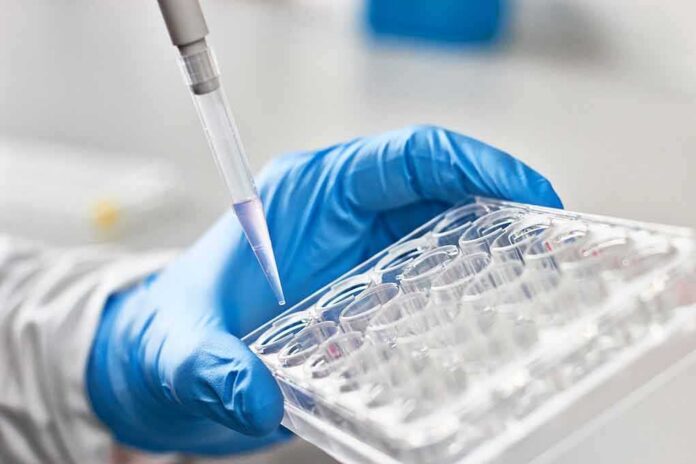
Duke scientists used an injectable scaffold to regrow blood vessels and restore movement in stroke-damaged mouse brains.
Story Highlights
- Duke University engineers built an injectable material that turned stroke cavities into repair hubs in mice.
- Treated mice regrew blood vessels and nerve fibers and regained motor function within eight weeks.
- The material appears to recruit the body’s immune cells to support healing rather than harm.
- Experts say this is still a mouse study, and human translation often proves harder than headlines suggest.
What Duke’s Team Achieved in Mice
Duke University biomedical engineers reported that an injectable biomaterial repaired mouse brains after an ischemic stroke. The stroke left a hollow cavity where brain tissue had died. Researchers injected a microporous scaffold into that space. The scaffold shifted the local environment toward healing. It drew in helpful immune cells, supported new blood vessel growth, and guided nerve regrowth. The Duke Pratt release described the strategy as turning a dead zone into a repair zone in mouse models.
Independent summaries of the work described strong gains in movement. Mice that received the scaffold improved on motor tests over several weeks. Reports said many treated mice performed close to healthy controls by week eight. Coverage credited the scaffold’s structure and signals for coordinating tissue repair. Those signals included cues that helped blood vessels form and nerves reconnect across the cavity. This pairing of blood vessel growth and neural wiring aligns with past biomaterial studies in stroke models.
How the Injectable Scaffold Works
The material acts like a tiny sponge made of linked particles. When injected, it fills the stroke cavity and leaves many pores. Those pores let cells move in, stick, and organize. The scaffold’s chemistry appears to nudge immune cells to a repair role, not a destructive one. As new vessels sprout, growing nerves use them like rails to cross the gap. This “vessels first, nerves follow” pattern has been shown before in preclinical stroke biomaterial research and matches the approach here.
Reports said the team used the scaffold to change what is usually a hostile site into a helpful one. After stroke, the cavity can block healing and trap harmful signals. Filling it with a designed structure can flip that script. The scaffold provides both physical support and biochemical cues. In mice, that allowed tissue to form across the void and linked circuits to return. Movement gains in the treated animals suggest those reconnections mattered for function.
Why This Matters for Patients and Caregivers
Stroke is a top cause of disability. Many families watch loved ones plateau after rehab. A therapy that rebuilds brain pathways could change lives. Today, approved options to reverse damage are limited by narrow time windows. A longer-window, repair-focused tool would be a major shift. This mouse result points to a future where doctors do not just clear clots, but also rebuild lost tissue. That prospect offers hope to patients who missed the early clock for clot-busting care.
For caregivers burned by promises that never arrive, caution still makes sense. Lab wins must pass tough tests in larger animals and then in people. Safety, dosing, timing, and delivery all matter. Even small changes in the human brain’s size and immune response can alter outcomes. But progress in materials science is real. Step by step, teams are learning how to guide the brain’s own repair playbook in a controlled way.
The Big Caveat: From Mice to Humans Is Hard
History shows many mouse breakthroughs do not translate. Reviews of stroke models warn that species differences in blood vessels, immune cells, and injury biology are large. That is one reason only a small share of animal successes reach clinical use. In stroke biomaterials, meta-analyses find strong preclinical signals yet still label the field as early. No such material has become standard care for people with stroke to date.
That gap does not mean these findings lack value. It means the next steps must be careful and clear. Researchers will need to test when to inject, how much to use, and how the scaffold behaves in bigger brains. Regulators will want to see durable gains without new harms. If those hurdles are met, this approach could join a group of tools that rebuild, not just rescue. For a country weary of systems that talk big but deliver little, measured progress here would be a welcome change.
Sources:
topics.consensus.app, pratt.duke.edu, thegoodnewsbrief.com, medibio.tiisys.com
© newsalertdaily.org 2026. All rights reserved.