
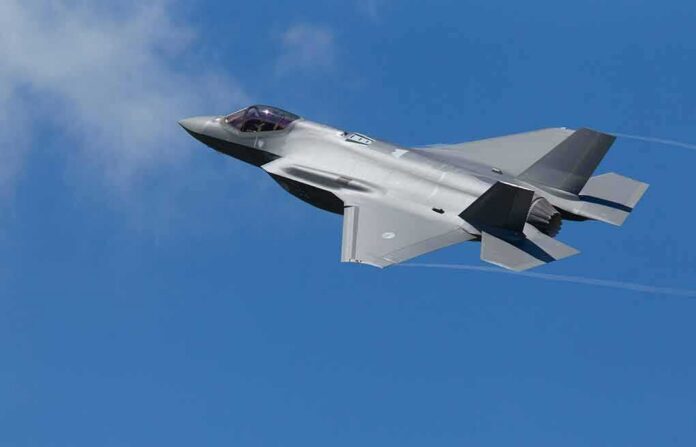
NORAD says an F-16 fired signal flares and escorted a small plane out of Camp David’s restricted airspace, with no threat to President Trump established.
Story Snapshot
- NORAD reports a 7:50 a.m. F-16 intercept near Camp David and a safe escort away.
- Signal flares were used to get the pilot’s attention, not as weapons.
- Federal rules ban flying near the President; violators can face military intercepts.
- Officials reported no injuries, damage, or ongoing risk after the incident.
What NORAD Says Happened Near Camp David
North American Aerospace Defense Command said an F-16 intercepted a civilian aircraft near Camp David at about 7:50 a.m. on September 19. The fighter used visual signals and dispensed flares to get the pilot’s attention. The jet then guided the aircraft out of the restricted area. The encounter ended without injuries or damage. The incident happened while President Trump was staying at the presidential retreat in Thurmont, Maryland, according to multiple official statements and reports.
Local and regional outlets reported loud jet noise over parts of Pennsylvania and Maryland as the F-16 moved in. Officials described the flares as a standard signal that helps a pilot notice and follow intercept directions. This response matches the long-standing playbook for airspace violations near the President. Authorities did not state the aircraft type or identify the pilot. They also did not announce criminal charges in initial updates.
Why Flares And Escorts Are Standard In These Cases
Federal Aviation Administration rules bar flying near the President under a special restriction called a temporary flight restriction. The rule exists to protect the President and those nearby. The Federal Aviation Administration states that pilots who ignore these limits may be intercepted by military aircraft and could face force if they fail to comply with directions. The system is built to treat unknown aircraft as risky until identified and removed from the area.
Such intercepts have happened around other presidential stops this year. Reports detail recent cases in New Jersey and Texas where jets guided small planes out after they strayed into no-fly zones. These events are disruptive, but they show the process working as designed. Quick response, clear signals, and a safe escort are the goals. That is what officials say occurred near Camp David on Saturday morning.
How The Security And Compliance System Works
Temporary flight restrictions are published by the Federal Aviation Administration through notices to air missions. The limits often include a no-fly inner ring and a wider outer ring with strict rules. General aviation pilots are expected to check these notices before each flight, plan routes to avoid them, and stay in contact with air traffic control. When pilots miss a notice or stray off course, military jets respond to secure the sky and protect people on the ground.
A NORAD F-16 intercepted an aircraft that violated restricted airspace over Camp David while Donald Trump was at the Maryland presidential retreat, officials said. The incident occurred with Trump in town and prompted concern, but the available reporting does not identify the… pic.twitter.com/rwEsbQ7X5j
— Cool X Media Group (@teslamillion) September 19, 2026
NORAD’s description of the Camp David incident fits that framework. An aircraft entered the restricted area, an F-16 responded, flares signaled the pilot, and the jet escorted the plane out. Officials reported no sign of deliberate harm and no continuing risk. The case will likely trigger a Federal Aviation Administration review of the pilot’s actions and radio contact. That review can lead to warnings, fines, or certificate actions if rules were broken.
Sources:
facebook.com, rmb.reuters.com, i-meihua.com, tfr.faa.gov, faa.gov
© newsalertdaily.org 2026. All rights reserved.