
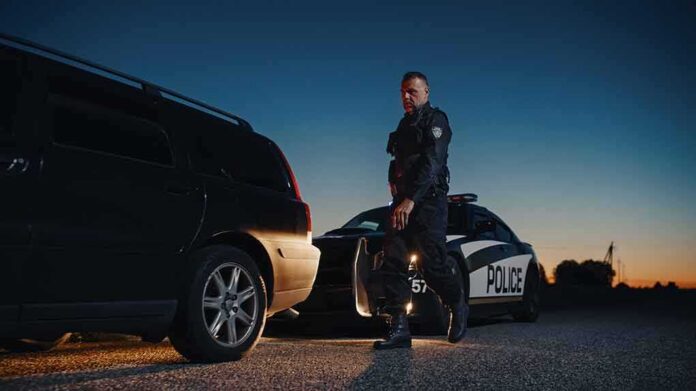
Police say a 60-year-old man pulled over a driver on an Arizona freeway while posing as an officer, then called 911 for “backup” and was arrested on felony charges.
Story Snapshot
- Arizona officials identified the suspect as Scott Carl Millage, 60, of Cave Creek.
- Prosecutors booked Millage on impersonating a peace officer, unlawful imprisonment, and kidnapping.
- Reports say the stop happened on Interstate 17 in Phoenix and involved a gray truck with lights.
- The case fits a known pattern of police-impersonation traffic stops seen in past studies.
Police Identify Suspect and Felony Charges
Arizona Department of Public Safety officials said troopers arrested Scott Carl Millage, 60, of Cave Creek, after a traffic stop on a Phoenix freeway led to suspected police impersonation. The agency said Millage was booked on impersonating a peace officer, unlawful imprisonment, and kidnapping. These are felony offenses under state law, and a conviction could carry prison time. Officials urged drivers to be cautious if they doubt an officer’s identity during a stop, and to call 911 to confirm.
Local reporting added that the incident occurred on Interstate 17 in north Phoenix. Reports described a gray pickup truck outfitted with red and blue lights being used to make the stop. Troopers responded and took the driver of that truck into custody. Law enforcement said unmarked or personal vehicles can confuse drivers, which is why verification through 911 is an important safety step when something feels off during a stop.
What Allegedly Happened on the Freeway
News accounts say Millage pulled over a silver Tesla on Interstate 17, then dialed 911 to request backup while acting like an officer. Responding state troopers found no legal authority for him to conduct a traffic stop. Troopers arrested him at the scene. He was later booked on multiple felony counts tied to impersonation and restraining the motorist without legal cause. The timeline points to a fast response once the 911 call was made.
The combination of charges reflects how the law treats forced or deceptive stops that limit a person’s movement. Police and prosecutors often use unlawful imprisonment or kidnapping counts when someone is held or directed without consent. The exact fit depends on details that appear later in formal records. In this case, officials said the driver’s conduct met the threshold to book serious restraint-related offenses pending review by prosecutors and the courts.
Why This Matters for Drivers and Public Trust
Drivers face a real safety problem when impostors mimic police actions. Research shows many impersonation crimes involve vehicle pull-overs, face-to-face control, and the use of props like flashing lights. These methods exploit the respect people have for law and for real officers who risk their lives to keep roads safe. Studies of past cases show these events are uncommon but repeat across regions and years, often centered on traffic stops.
On September 8 two (Former) Phoenix police officers pleaded not guilty to charges stemming from failing to activate body cams and log a "traffic stop" during which a Taser was deployed.
On Aug. 5 at about 11:30om they stopped a couple driving a sports car.
Details:
Court and…— Christopher Fishell (@chieffishell) September 17, 2026
Practical steps can help reduce risk without undermining real policing. If a vehicle without clear police markings signals you to stop, slow down, turn on hazard lights, and call 911. Ask the dispatcher to confirm the stop and location. Drive to a well-lit public spot if you feel unsafe, and keep your hands visible. Police agencies endorse these steps because they protect drivers and officers, and they help separate impostors from law enforcement.
Policy Questions the Case Raises
State leaders and city officials can press for clearer rules on unmarked stops, stronger penalties for impersonation tools like illegal lights, and faster public alerts when cases occur. Many readers, right and left, worry that basic safety on the road has become a do-it-yourself task. Ensuring clear officer identification and better training on verification could help rebuild trust. Those steps respect both civil liberty and public order without asking people to ignore their instincts when something seems wrong.
Sources:
reddit.com, azcentral.com, fox10phoenix.com, azdps.gov, govinfo.gov
© newsalertdaily.org 2026. All rights reserved.