

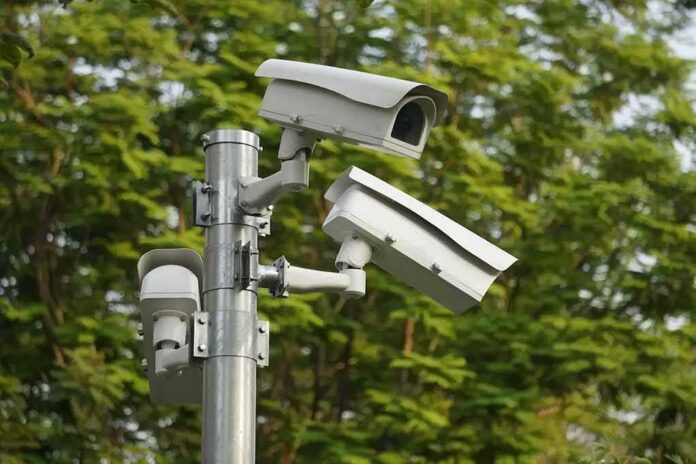
China’s export of camera networks, facial recognition, and “Safe City” platforms is spreading tools that can supercharge state control far beyond its borders.
Story Snapshot
- U.S. and policy reports say China leads in exporting surveillance tech tied to digital repression.
- Researchers counted dozens of “Safe City” deals across more than 50 countries.
- Advocates warn these tools can track, score, and punish citizens at scale.
- Supporters argue the systems also reduce crime and manage traffic, showing dual-use risk.
What the Records Show About China’s Surveillance Exports
U.S. government and think tank studies describe China exporting surveillance systems as part of a wider push that can enable digital authoritarianism abroad. A 2020 report published by the U.S. Government Printing Office said China spreads technologies and methods used for digital authoritarian control as it seeks influence overseas. Brookings analysts later found autocracies and weak democracies are more likely to import Chinese artificial intelligence surveillance when local capacity is low and unrest is high. Together, these accounts frame a supply meeting strong demand.
Open-source trackers place the reach of these platforms well beyond a few clients. The Center for Strategic and International Studies’ Reconnecting Asia Project identified 73 “Safe City” agreements across 52 countries, signaling a wide footprint for citywide camera and analytics packages. Separate scholarship notes adoption in more than 80 countries, including democracies that face crime or crowding and authoritarian states with tighter controls. The spread cuts across regions and incomes, which raises questions about oversight, not just intent.
How “Safe City” Tools Work—and Why They Worry Both Sides
Vendors market these systems as public-safety upgrades that connect cameras, sensors, and data analytics. The U.S.-China Economic and Security Review Commission describes China’s smart-city exports as networks that collect data to manage traffic, energy use, and crime, while also augmenting state power. Researchers stress the dual-use core: the same tools that find a stolen car can also track a protest organizer. That flexibility, sold as an advantage, is the very reason civil liberties groups sound alarms.
Advocates and officials warn that once installed, the platforms can monitor daily life at massive scale. A U.S. government advocacy outlet summarized the risk as helping governments track, reward, and punish citizens through digital surveillance. News reporting and policy analysis describe the model as “Mao-era policing on steroids,” exported to authoritarian states and fragile democracies alike. Critics fear features like face matching, behavior scoring, and real-time alerts can chill speech and crush dissent when checks and balances are weak.
Why Governments Buy: Cost, Capability, and Geopolitics
Countries adopt these systems for practical and political reasons. Brookings points to both “push” and “pull” dynamics: states important to Beijing and states battling high crime are more likely to buy Chinese platforms. Chinese firms often bundle training, financing, and rapid deployment, which lowers barriers for cash-strapped cities. For leaders under pressure to curb violence or congestion, the pitch is simple—more eyes, faster response, and dashboards that promise control. That promise can be appealing regardless of regime type.
Supporters in buyer governments say cameras and analytics help solve crimes, manage traffic, and coordinate emergency response. Those goals resonate with citizens who want safer streets and shorter commutes. Yet the same centralization can tempt leaders to widen watchlists and silence rivals. Even sympathetic analyses acknowledge the dual-use nature and call for rules that limit abuse, log access, and allow audits. Without such guardrails, the line between safety and surveillance can vanish overnight.
What This Means for American Readers
Americans across the spectrum see a familiar pattern: powerful tools, weak oversight, and leaders who claim necessity while dodging accountability. If cities abroad can flip “smart” into “surveillance,” the same risk exists anywhere technology outpaces rules. The lesson is not to fear every camera, but to demand limits that stick. Procurement should require transparency, narrow uses, short data retention, and independent checks that citizens can verify, not just trust.
@elonmusk exports digital freedom to the rest of the world thru @Starlink, and China in turn exports digital surveillance to dictators all around the world.
— $itizen (@fk4561) August 16, 2026
The broader challenge is strategic. As President Trump’s administration pressures supply chains and Congress debates export rules, China’s head start in this market grows. Reports say China holds a comparative edge in exporting facial recognition systems and sells them where demand is highest. That reach matters for values and for influence. Countries that wire their cities with one vendor’s tools may also import that vendor’s standards. The price can be lower, but the bill for freedom can be steep.
Sources:
zerohedge.com, amnesty.org, wm.edu, chosun.com, brookings.edu, scholarworks.uark.edu, strausscenter.org, cfr.org
© newsalertdaily.org 2026. All rights reserved.