
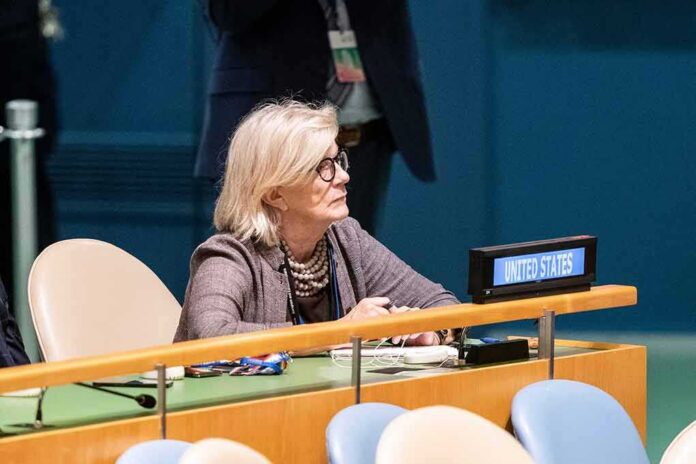
The United Nations General Assembly briefly halted its debate after U.S. and Cuban envoys shouted over each other on the floor during a clash about the U.S. embargo on Cuba.
Story Snapshot
- The General Assembly paused proceedings after a heated exchange between U.S. and Cuban representatives.
- Most countries again backed a resolution urging an end to the U.S. embargo on Cuba, with a 165-7-12 vote in a recent session.
- The U.S. defended the embargo as necessary for security and accountability, while Cuba said it harms civilians.
- United Nations officials linked tighter sanctions to fuel shortages and delayed surgeries in Cuba this year.
What Sparked The Floor Fight
Witnesses at the United Nations reported that debate on the Cuba embargo turned into a shouting match. The United States envoy accused Cuba of repression and tied the embargo to U.S. security goals. Cuba’s Foreign Minister Bruno Rodríguez stepped in from the floor, called the claims lies, and pressed to speak out of turn. The Assembly president suspended the meeting to restore order before resuming debate. A media account described the exchange as loud and personal, with both delegations refusing to yield.
The confrontation came after years of tense votes on the same question. The General Assembly has repeatedly urged an end to the embargo since the 1990s. In the most recent recorded tally, member states adopted the Cuba measure by 165 votes in favor, seven against, and twelve abstaining. Support remains broad, even as a handful of countries oppose the text. That long pattern shows this is not a one-off fight, but a standing global dispute over the policy and its impact.
How Each Side Framed The Stakes
The United States envoy argued that sanctions are justified to oppose repression and protect national security. U.S. statements in recent debates linked Cuba to support for hostile actors and interference abroad. Washington says pressure is needed to push accountability and curb illicit activity. Cuba rejected those claims and said the measures punish ordinary people. Rodríguez told the Assembly that threats and other actions block commercial and humanitarian fuel supplies from reaching the island.
Cuban officials detailed social costs they attribute to tightened U.S. steps. A United Nations transcript recorded claims of shortages of more than sixty percent of essential medicines and a drop of over fifty percent in food production over five years. United Nations reporting this year tied stricter measures to an energy crunch, warned of risks to health and food access, and noted more than one hundred thousand postponed surgeries in Cuba, according to senior officials. Those data points fueled calls from many countries to lift trade and financial curbs.
Why This Matters Beyond One Outburst
The pause in the Assembly underscored a shared worry on left and right: big choices that affect daily life can be set by a few and then locked in for decades. Most nations want the embargo ended, yet the deadlock continues year after year. That gap between global votes and real change feeds distrust in institutions. It also raises a hard question for Americans: do long sanctions make us safer, or do they entrench pain without changing a regime’s behavior?
Research on sanctions finds many do not reach their stated goals when a government sees the dispute as core to its survival. Studies of Cuba’s case point to weak evidence that embargoes alone deliver better human rights or democracy. Analysts also note that U.S. measures can spill over, making trade and finance with third countries riskier and costlier for the target state. Those findings add weight to the Assembly’s repeated votes, even as the U.S. holds to its security case.
What To Watch Next
Delegates expect another resolution pressing to end the embargo. The vote count will show whether support shifts as reports of energy and health strains grow. The United States will likely restate security concerns and seek to rally the small bloc that votes no. Cuba will push humanitarian claims and seek wider backing for relief. Any change in exemptions for food, fuel, or medicine would signal room for practical easing within a hard political fight.
Rodríguez called Waltz a liar, while the US envoy demanded that he step back. The heated exchange forced the UN meeting to be temporarily suspended.
❓ Is this normal diplomacy, or are tensions between nations reaching a new level? pic.twitter.com/nIBopyVJ2X
— The Insight Affairs (@TInsightAffairs) October 28, 2026
Sources:
youtube.com, media.un.org, news.un.org, press.un.org, digitallibrary.un.org, unny.mission.gov.au, transcripts.un.org, cambridge.org
© newsalertdaily.org 2026. All rights reserved.