

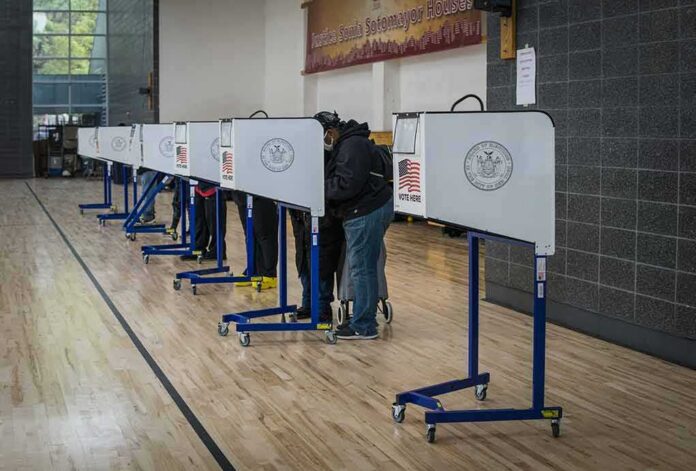
In a late-stage order before November’s vote, the Supreme Court let New Hampshire bar student IDs at the polls while an appeal continues.
Story Snapshot
- The Court stayed a lower-court ruling, clearing the state to exclude student IDs for now.
- Justice Ketanji Brown Jackson dissented; the order does not decide the final merits.
- State guidance points students to licenses, passports, or military IDs instead.
- Advocates say there is no evidence student IDs enabled fraud and warn of confusion.
What the Supreme Court’s Order Does Right Now
The Supreme Court granted New Hampshire’s request to pause a lower-court order that had allowed limited use of student IDs as backup proof of identity. The stay lets the state enforce House Bill 323’s rules during the November election while appeals proceed. The justices acted on the state’s timing argument about changing rules close to voting, often called the Purcell principle, and issued a temporary order, not a final judgment on the law’s validity.
Justice Ketanji Brown Jackson dissented from the decision to grant the stay, signaling disagreement with allowing the restriction for this election period. The Court’s order did not explain the full reasoning or provide a detailed vote breakdown beyond the noted dissent. Because it is an emergency ruling, it only addresses what rules apply during the election and leaves the core legal questions for later resolution in the normal appeals process.
What New Hampshire’s Law Changes at the Polls
House Bill 323 removed student identification cards from the list of documents that count as qualifying photo identification for getting a ballot. A separate “safety-valve” process exists for voters who lack qualifying identification, but state officials instructed clerks not to treat student IDs as part of that fallback. A federal judge said officials could consider student IDs as one piece of evidence in that process, but the Supreme Court’s stay put that ruling on hold for now.
The Secretary of State’s office told students to bring a driver’s license from any state, a United States passport, or a military identification card. The office also explained that proof of residency can be shown with mail, like a utility bill or bank statement. Critics argue that some students, especially those without cars, travel funds, or time to secure new documents, could face real hurdles meeting these rules before Election Day.
Why the State Asked for Emergency Relief
New Hampshire said changing guidance weeks before voting would confuse voters and poll workers and disrupt training. The state argued that keeping one clear rule set in place would protect election administration. The Supreme Court agreed to pause the lower-court order, citing the usual caution about late changes. The state did not present data showing student IDs had caused fraud, and the stay order itself did not endorse such a showing; it focused on timing and stability.
The lawsuit challenging the law continues in the lower courts. The district court opinion described the law’s narrow effect and highlighted the dispute over how the safety-valve should work. That opinion found the Secretary of State’s earlier directive too broad, but that view is now paused. The ultimate outcome will depend on further legal review, statutory interpretation, and whether the policy fits constitutional standards for voting rules.
How This Affects Students and Trust in the System
Advocates say there is no evidence that student IDs are unreliable or linked to fraud and warn the change will burden eligible young voters and cause confusion in college towns used to different rules. The coalition challenging the law called the stay disruptive and said it risks keeping voters from the ballot. Their claims stress access and fairness, while the state emphasizes order and clarity near Election Day, reflecting a long-running national split over identification rules.
Supreme Court clears NH student ID ban
Justices stay order allowing student IDs for Nov. 3 vote over Jackson dissent
New Hampshire voters need government photo ID at the polls#SCOTUS #Midterms #Voting
— Newsaholic (@MrNewsaholic) October 23, 2026
For voters on both left and right, the core worry is trust. Many feel leaders change rules late and leave regular people to sort it out. Clear standards known well ahead of elections help confidence. So do facts. Studies often find in-person fraud is rare and that strict identification rules do not clearly change turnout, up or down. New Hampshire’s case now tests a narrower point: which documents count and how flexible the fallback process can be.
Sources:
cbsnews.com, nhd.uscourts.gov, scotusblog.com, courthousenews.com, nbcboston.com, nhpr.org, repository.belmont.edu
© newsalertdaily.org 2026. All rights reserved.