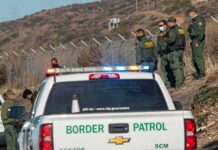

Federal officials told border wall contractors to stop drilling new water wells in parched New Mexico, acknowledging drought and permit concerns while they review what authority applies.
Story Snapshot
- Federal agencies ordered a halt to new well drilling tied to border wall work in southern New Mexico.
- New Mexico officials and ranchers said several wells moved ahead without state permits during severe drought.
- Customs and Border Protection runs wall projects with the U.S. Army Corps of Engineers under federal contracts.
- Key legal questions remain over permits and preemption; agencies are reviewing scope and compliance.
What Triggered The Stop-Drill Order
Federal officials moved to pause water-well drilling that supports active border wall construction in Luna and Hidalgo Counties. State regulators and ranchers had warned that new, high-volume wells were advancing without state permits in a region already short on water. Local reports and on-the-record statements described at least several wells under development near work sites. The pause targets new drilling while agencies sort out permitting and supply plans that will not worsen the drought-driven strain on aquifers.
Members of Congress from New Mexico pressed the administration to intervene. They said contractors working for the Department of Homeland Security had begun deep wells to supply concrete mixing and dust control. They argued that unpermitted drilling could harm ranch operations that depend on shallower domestic wells. Public comments amplified those concerns, citing low rainfall, falling water tables, and stress on rural communities. The stop order is narrow. It addresses new wells and does not decide the final legal outcome.
How Federal Control Of Wall Projects Works
Customs and Border Protection has long managed border barrier work as a federal program with the U.S. Army Corps of Engineers. During the 2021 construction pause under President Biden, the agencies issued formal suspension orders and kept only limited work for safety and environmental reasons. The Government Accountability Office later described the wall as a Department of Homeland Security program funded by federal appropriations and transfers. That history shows federal agencies set project scope and pace through contracts and directives.
Public statements at the time underscored that point. Customs and Border Protection said projects would follow the President’s proclamation and that construction would stop except for safety tasks. That set a pattern: wall activities, including site support like water supply, run through federal oversight, not state management. The current New Mexico dispute sits inside that structure. Federal officials can pause or resume tasks. But the question of whether state well permits are still required is separate and now under review.
The Open Questions On Water Rights And Permits
New Mexico’s Office of the State Engineer says wells need state permits. Ranchers say their domestic supply is at risk if large, new wells pull from the same aquifers. Federal officials must decide how to source water without deepening the drought problem. The record so far does not include a public legal memo that clearly says federal authority preempts New Mexico groundwater permitting for this work. That gap remains central to the fight and shapes what contractors can do next.
Contractors building border wall ordered to stop drilling wells in drought-stricken New Mexico https://t.co/CnGcUmWGyF
— EYEWITNESS NEWS (@cnyhomepage) August 4, 2026
The stakes reach beyond one work zone. Similar border projects have sparked fights over land access, environmental impact, and contract scope. The Government Accountability Office found billions in Department of Homeland Security funds were obligated for barrier projects and that federal agencies managed the stops and starts. That national framework meets local realities at the wellhead. People on both the right and left agree on this point: when government fails basic planning, neighbors pay the price on the ground.
Why This Matters To Readers
Border security is a federal duty. Water is a local lifeline. When agencies rush or argue over paperwork, families, ranches, and small towns get squeezed. Conservatives see another case of federal overreach and poor land stewardship. Liberals see environmental risk and communities left out of major decisions. Both sides see a system that struggles to deliver competent, accountable work. The stop-drill order buys time. What happens next will show if leaders can secure the border and protect scarce water at the same time.
Sources:
fox32chicago.com, foxnews.com, instagram.com, scdailypress.com
© newsalertdaily.org 2026. All rights reserved.