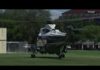

U.S. Marines have now put a new kind of strike power into small units, with live-fire FPV drone drills in South Korea showing reach far beyond older infantry weapons.
Quick Take
- The Marine Corps said it successfully finished its first live-fire first-person view attack drone series in South Korea.
- Marines used the Neros Archer drone in two training events during Korea Marine Exchange Program 26.2.
- The service said the drone can hit targets about 20 kilometers away and keep operators farther from danger.
- The drills happened near the border with North Korea, making the exercise part military test and part public signal.
What the Marines Tested
The Department of War said Marines assigned to the 4th Marine Regiment successfully concluded the Corps’ first live-fire first-person view attack drone flights in South Korea. The series included an initial range event on July 30 and a second event on August 5, both tied to Korea Marine Exchange Program 26.2. Marines used the Neros Archer drone for precision anti-armor and antipersonnel explosive strikes, according to the official release.
Reporting from the scene said Marines trained at Rodriguez Live-Fire Complex in Pocheon, about 15 miles south of the border with North Korea. South Korean and American reporting said the drones struck targets at about 900 meters in the public demonstration, while the Marine Corps also described the system as having an effective range of about 20 kilometers. That gap matters because the live-fire drill showed a short-range target, but the system itself gives small units a much longer reach.
Why the Range Matters
The Marine Corps said the new drone setup extends the tactical influence of small units far beyond traditional squad weapons. In plain terms, that means a Marine team can strike from farther away and stay out of direct view longer. Supporters see that as a real shift in battlefield shape, especially in the Pacific, where distances are large and fast-moving weapons matter. The drills also fit a broader push to mix drones, joint training, and forward deployment.
That wider trend has both military and political weight. The exercise came during a public training event near the Korean border, so it also served as a signal to allies and rivals. For readers who distrust big institutions, the story fits a familiar pattern: officials showcase new tools as proof of progress while the public is asked to take their word that the system will work the same way under real combat pressure. The drill itself was real; combat proof was not the claim made here.
What the Public Saw
Media accounts said the Marines openly disclosed the drill and let reporters watch part of it. Korean reporting said six FPV drone strikes hit a target used as a makeshift barracks. Other coverage said the Marines used a hit-to-kill method, where the drone crashes into the target and detonates. That image will likely stick with audiences because it shows how cheap, hard-to-stop drones can change modern war without needing a large aircraft or a costly missile.
U.S. Marines just ran their first live-fire FPV attack-drone drills in South Korea pic.twitter.com/1V4f7ExOVM
— Curious Cat (@m9berettta) August 8, 2026
The timing also adds to the message. The Pentagon has been pushing small, low-cost precision weapons as a way to improve combat power without adding the price and weight of older systems. For many Americans, that sounds like common sense in an era of stretched budgets and repeated government overpromising. But the deeper question is whether these drills become a real field tool or another polished demonstration that looks stronger on video than it may prove in war.
Sources:
taskandpurpose.com, war.gov, koreatimes.co.kr, forbes.com, aa.com.tr, dvidshub.net, naval-technology.com
© newsalertdaily.org 2026. All rights reserved.