

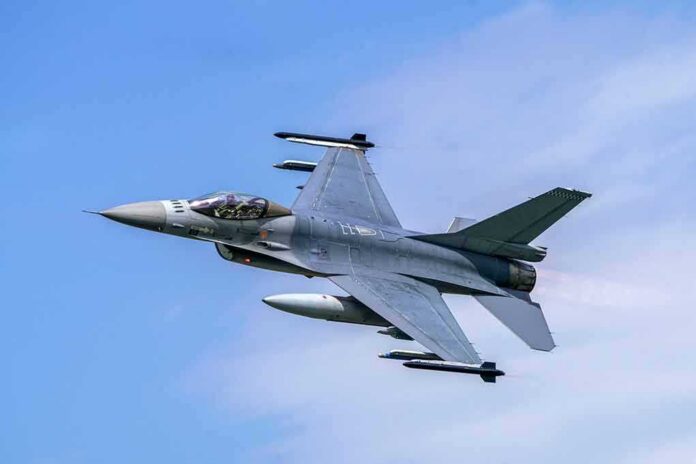
Washington’s choice to eject Turkey from the F-35 program over its S-400 purchase shows the system is treated as a real intelligence and detection threat, not a paper tiger.
Story Snapshot
- The S-400 networks long-range radars and missiles to hunt advanced jets, including the F-22 and F-35.
- The United States removed Turkey from the F-35 program due to S-400 data risks.
- Analysts say detecting a stealth jet is easier than getting a weapons-quality track.
- No verified combat has shown the S-400 defeating an F-22 or F-35.
What Prompted The U.S. Break With Turkey
Pentagon leaders told Congress in 2019 that the S-400 was not just another foreign system. They warned it could collect sensitive data on the F-35’s low-observable features if both operated together in Turkey. The United States then removed Turkey from the F-35 program and began a full “unwinding” of ties tied to the jet. This decision signaled that leaders saw the S-400 as a credible surveillance and counter-stealth risk, not mere hype.
Lawmakers and defense officials argued that software, mission data, and maintenance links could expose patterns that help an adversary learn. Officials framed the danger as long-term. They worried the system might log how an F-35 looks from different angles and distances. That kind of data can help tune radars and missiles over time. Removing Turkey carried high cost, but leaders chose protection of the fleet’s edge over short-term industry or alliance friction.
How The S-400 Builds Its Kill Chain
Russia designed the S-400 to cover large areas using a stack of sensors and missiles. A surveillance radar scans far and wide to find many targets. A command post assigns threats. A separate engagement radar focuses on the chosen target and guides missiles to it. The longest-range missile, often cited as the 40N6 or its export 40N6E, is advertised for hundreds of kilometers against large targets. This layered approach aims to spot, track, and shoot in one networked loop.
Analysts stress that stealth does not make a jet invisible. It makes each step in that loop harder. Lower-frequency radars may sense that “something” is there. But they do not give the precise and steady target data needed to steer a missile. The fire-control radar, which works at higher frequencies, must do that job. Stealth shaping and coatings are built to blunt that radar’s view. The question is not “see or not see,” but whether the system can hold a tight track soon enough to fire.
What Open Sources Say About Stealth Versus S-400
Public estimates vary, but many point to short ranges for weapons-quality tracking on stealth jets. One analysis cited by The Diplomat reported that the system might detect an approaching F-22 at about 21 kilometers and an approaching F-35 at about 34 kilometers. These are rough, scenario-based figures, not official data, but they reflect the idea that initial detection and engagement-quality tracking are different hurdles.
Defense explainers echo this split. They note that early warning radars can sometimes find and even track stealth aircraft in a broad sense, but they “do not deliver a weapons quality track.” They also point out the S-400’s engagement radar works in the band where stealth shaping is tuned to reduce returns. That technical mismatch keeps the advantage with fifth-generation aircraft, especially when they shoot from outside the defender’s best range.
What Has And Has Not Been Proven In Combat
Open reporting has not confirmed any S-400 engagement against an operational F-22 or F-35. That leaves real-world performance against top-tier stealth unproven. Analysts warn that many claims about range or “seeing stealth” come from marketing or selective demonstrations. Without combat evidence, the prudent view is that the system is dangerous, but not magic. Crews on both sides train to break the other’s chain while protecting their own.
For citizens, this debate is a lesson in how big systems work. Flashy range numbers do not win wars by themselves. What matters is the whole loop: find, track, decide, engage, and hit. The United States treated the S-400 as a real data threat to the F-35 and paid a price to reduce that risk. That choice reflects a core duty: protect service members and taxpayers by guarding hard-won advantages in a world where rivals probe every seam.
Sources:
19fortyfive.com, war.gov, congress.gov, reuters.com, militarymachine.com, theaviationgeekclub.com, defenseone.com
© newsalertdaily.org 2026. All rights reserved.