

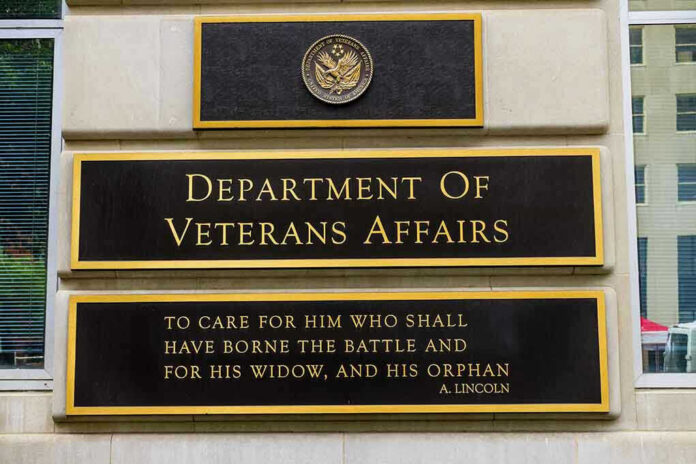
By fast-tracking psychedelic drugs while leaving most use illegal, Trump’s new mental health order puts desperate patients between hopeful science and a system many already feel is rigged against them.
Story Snapshot
- Trump signed an order telling federal agencies to speed up research and review of psychedelic therapies for serious mental illness, especially in veterans.
- The Food and Drug Administration (FDA) responded by giving ultra-fast review vouchers to three psychedelic drugs for depression and post-traumatic stress disorder.
- The order highlights ibogaine and opens a narrow “Right to Try” path, but almost all non-medical psychedelic use stays criminal.
- Supporters say faster review could save lives, while critics warn about safety risks and a system that still leaves most patients shut out.
Trump’s Order: Faster Paths for Psychedelic Medicines
President Donald Trump’s April executive order tells the federal government to “dramatically accelerate” access to psychedelic-based treatments for serious mental illness, including depression, addiction, and post-traumatic stress disorder in veterans. It directs the Food and Drug Administration (FDA), Drug Enforcement Administration, Department of Health and Human Services, and Department of Veterans Affairs to speed research, share data, and ease some restrictions that have long slowed this field. The White House frames this as a response to high suicide rates, failed standard treatments, and a deep national mental health crisis.
The order is built around an existing FDA tool: the Commissioner’s National Priority Voucher pilot program, launched in 2025 to cut review times for drugs that meet key national health needs. Under Trump’s directive, psychedelic drugs that already have Breakthrough Therapy status can receive these vouchers. That can shrink Food and Drug Administration decision windows from the usual 10–12 months down to roughly one or two months for qualifying applications, without changing the safety and effectiveness standards that the agency applies to all medicines. Supporters argue this time gain could matter for people at real risk of suicide.
FDA’s Ultra-Fast Track for Three Psychedelic Drugs
Days after the order, the FDA announced it was issuing national priority vouchers to three psychedelic programs: psilocybin for treatment-resistant depression, psilocybin for major depressive disorder, and methylone, a compound related to MDMA, for post-traumatic stress disorder. Reporting by Stat News and others identified the companies as Compass Pathways, the Usona Institute, and Transcend Therapeutics, all of which confirmed they received vouchers. These projects already had promising late-stage data and Breakthrough Therapy designation, which signals early evidence of substantial improvement over existing options.
These vouchers do not guarantee approval, but they turn regulation from a slow walk into a sprint. Review timelines that used to stretch close to a year can be compressed to roughly one to two months once a company submits its final application. The FDA says it will use collaborative, “tumor board-style” review teams to manage that pace while keeping trial design and safety scrutiny intact. For many families watching loved ones cycle through failed antidepressants or trauma therapies, the idea of months instead of years feels like a real, tangible change.
Ibogaine, Right to Try, and Ongoing Safety Fears
Trump’s order is unusual because it spotlights ibogaine, a powerful psychedelic with reported benefits for addiction but serious heart risks. The FDA press release notes it has cleared an early clinical study of noribogaine hydrochloride, an ibogaine metabolite, for alcohol use disorder, while stressing this only means the trial may proceed, not that the drug is safe or approved. At the same time, the order tells the Food and Drug Administration and Drug Enforcement Administration to build a “Right to Try” pathway so some patients can access investigational psychedelics, including ibogaine compounds, outside standard approval routes.
Cardiac specialists and several studies have flagged ibogaine’s ability to disrupt heart rhythms and extend the QT interval, sometimes to dangerous levels, which can trigger fatal arrhythmias even when monitoring is in place. Medscape’s review notes that ibogaine still has no randomized, placebo-controlled trials in the United States and remains a Schedule I substance, meaning no accepted medical use under federal law. That status is unlikely to change before the end of this decade, even with Trump’s push, and any “Right to Try” channel will sit on top of strong warnings about heart safety and the need for intensive medical supervision.
Who Benefits, Who Is Left Out, and Why Both Sides Worry
The order fits a broader pattern: for three decades the FDA has built special tracks like Breakthrough Therapy and Accelerated Approval to move drugs for serious, under-treated diseases faster through the system. Over 350 such designations have been granted in recent years, often cutting time to first approval by more than a year compared with standard paths. Trump’s directive extends that logic into psychedelics, seeking to turn promising trial results in psilocybin, MDMA-like compounds, and ibogaine derivatives into near-term options for patients who have run out of alternatives.
Why did they lead this Executive Order with Ibogaine instead of mushrooms?
Almost no one has heard of Ibogaine — and that's precisely the point. It sounds like a pharmaceutical already, not some obscure African shrub. It arrives without baggage.
Mushrooms, on the other hand,…
— Jon Rob (@homogalactic) June 29, 2026
But the gap between medical trials and everyday reality is what fuels anger from both conservatives and liberals who feel the system serves elites first. Reason magazine points out that Trump’s “historic reforms” leave almost all non-medical psychedelic use illegal, meaning most people who use these substances outside clinics stay on the wrong side of the law. Veterans ask whether any of this matters if the Department of Veterans Affairs does not fully fund care and benefits, while skeptics recall that the FDA rejected an MDMA-assisted therapy application in 2024 over flawed study design despite hopeful results.
For many Americans, the deeper worry is not the science but the structure. Drug companies and well-connected clinics stand to gain from ultra-fast approvals, while ordinary patients still face high costs, narrow access programs, and criminal penalties if they seek help on their own. At the same time, there is real evidence that some psychedelic-assisted treatments can bring lasting relief where standard drugs fail, and the mental health crisis is getting worse, not better. Trump’s embrace of psychedelic therapy captures that tension: a potentially life-saving shift, delivered through institutions many citizens on both the right and the left no longer trust.
Sources:
reason.com, psychedelicalpha.com, reddit.com, statnews.com, insidehealthpolicy.com, genengnews.com, facebook.com, sites.fuqua.duke.edu, fda.gov, biospace.com, medscape.com, pmc.ncbi.nlm.nih.gov, experienceibogaine.com, thehill.com, foxrothschild.com, ozmosi.com
© newsalertdaily.org 2026. All rights reserved.