
The Supreme Court just locked birthright citizenship into the Constitution, while exposing how little power voters really have to change a broken immigration system.
Story Snapshot
- The Court ruled 6–3 that President Trump cannot narrow birthright citizenship by executive order.
- Chief Justice John Roberts said nearly all babies born on U.S. soil are citizens, regardless of parents’ status.
- Dissenting justices warned the ruling could fuel “birth tourism” and deepen immigration and security worries.
- The decision highlights a deeper problem: big questions about citizenship are decided by unelected judges, not voters.
What The Supreme Court Decided In Trump v. Barbara
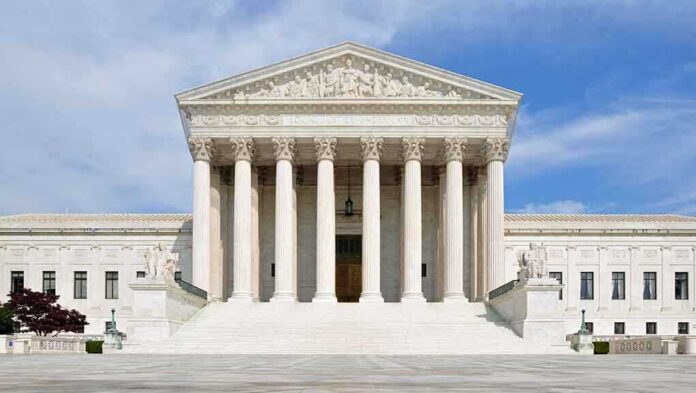
On June 30, 2026, the Supreme Court ruled 6–3 in Trump v. Barbara that President Donald Trump’s order to restrict birthright citizenship is unconstitutional. The order would have blocked automatic citizenship for children born in the United States to parents who were undocumented or only in the country on temporary visas. Chief Justice John Roberts wrote the main opinion. He said the Fourteenth Amendment’s words “born in the United States, and subject to the jurisdiction thereof” cover those children, making them citizens at birth.
Roberts’ opinion leaned heavily on the 1898 case United States v. Wong Kim Ark, which held that a child born in San Francisco to Chinese immigrant parents was a citizen under the Constitution. He explained that the Citizenship Clause was “declaratory” of a long-standing rule: if you are born on American soil and under American law, you are an American citizen. The Court again recognized only narrow exceptions, like children of foreign diplomats or hostile occupying forces, not ordinary undocumented or temporary visitors.
How Trump’s Order Tried To Change Birthright Citizenship
President Trump signed his birthright citizenship order on his first day of his second term, aiming to end automatic citizenship for children born to parents who were in the country illegally or only temporarily. The order claimed that these children were not “subject to the jurisdiction” of the United States in the way the Fourteenth Amendment requires. In plain terms, the administration tried to tie a baby’s citizenship to the parents’ legal status and long-term ties, instead of the simple fact of birth inside the country.
Lower federal courts across several states quickly blocked the order, saying it conflicted with the clear text of the Constitution and existing law. Judges pointed to 8 U.S.C. §1401, which follows the Fourteenth Amendment and says that people “born in the United States, and subject to the jurisdiction thereof” are citizens. By the time the case reached the Supreme Court, every lower court that had ruled on the merits had rejected the administration’s view of the Citizenship Clause. The justices were left to decide whether a president can rewrite who is a citizen without an amendment or an act of Congress.
Majority Versus Dissent: Two Very Different Views Of Citizenship
The Roberts majority said the Constitution’s promise is simple: if you are born here and under U.S. law, you are a citizen, no matter your parents’ papers. The opinion stressed that for more than 125 years, courts have followed Wong Kim Ark and treated birthright citizenship as the norm for almost everyone born on U.S. soil. Civil rights groups praised the ruling as a “major victory” for immigrant families and a clear statement that “the Constitution, not the president, determines who is a native-born citizen.”
The dissenting justices saw the same facts very differently. Justice Samuel Alito called the majority decision “a serious mistake” and argued that the Fourteenth Amendment was meant to cover only children who “owe allegiance solely to this country” at birth. He warned the ruling could lead to “grotesque results,” including more “birth tourism,” where wealthy foreigners travel to the United States just to secure citizenship for their babies. Justice Clarence Thomas and Justice Neil Gorsuch also wrote dissents, arguing that the Court was reading the phrase “subject to the jurisdiction thereof” far too broadly.
Why This Fight Rings Alarm Bells On Both Left And Right
For conservatives who worry about illegal immigration, overburdened schools and hospitals, and the sense that global elites game the system, this ruling may feel like the Court slammed the door on a democratic debate. The justices did not fix the border or punish employers who exploit cheap labor. They simply said the president ran into the wall of the Fourteenth Amendment, while leaving Congress divided and inactive. That fuels the belief that the “deep state” keeps the system running for itself, not for citizens.
US Supreme Court Struck Down Trump's Executive Ban on Birthright Citizenshiphttps://t.co/kZcWpOkjOj
— Nasi Leak (@nasi_leak) July 2, 2026
For many liberals, the ruling protects children from becoming a permanent underclass, but still exposes a harsh truth. A single executive order almost stripped American kids of citizenship until courts stepped in. That underscores how fragile basic rights can be when power is concentrated in Washington. Both sides can see the same pattern: big choices about who belongs in America are being made by a handful of unelected judges and by presidents using sweeping orders, while ordinary people feel shut out and stuck with the costs.
What It Means Going Forward
The decision keeps the current rule in place: almost every baby born on U.S. soil, except children of foreign diplomats and similar narrow cases, is a citizen. It blocks this president and future presidents from using executive orders to redraw the meaning of “We the People.” But it does not answer deeper worries about border control, social strain, and fairness between law-abiding Americans and those who break the rules. Those hard questions remain on Congress’s desk, where many suspect they will stay untouched.
That may be the most troubling part of this story. The Framers wrote the Fourteenth Amendment after a brutal civil war to make sure the government could not pick and choose which babies counted as American. Today, that promise stands, yet many citizens feel the entire system—from immigration policy to economic rules—is stacked by elites who never bear the consequences. The Court defended one core constitutional value. Whether our leaders will tackle the larger failures that frustrate both the right and the left is still very much in doubt.
Sources:
pjmedia.com, scotusblog.com, aljazeera.com, aclu.org, supremecourt.gov, aclu-nh.org, facebook.com, instagram.com, thehill.com, constitutioncenter.org, law.cornell.edu, fam.state.gov, bbc.com
© newsalertdaily.org 2026. All rights reserved.