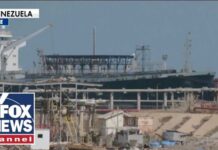

President Trump’s claim that the U.S. secured majority control of 65 billion Venezuelan barrels landed before any public deal text, leaving big stakes and bigger questions.
Story Highlights
- Trump said the U.S. gained majority control of 65 billion barrels “at no taxpayer cost.”
- Reuters and Axios reported ongoing talks for stakes in more than a dozen oil fields, not a published mega-transfer.
- Reports say private companies would develop fields while the U.S. seeks long-term access and lower import costs.
- Key documents and final contract terms were not released, keeping core claims unverified in public records.
What Trump Announced And Why It Matters
On August 28, President Trump said the U.S. secured majority control of more than 65 billion barrels of Venezuela’s proven oil reserves and called it the “biggest oil deal in world history.” He also said the arrangement would not cost taxpayers. The statement drew immediate attention at home and abroad because it implies a huge shift in energy security and foreign leverage. Newsrooms quickly sought deal details in agency records or contracts, but none were released that day.
Axios and Reuters reported that the administration was in talks with Venezuela’s interim authorities about an ownership stake in oil resources. Their reports described negotiations around more than a dozen productive fields, with a possible lease model. Sources said private companies, including American firms, would develop the fields, and the goal was long-term access to reserves and lower import costs. Those details support a major access push, but not a published transfer of control over 65 billion barrels.
What We Know From Public Reporting
Reuters’ coverage stressed that officials had provided few specifics and that the arrangement remained under discussion. The reports pointed to a structure where private firms invest and operate, while Venezuela receives revenue. That points to a commercial path rather than a direct public purchase. It also fits a recent policy arc in which Washington eased some oil sanctions to let foreign firms return and to restart projects, which could help raise output over time from a low base.
Earlier in 2026, separate statements by Trump framed Venezuela’s oil as being turned over or monetized for U.S. benefit, including tens of millions of barrels sold at market price. Those claims set a narrative that America could secure oil supply without direct budget spending. Critics asked who controls the revenue and under what authority, especially after reports about funds routed through foreign accounts. These threads made clarity on the legal deal form even more important.
Where The Record Is Still Thin
No public contract, lease, or executive agreement has surfaced that shows the United States government obtained majority control over the cited reserve base. The number in the announcement appears to reference Venezuela’s large proven reserves, but the press reports describe negotiations tied to selected fields. That mismatch leaves open how much oil is actually committed, for how long, and under what rights. Until documents appear, the core control claim rests on a statement, not on filed terms.
Industry signals also urge caution. Major oil companies have called Venezuela “uninvestable” because of legal risk, decayed infrastructure, and politics. Investors told reporters they were waiting for Venezuela to publish new contract models with precise terms. Some companies signed preliminary agreements, but delays persisted in finalizing greenlights. These facts do not kill the deal idea, but they show any field revival will be complex, costly, and slow, not instant or free.
What It Could Mean For Americans
If the talks yield stable access and real output growth, Americans could see steadier supply and some price relief at the pump. Private firms would bear capital costs, which aligns with the “no taxpayer cost” claim in spirit. But enforcement, sanctions waivers, security, and dispute handling can shift costs back to the public in hidden ways. Only signed terms can prove who pays, who profits, and who decides when things go wrong. Transparency is the guardrail against favoritism and waste.
🚨 Trump’s ‘Biggest Oil Deal In World History’ With Venezuela
The deal could give the U.S. access to vast Venezuelan oil reserves and attract $100 billion in investment.
But can Venezuela ramp up production quickly enough?
Watch: https://t.co/onhEEhqLjE#Trump #Venezuela…
— CNBC-TV18 (@CNBCTV18News) August 29, 2026
Many readers on the right and left share the same worry here: big moves get announced, but the fine print stays hidden. That pattern fuels distrust that well-connected players win while citizens carry the risk. The path forward is simple but not easy. The White House and agencies should release the legal instrument, annexes, any sanctions waivers tied to it, and the selection rules for private operators. Clear documents will show whether this is a landmark win or just headline heat.
Sources:
aljazeera.com, nypost.com, axios.com, reason.com, reuters.com, dw.com, wtaq.com, bloomberg.com, abc7.com, bbc.com, cnbc.com
© newsalertdaily.org 2026. All rights reserved.