

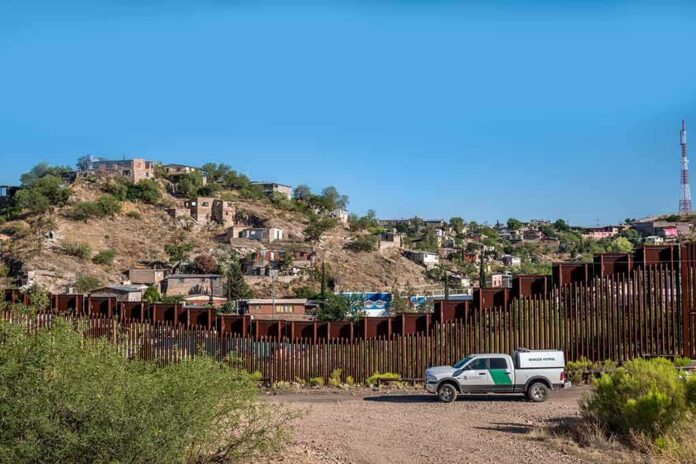
Border wall crews have been ordered to stop drilling new water wells in southern New Mexico after state officials and ranchers warned that unpermitted pumping in a deep drought could drain the aquifers their communities depend on.
Story Snapshot
- Federal border wall contractors drilled at least eight groundwater wells in southern New Mexico without state permits during a severe drought.
- Customs and Border Protection (CBP) now says contractors must stop drilling new wells but has not clarified if existing wells will keep pumping.
- New Mexico’s top water agency insists all non-tribal wells on any land, including federal land, must have state permits.
- Local ranchers, who mostly support strong border security, fear high‑volume pumping for wall construction could cripple their domestic and livestock wells.
Border wall work collides with New Mexico water law
New Mexico’s Office of the State Engineer, the agency that oversees wells statewide, says staff have identified at least eight wells drilled for border wall work along the southern border that have no state permits. Officials warn there could be more wells they have not yet inspected. These wells sit on a narrow federally owned strip of land called the Roosevelt Reservation that runs along the border. Construction crews use the water to mix concrete, build roads, and control dust at wall sites.
New Mexico water law says all non‑tribal wells, whether on private, state, or federal land, must be permitted by the state engineer before drilling or pumping happens. State officials argue this rule applies even when the land is controlled by the federal government. The system lets the state track who uses water, how much they pump, and whether new wells hurt older users. Without permits, officials say they cannot see how construction pumping affects aquifers already weakened by long‑term drought.
Ranchers warn that high‑volume pumping risks local wells
Ranchers in Luna County and nearby areas first raised the alarm when they saw deep new wells and heavy truck traffic near their pastures. Many ranchers say they back strong enforcement at the border but fear that wells drilled for construction are pulling hundreds of gallons of water per minute from shared aquifers that also feed their home and livestock wells. One state inspection in July found two border‑wall wells pumping about 200 gallons per minute, a scale that can quickly lower water levels in stressed underground basins.
Farmers and ranchers worry that deeper, high‑capacity wells for border projects will capture most of the remaining water, leaving shallower domestic wells to run dry or lose pressure. They point out that their families and herds depend on these aquifers in a region with little surface water and scarce rainfall. Some ranchers describe the drilling as “stealing their water” and say it shows how large federal projects can ignore local realities when resources are tight. Their fight, they stress, is not against border security itself but against losing the basic water they need to survive.
Federal claims of immunity meet growing pushback
In letters and public statements, Customs and Border Protection has argued it does not need state permits to drill or pump groundwater on federal land for border wall work. In the first Trump term, CBP applied for and received state permits for similar construction wells, but this time it has claimed federal immunity from the permitting system. That change has frustrated New Mexico officials, who say the federal government is breaking with past practice and dodging basic accountability.
We can secure our southern border while protecting the water our ranchers and communities depend on.
When ranchers raised concerns that new wells being drilled for border wall construction could strain Southern New Mexico’s already limited water supply, Rep. Jenifer Jones took… pic.twitter.com/YZgcoLR319
— New Mexico House Republicans (@NMHouseGOP) July 31, 2026
After months of complaints, a CBP spokesperson now says border wall contractors in New Mexico have been told to stop drilling new wells, but the agency has not said whether water will keep flowing from wells already in place. New Mexico’s Office of the State Engineer says it lacks direct power to shut down drilling inside the federally declared National Defense Area near the border and warns legal fights could drag on for years. The agency is pushing instead for a negotiated plan that would mix some pumping with purchased water and better tracking of use.
Shared frustration with federal power and local impacts
For many New Mexicans, this clash over border wall wells goes beyond one project. It fits a wider feeling, on both the right and the left, that distant federal decision‑makers treat local communities as an afterthought. Ranchers who back President Trump’s push for tougher border control now see contractors drilling without permits and shrugging off state law, and they worry elites in Washington care more about finishing a project than protecting families who have ranched this land for generations.
Residents who are skeptical of the border wall see the same pattern from a different angle. They point to federal claims of legal immunity, thin disclosure of how many wells exist, and little study of aquifer impacts as signs of a government that does not feel bound by the rules everyone else must follow. Both sides share a basic concern: when powerful agencies can tap vital resources without local oversight, ordinary people bear the risk, whether the issue is water, energy, or immigration.
Why drought makes this fight more urgent
New Mexico’s own drought guidance warns that heavy pumping during dry periods can quickly lower water levels and stress wells, especially in rural areas. The state encourages well owners to track their water levels and conserve outdoor use when supplies are tight. Those warnings frame the border wall dispute. Ranchers are not fighting over a surplus; they are arguing over the last dependable water they have in a landscape that has been dry for years.
The border wall wells show how fast local trust can erode when federal projects tap shared resources without clear limits or transparency. For many Americans watching from afar, this story echoes a broader fear: that big decisions about land, water, and security are made far away, by people who will never feel the direct cost if wells run dry and small towns fade. That concern crosses party lines, and this New Mexico fight over water and the wall is one more sign of a federal system struggling to balance security with stewardship.
Sources:
washingtontimes.com, wbur.org, npr.org, krqe.com, instagram.com, youtube.com, popsci.com, reddit.com, abqjournal.com, lascrucestoday.com, hcn.org
© newsalertdaily.org 2026. All rights reserved.