
An off-duty FBI agent shot and killed a 27-year-old man in Chicago after reports he was firing into a homeless camp, and the paper trail before the shooting exposes familiar gaps in a system many Americans say no longer works.
Story Snapshot
- The FBI confirmed an agent-involved fatal shooting in Chicago’s Pilsen neighborhood and opened an internal review.
- Officials identified the man as Oscar D. Isaya-Corrales, 27, and said he was pronounced dead at the scene.
- ABC7 and FOX 32 reported sources said he was firing toward a homeless encampment before the agent intervened.
- Public records show a May shoplifting arrest and a June warrant after a missed court date, but no verified immigration file.
What Authorities Confirmed About the Shooting
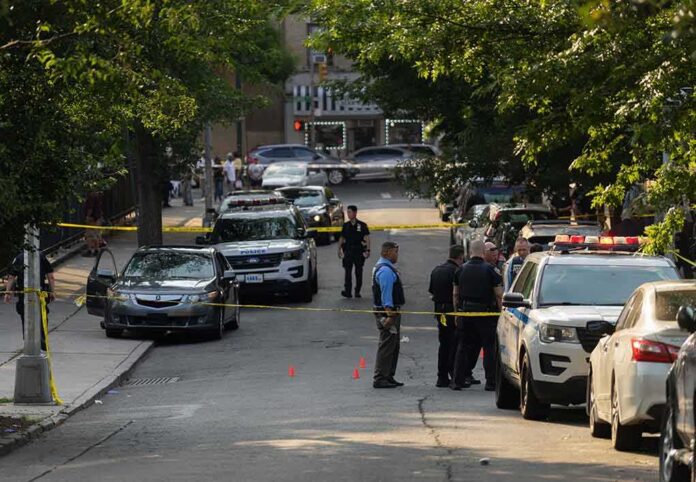
The Federal Bureau of Investigation (FBI) said it is reviewing an agent-involved shooting near West 18th Street and South Union Avenue on October 26, 2026. The FBI’s Inspection Division is handling the review, which is standard after such incidents. The Cook County Medical Examiner identified the man who died as Oscar D. Isaya-Corrales, age 27. Local reporting said officers reached the scene and found the agent holding a gun after the shooting was over.
Federal law-enforcement sources told local outlets the agent was off duty and driving home when he saw gunfire near a homeless encampment. ABC7 reported a senior official said Corrales was firing toward people before the agent stopped and engaged him. FOX 32 relayed a similar account, citing the FBI and Fox News reports. Police have not released body-camera footage or a full incident report to the public at this time.
What Led Up to the Encounter
Court and police records show Chicago officers arrested Isaya-Corrales on May 25, 2026, in a retail theft case involving necklaces valued at about three hundred twenty dollars. The arrest report also flagged a Guatemalan passport that “did not belong to him,” though officers could not confirm if it was stolen at the time. Records show a judge issued a warrant on June 1 after he failed to appear in court on the case.
These records document a missed court date and an open warrant months before the shooting. They do not confirm an immigration arrest, a federal custody decision, or a release under a specific presidential policy. No agency has produced a case number, detainer, removal file, or parole record tied to Isaya-Corrales. Claims that he was “caught and released under Biden” remain unverified without those documents.
Conflicting Details and Open Questions
A Chicago alderman said witnesses described two bursts of gunfire minutes apart, which suggests an earlier shooting followed by the agent’s arrival. That account adds uncertainty about the exact sequence before the fatal shots. The FBI has not publicly stated whether the agent issued commands, whether anyone recovered a firearm from the scene, or how many rounds were fired. An internal review is underway, but results are not yet public.
Key questions remain. Did police recover the gun allegedly fired into the encampment? What do shell casings, camera footage, and 911 audio show about timing? Did prior local or federal decisions miss warning signs, or were there no clear red flags beyond a nonviolent shoplifting case and a missed court date? Without records, the public is left with partial facts and unnamed sources. That vacuum invites political spin from both sides.
Why This Case Hits a National Nerve
This case touches three separate debates that often get blurred. First, was there any past immigration custody at all? Second, if yes, who made the release call and under what law or policy? Third, would a different call likely have stopped this event? The available reporting answers none of those fully. What we have are local arrest records, a missed court date, and a fatal encounter now under review.
Many Americans see a pattern: agencies do not share data well, courts move slowly, and leaders point fingers after tragedies. Supporters of stricter immigration rules see failure to detain risky people. Civil-liberties advocates warn that holding people longer before trial can raise future crime and harm communities, according to several studies on pretrial detention effects. Both concerns center on safety and trust. Both need hard records, not guesses, to build real fixes.
What to Watch Next
Watch for the FBI Inspection Division findings, any release of surveillance or body-camera video, and forensic details like ballistics and recovered weapons. Look for the full Cook County case file on the May arrest, including bond terms and notice of the hearing he missed. Most of all, watch for an official federal immigration record with a case number. That is the only way to confirm or reject claims about a past “catch and release” decision.
Law and order requires truth and transparency, not headlines alone. If agencies publish verified records quickly, the public can judge facts, not rumors. If they do not, this case will become another symbol of a government that withholds answers while communities live with the fallout. That cycle feeds anger on the right and the left. Ending it starts with documents, not talking points.
Off the Books Migrant Homicide … FBI Agent Involved in Fatal Shooting of Wanted Criminal Venezuelan in Pilsen October 26 2026https://t.co/o4P6hsbHLb® Crime Report
CHICAGO — Oscar D. Isaya-Corrales, a 27-year-old Venezuelan migrant wanted on an outstanding warrant in a… pic.twitter.com/4IMtjl5TDa
— SubX.News® (@SubxNews) October 27, 2026
Sources:
nypost.com, nbcchicago.com, fox32chicago.com, abc7chicago.com, univision.com
© newsalertdaily.org 2026. All rights reserved.