
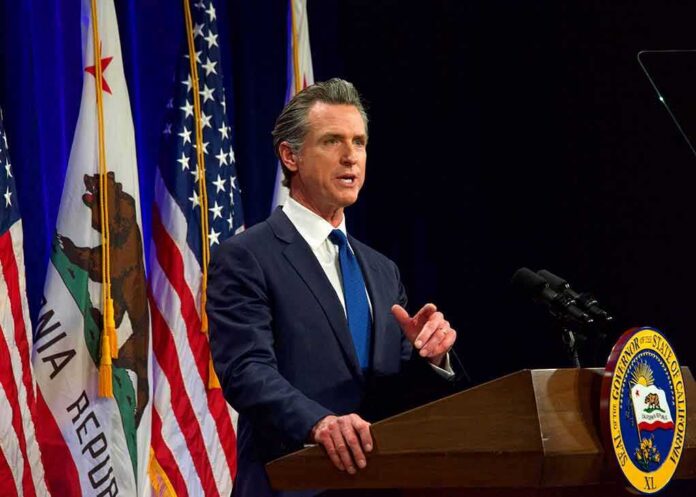
Governor Gavin Newsom signed more than a thousand bills in 2026, setting up a wave of rule changes that will touch health care, elections, immigration, drivers, schools, and energy across California.
Story Snapshot
- Newsom signed over 1,000 bills; most take effect January 1 after passage.
- New laws target elections security, immigration enforcement limits, and health care access.
- Drivers, schools, and energy policy see notable rule shifts, with phased timelines.
- The volume highlights how state laws can quickly reshape daily life and costs.
What California’s 2026 Signing Spree Actually Did
Governor Gavin Newsom approved a large batch of bills through late summer and fall 2026, covering many parts of daily life. Official releases list measures on topics like driver licenses, school safety, energy, health care, election security, and immigration enforcement. The Governor’s office detailed signings on dates including July 13, August 17, August 22, August 24, August 27, September 14, September 19, September 20, September 27, September 29, and September 30, confirming the scope and sequence of actions.
The Orange County Register reported that lawmakers sent 1,160 bills to the Governor in 2026, and Newsom signed more than one thousand while vetoing about 10.3 percent, a typical end-of-session pattern in Sacramento. This shows the scale of change moving at once and why residents often feel sudden rule shifts at the start of the next year. The report underscores how wide the policy net was, even as the effect of each law will differ by community and sector.
Elections, Immigration, and Civil Rights Measures
Election security changes figure prominently. One new law makes it a felony to seize ballots, election records, or certified voting tools before results are certified, and to direct others to do so. The aim is to guard chain of custody and reduce interference during vote counting. The Governor framed this as shielding local election workers and voters from pressure during a tense national climate and to deter disruptive actions around ballot handling.
Immigration-related bills focus on detention conditions, transparency, family services, and access to state facilities. The Governor’s office described the package as strengthening civil rights and public safety while limiting what it called “Orwellian” tactics by federal immigration officers. The measures reflect California’s long-running approach to protect immigrant communities and set state standards for cooperation and oversight. State leaders also noted a coordinated signing of 21 related bills on one day.
Health Care Access, Reproductive Care, and Autism Services
Health care bills range from maternal care access to administrative fixes. A package expanding reproductive health protections seeks to support providers and patients, including emergency services tied to nurse-midwives and legal shields for certain kinds of care. Another law addresses autism services by defining qualified paraprofessionals within the Medical Practice Act, with the goal of improving support for families seeking therapy and assessments for children with developmental needs.
Separate actions touched Medi-Cal rules where enrollees have other coverage, signaling adjustments to how managed care plans coordinate benefits. While technical changes are dry, these details shape real outcomes like referrals, network access, and who pays first for services. Such tweaks can ease paperwork for some families yet also require new training or system updates for plans and providers, which may roll out over months.
Drivers, Schools, and Energy Policy Changes
For drivers, a new law expands mobile driver’s licenses through the Department of Motor Vehicles. The Governor’s office said this aims to cut costs and reduce red tape, letting millions access secure digital IDs alongside physical cards. Agencies will still need to educate the public and phase in acceptance rules across airports, agencies, and private businesses. Adoption will vary, so many residents will carry both forms for now.
In 2025 he rejected 123 of 917 bills (about 13%), and CalMatters found cost was the reason he cited most often.
The cases that match the claim are specific and recent.
**Homelessness spending.** In 2024 the state auditor reported California had spent about $24 billion on…
— Reply Guy in Witness Protection 🥸 (@smellyfarts24) October 8, 2026
Schools and local safety rules also shift. One law creates electric bicycle safety and training programs for students, reflecting rising e-bike use and injuries among teens. Another allows electrified security fences with defined standards, a move backed by businesses and some communities to deter property crime. Supporters say these steps improve safety and order; critics often warn about costs and unintended risks, but the state has now set the baseline for local compliance.
Environmental Reviews and the State’s Energy Push
Environmental and energy actions continue California’s long arc. One law ties environmental reviews to coal handling, storage, and export, signaling tighter scrutiny of fossil fuel infrastructure. Another package says it will speed electric vehicle growth, expand consumer choice, and strengthen energy independence, including several Senate and Assembly bills named in the release. Agencies and utilities must translate these goals into real projects, timelines, and rate impacts over years, not weeks.
Most new California laws start on January 1 after they are chaptered, unless a bill sets a later start or an urgency date. The legislative process explains why residents often feel many changes hit at once each new year. The Governor has a set window to sign or veto, and once a bill is signed and chaptered, it becomes a statute. The result is a predictable but compressed cycle of annual policy shifts.
Why This Matters Beyond Party Lines
Californians on the left and right share doubts that government serves regular people well. This rush of laws shows how much power the state wields over daily life, from how you vote to how you ride, drive, work, and see a doctor. Supporters call it problem-solving at scale. Critics see complexity, cost, and mission creep. Both views fit one truth: when hundreds of laws change at once, transparency and clear rollout plans are not luxuries; they are the only way to keep public trust.
Sources:
nypost.com, gov.ca.gov, californiaglobe.com, ocregister.com, assembly.ca.gov
© newsalertdaily.org 2026. All rights reserved.