

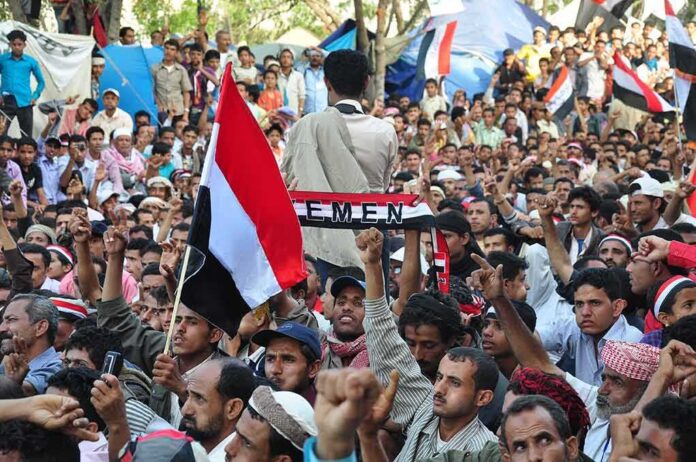
Yemen’s internationally backed leader urged citizens to “general mobilization,” pairing the call with a promised amnesty for Houthi defectors on the country’s September 26 Revolution anniversary.
Story Snapshot
- Rashad al-Alimi asked Yemenis to join security and armed forces through official enlistment channels.
- The address promised a forthcoming amnesty for those who leave the Houthi movement and stop fighting.
- Multiple outlets confirmed the mobilization message and amnesty linkage across the same news cycle.
- The move fits a long war pattern that mixes recruitment drives with incentives to defect.
Al-Alimi’s Call and What He Asked Citizens To Do
Rashad al-Alimi, the Chairman of Yemen’s Presidential Leadership Council and the Supreme Commander of the armed forces, called for “general mobilization and national mobilization.” He urged citizens to rally behind the armed and security forces and to join their ranks through official channels. The address, delivered on September 25–26, marked the 64th anniversary of the September 26 Revolution. The presidential office framed the push as a return to the Republic and constitutional legitimacy, seeking broader public support and manpower.
The mobilization appeal arrived with clear institutional framing. Reports identified al-Alimi in his role as head of the Presidential Leadership Council and commander of the military, underscoring the authority behind the message. The government’s request focused on formal enlistment pathways, not ad hoc recruitment. That detail matters in a conflict where irregular mobilization has often fueled abuses. Several regional and international outlets carried the same quotes and core message, signaling broad alignment in basic facts.
The Amnesty Offer for Houthi Defectors
The address linked mobilization to an offer of amnesty for members of the Houthi movement who leave the group and stop fighting or working for it. The pledge, as reported, would be issued later according to legal procedures, which means it is a promise of policy rather than a signed decree at this stage. The proposal aims to peel fighters away from the Houthis and reduce confrontation, a tactic seen before in long wars where incentives compete with fear and loyalty to shift the balance.
Coverage from other outlets reinforced the amnesty link, stating that those who defect to government forces would qualify once the amnesty is enacted. That approach pairs a stick with a carrot: stronger government ranks alongside a path back for opponents who disengage. The policy’s impact will turn on speed, clarity, and trust in its legal protections. The announcement did not specify numbers or timelines for implementation, leaving the scale and pace of results uncertain.
Why This Fits Yemen’s Wartime Pattern
Yemen’s conflict has leaned on recruitment drives and messaging wars for years. Armed groups have tried to signal strength, draw in new fighters, and encourage defections. This moment follows that pattern: a formal mobilization call, publicized across media, and a set of incentives meant to split the ranks of the other side. The structure is familiar in conflicts where manpower and legitimacy are contested as fiercely as ground. The tactic is not new, but timing and execution will decide how much it moves the needle.
📊 YEMEN CRISIS & MACRO SQUEEZE | September 26, 2026
Yemen faces a dangerous military and humanitarian escalation as the fragile calm shatters, sparking severe supply chain blockades. Here is your quick market breakdown:
📉 Damaging Economic Metrics:
• GDP Growth (2026 Shift):…— Lucky (@Lucky_m_X) September 26, 2026
The war’s human cost also shapes these choices. Rights reporting has documented large-scale recruitment by the Houthi movement, including of children. Those reports point to tens of thousands of new fighters since late 2023 and continued use of minors, a practice widely condemned. In that environment, the government’s insistence on official channels and a route back for defectors seeks to contrast with practices tied to coercion and indoctrination, even as both sides continue to fight for advantage.
What Americans Should Watch
American readers should watch three things. First, whether the Yemeni government issues a formal amnesty text soon and defines who qualifies. Second, whether enlistment numbers rise and defections occur in measurable ways. Third, whether any shift affects the security of Red Sea shipping lanes and the wider region. Clear legal steps and transparent numbers will decide if this is a message play or a turning point. Until then, the move signals intent and tests public will.
Why This Matters Across U.S. Politics
For conservatives focused on border security, energy stability, and global supply chains, Yemen’s turmoil touches shipping routes and oil markets. For liberals focused on human rights and civilian harm, the conflict’s recruitment practices and humanitarian strain remain central. For both, this is another case where leaders ask citizens to bear the cost while elites bargain over power. The risk is mission creep without clear results; the hope is a lawful off-ramp for fighters who choose to stop.
Sources:
zerohedge.com, aljazeera.com, aa.com.tr, jpost.com, arabnews.com, academic.oup.com
© newsalertdaily.org 2026. All rights reserved.