
newsalertdaily.org — The Pentagon has quietly turned its own press office into a classified zone and locked out reporters—despite a federal court already warning that its press rules violated the Constitution.[1][2]
Story Snapshot
- The Pentagon has redesignated its press office as a classified space and barred journalists from entering.
- Earlier, reporters were told they could be banned if they published any information not officially approved for release.[1][2]
- A federal court ruled the Pentagon’s 2025 media rules violated the First and Fifth Amendments.[1][2]
- Critics say the move undercuts transparency and echoes the worst instincts of the permanent security bureaucracy.
Pentagon Turns Press Office Into Classified Zone
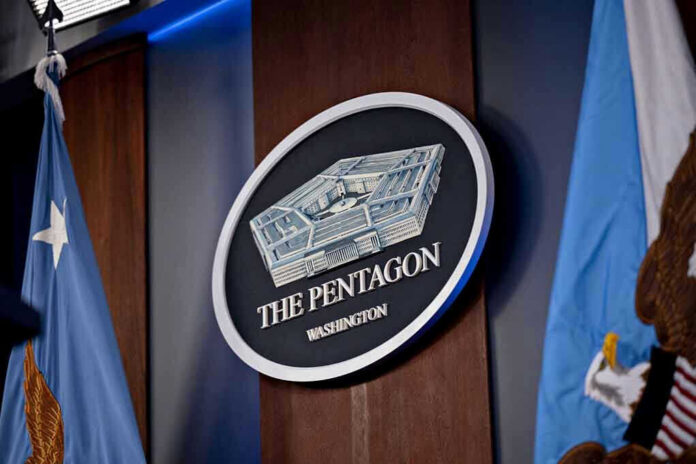
The Defense Department has formally barred journalists from entering the Pentagon press office, saying the space has been redesignated as a classified area and is now off-limits to reporters. Officials state the office has become a “Sensitive Compartmented Information Facility” where speechwriters and staff handle classified material, and therefore only personnel with the proper clearances may enter. This change means reporters can no longer walk in to meet public affairs officers, gather background information, or informally verify details inside the building.
The new restriction lands on top of already tight physical controls that limited where reporters could move without escorts. Updated Pentagon guidance from 2025 specified that accredited media had unescorted access only to a narrow slice of corridors on a single floor during business hours, underscoring that access was never unlimited. By turning the press office itself into a classified workspace, however, the department has effectively removed the central hub where journalists historically engaged directly with press staff and sources on a daily basis.
From Restrictive Pledges To Constitutional Rebuke
This latest step follows an earlier Pentagon media policy that provoked a major backlash from news outlets and a decisive defeat in federal court.[1][2] In 2025, the Pentagon told journalists they risked losing credentials if they reported on any information not officially approved for release, conditioning access on a pledge not to gather or publish unapproved material.[1][2][3] Reporters responded by turning in their access badges rather than sign away their independence, cleaning out workspaces before a deadline that forced them to choose between their jobs and their principles.[1][2]
A federal judge in Washington, D.C., later ruled that the Pentagon’s press rules violated the First and Fifth Amendments, finding they amounted to viewpoint discrimination and unconstitutional censorship.[1][2] Coverage of the ruling emphasized that the court viewed the policy as an attempt to control not just building access but the substance of what journalists could report.[2] The decision forced the Pentagon to walk back some measures and led to an announcement that certain media offices would be removed from the building entirely, with reporters pushed to off-site locations.[2]
Security Justifications Versus Press Freedom Concerns
Pentagon officials justify these changes by citing the need to protect classified information and reduce the risk of leaks in an era of digital networks and rapid disclosure. Commentators with national security experience note that media access inside the Pentagon has always been controlled and subject to layered security, dating back to the building’s early years. The department argues that converting the press office into a classified facility reflects operational realities, given that staff increasingly handle sensitive material in the same spaces where they interact with the press.
Press freedom advocates and many reporters counter that the cumulative effect looks less like narrow security tailoring and more like a broad effort to manage what journalists can see and hear.[1][2][3] A briefing document on the revised access rules stresses that media entering the Pentagon Reservation must adhere to strict terms, and critics argue these conditions make it harder to conduct independent newsgathering rather than simply protecting secrets. Mick Mulroy of Harvard’s Belfer Center warns that the new media policy risks eroding transparency and public trust, even as registered media already understand they cannot lawfully transmit classified material.
Why This Matters For Constitutional Conservatives
This clash fits a familiar pattern in national security: officials invoke classified information and operational security while journalists and civil libertarians warn about shrinking access and expanding message control.[1][2] The core issue is not whether the government may keep secrets or secure certain rooms—it can—but whether these restrictions are narrowly focused on genuine security needs or instead function as a way to regulate what the press can learn inside a public-facing institution.[1] The federal court’s ruling underscores that even at the Pentagon, the First Amendment still draws real constitutional lines.[1][2]
🚨🇺🇸 The Pentagon just classified its own press office and locked reporters out of it, and that should give everyone pause…
The War Department redesignated the office as a secure facility, citing speechwriters who now share the space and handle classified material.
The… pic.twitter.com/J38OhyC7Aa
— Mario Nawfal (@MarioNawfal) June 2, 2026
For conservatives who value limited government and constitutional checks on federal power, this fight is not about defending legacy media outlets; it is about whether unelected bureaucrats can sidestep a court ruling by re-labeling press spaces as classified and boxing out independent scrutiny.[1][2] When the nation’s largest military bureaucracy tightens the door on journalists, it also tightens the door on the American people who fund and oversee that institution through their elected representatives.[1] Maintaining genuine transparency at the Pentagon is part of safeguarding liberty, not a luxury to be traded away for bureaucratic convenience.[1][2]
Sources:
[1] Web – Pentagon defends banning reporters from press office by turning it …
[2] Web – Pentagon Rules for the Press, 2025 | The First Amendment …
[3] YouTube – Pentagon journalists turn in access badges after rejecting …
© newsalertdaily.org 2026. All rights reserved.