
When President Trump warned about “rigged” elections, the bigger shock was which networks — and lawmakers — refused to give his speech a prime-time spotlight.
Story Snapshot
- Major television networks ABC, NBC and CNN did not air Trump’s election-security address on their main channels, moving it to smaller streaming platforms instead.
- Republican allies blasted the decision as censorship, while Trump urged Congress and regulators to consider revoking broadcast licenses over what he called a “fraud” on viewers.
- Democratic critics focused on Trump’s unproven claims about the 2020 election and foreign interference, arguing networks had a duty not to spread misinformation.
- The fight over one speech has widened into a bigger battle in Congress over media power, free speech, and public trust in elections.
Networks decline, and Congress takes notice
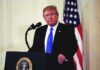
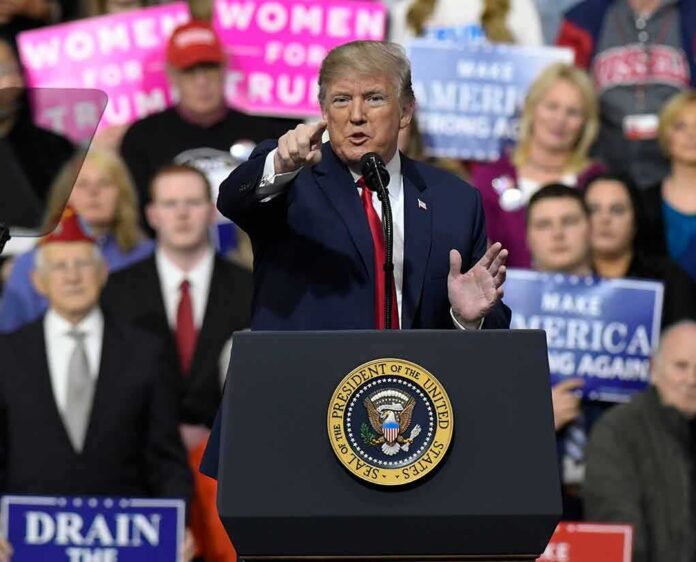
On Thursday night in Washington, President Donald Trump gave a prime-time address on election security from the White House, warning of alleged foreign access to voter data and repeating claims about the 2020 election. ABC, NBC, and CNN chose not to air the speech live on their main broadcast channels, instead streaming it online and on digital news platforms. This move drew immediate fire from Trump and quickly became a flashpoint for lawmakers already skeptical of both the media and the election system.
ABC said Trump’s remarks would run on its ABC News Live streaming service and ABC News Radio, with regular newscasts covering key developments afterward. NBC used a similar approach, placing live coverage on its NBC News NOW streaming platform while keeping the broadcast schedule unchanged on its main network. CNN told reporters it would treat the address as a “news event,” stream the speech online, and follow up with analysis from election and intelligence experts rather than airing it straight on cable.
Republican anger over “media blackout” and licenses
Republican lawmakers aligned with Trump described the network decisions as a “media blackout,” arguing that Americans were being blocked from hearing their own president speak about election security. In his speech and in remarks afterward, Trump said NBC and ABC’s refusal to carry him live was an act of “fraud” against viewers and suggested that Congress and the Federal Communications Commission should consider revoking their broadcast licenses. Some House Republicans echoed that idea, promising hearings on whether large media companies misuse their government licenses when they sideline presidential addresses.
These Republicans framed the issue in familiar “America First” terms, saying coastal media elites use their power to shape what ordinary citizens can see, especially on questions like voter fraud, immigration, and national security. They tied the incident to long-running complaints about biased coverage, social media censorship, and what many on the right view as a “deep state” effort to control political debate. For older conservatives already frustrated with high costs, cultural changes, and distrust in institutions, the networks’ decision looked like one more example of powerful insiders ignoring their concerns.
Democrats focus on misinformation and mental fitness
Democratic lawmakers mostly backed the networks, saying they were right to be cautious about airing a speech heavy on unproven claims as if it were settled fact. Many pointed to Trump’s long record of false statements about the 2020 election and warned that repeating those claims on national television could further damage public trust in voting. Representative Alexandria Ocasio-Cortez argued that broadcasters have an “ethical obligation” not to air presidential remarks live if they are not rooted in evidence, stressing the need for context and fact-checking.
Veteran Democratic strategist James Carville went even further, criticizing CNN, ABC, and NBC for not airing the speech only because he wanted “blanket coverage” to show the president’s worsening behavior to the nation. Other Democrats took the opposite stance, saying focused clips and fact-checked segments were safer than giving Trump an open, unfiltered hour in prime time. For many liberals, the incident underscored a broader fear that unchecked falsehoods about elections, coupled with attacks on the press, are deepening the divide between the “haves” and “have-nots” and making honest debate harder.
Shared frustration: media power, election trust, and the “deep state”
Despite sharp party differences, the clash over Trump’s speech touched a nerve that runs across the political spectrum: the sense that powerful institutions decide what regular people get to see and hear. Research on the American media landscape shows that cable news and online platforms often fuel polarization by blending opinion, outrage, and selective coverage, while trust in both elections and journalism falls. Many citizens now believe media executives, tech leaders, and government officials work together to manage political speech, especially on hot-button topics like voter fraud and foreign interference.
Media scholars note that conflicts like this often become “outrage cycles,” where calls to boycott networks or “delete” channels trend online but rarely show up in hard subscriber data. Still, they deepen the feeling on both left and right that the system is rigged, whether by rich corporate owners or by partisan politicians using state power to punish critics. As Congress weighs new hearings on election security and media influence, the real test may be whether lawmakers pursue transparent fixes that rebuild trust, or simply use the anger to score points while the American Dream slips further from many families’ reach.
Sources:
pjmedia.com, yahoo.com, theguardian.com, abc.net.au, noticias.foxnews.com, thehill.com, detroitnews.com, usatoday.com, bostonglobe.com, law.stanford.edu, judiciary.house.gov, en.wikipedia.org, aclu.org, pmc.ncbi.nlm.nih.gov, rstreet.org, sites.bu.edu, journalism.uoregon.edu
© newsalertdaily.org 2026. All rights reserved.