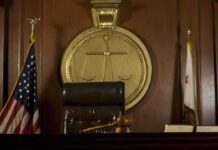

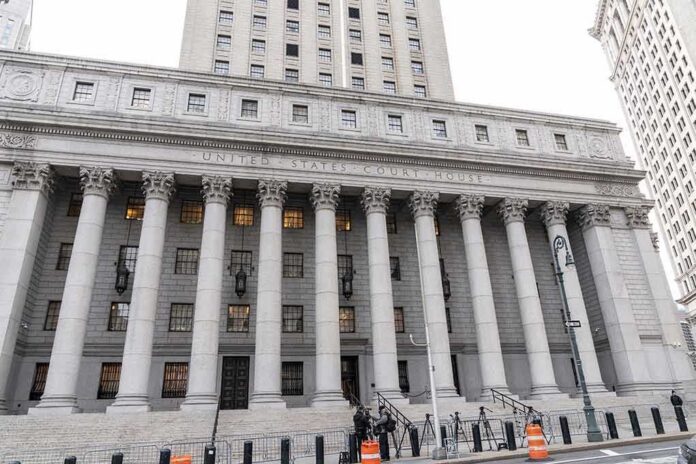
A federal judge just ruled that President Trump’s own Federal Communications Commission (FCC) broke the law by rushing to review ABC’s broadcast licenses years early.
Story Snapshot
- U.S. District Judge Loren AliKhan blocked the FCC from reviewing eight ABC-owned station licenses before they were due.
- The judge called the case “not a close case” and said the FCC likely retaliated against ABC for its speech.
- FCC Chairman Brendan Carr says the probe is about diversity, equity and inclusion (DEI) practices and equal-time rules, not punishment for content.
- The ruling is a preliminary injunction, not a final decision, so the legal fight over the FCC’s real motive continues.
Judge Finds FCC Rushed ABC’s License Review
Judge AliKhan granted Disney’s request to stop the FCC from moving forward with early renewal proceedings on eight ABC-owned stations. The FCC had ordered those stations to file for license renewal years ahead of their normal schedule. The judge found ABC was likely to win its claim that the early review violated the First Amendment.
AliKhan pointed to the severity of what ABC stood to lose. She wrote that the threat was “extreme, indeed existential,” because losing a broadcast license could knock a station off the air entirely. That kind of risk, she said, was enough to scare any broadcaster of normal courage into softening its coverage.
The judge went further than simply finding a plausible legal claim. She described the case as “not a close case,” language that signals strong confidence rather than a marginal call. Reports describe her conclusion as finding an unconstitutional act of retaliation tied to President Trump’s broader pressure on media companies.
Carr Says Investigation Targets DEI, Not Speech
FCC Chairman Brendan Carr pushed back hard on the retaliation claim. He said the early review grew out of a yearlong investigation into Disney’s diversity, equity and inclusion practices, not anything ABC broadcast. “This action is driven by investigation into DEI conduct, not any speech at all,” Carr told reporters.
Carr also pointed to a separate issue: whether ABC’s daytime show “The View” broke federal rules requiring equal airtime for political candidates. The FCC says its investigation covers possible violations of the Communications Act of 1934, including rules against unlawful discrimination.
Carr said Disney would face consequences only if the investigation proved real wrongdoing. “If Disney engaged in illegal DEI discrimination, if it failed to operate broadcast stations in the public interest, it will be held accountable,” he said. He also denied the White House pushed him to order the review.
Broadcast Licenses Carry Unique Government Leverage
This fight highlights a power gap that goes back decades. Unlike newspapers or websites, television and radio stations need government permission to use the airwaves. That gives the FCC leverage no other federal agency has over a news outlet, and legal scholars have long warned it can scare broadcasters into self-censorship even without an actual license revocation.
History shows outright license revocations over content are rare. In 92 years under the Communications Act, only a handful of stations have ever lost their licenses over biased or objectionable coverage. That rarity is part of why AliKhan’s finding of “existential” risk carried weight, even though the FCC never actually pulled ABC’s licenses.
Judge blocks FCC from early license review for ABC, which network says has had a chilling effect https://t.co/yHPbPwApi4
— Chicago Tribune A&E (@ChiTribEnt) November 26, 2026
The ruling is only a preliminary injunction. It stops the FCC’s early review for now and keeps the eight ABC stations on the air while the lawsuit continues, but it does not settle whether the agency’s motives were retaliation or a legitimate hunt for DEI and equal-time violations. That bigger question still awaits a final ruling.
Why This Case Matters Beyond ABC
For viewers across the political spectrum, the case taps into a shared worry: that powerful government agencies might use regulatory tools to punish speech they dislike, regardless of which party holds office. Conservatives who cheered FCC scrutiny of alleged media bias and liberals who fear government pressure on the press both have reason to watch how this case ends. The final answer on motive still has not arrived.
Sources:
cbsnews.com, apnews.com, reuters.com, nbcnews.com, ew.com, latenighter.com, kcentv.com
© newsalertdaily.org 2026. All rights reserved.