

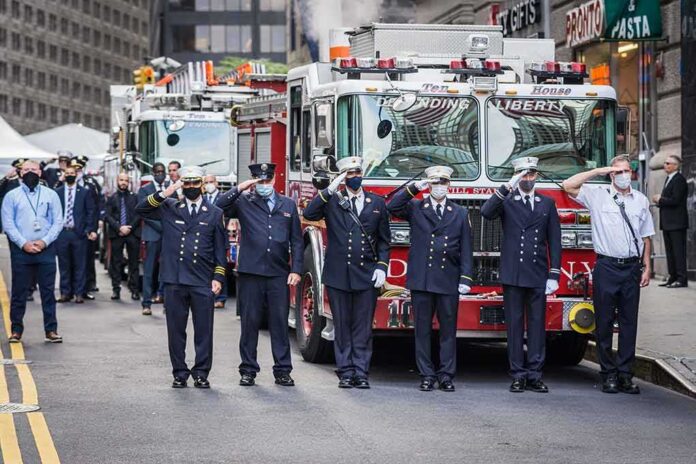
New York City reached 90 fire deaths this year after two more people died in separate daytime blazes, nearly doubling the toll at this point in 2025.
Story Snapshot
- Fire Department of New York reported 90 fire deaths from 62 fires so far in 2026.
- Two latest deaths occurred hours apart in Brooklyn and the Bronx, officials said.
- This year’s toll is far above the 51 deaths at the same point in 2025.
- City Council held an emergency hearing as battery and home fire risks draw concern.
What Happened In The Latest Fires
Fire Department officials said two people died Thursday in separate fires that broke out in broad daylight. One blaze started around 10:15 a.m. on the first floor of a four-story building on Lincoln Place near Classon Avenue in Crown Heights, Brooklyn. Another began about 12:25 p.m. on the second floor of a private home on Metcalf Avenue near East 172nd Street in the Soundview section of the Bronx. The second victim was identified as Zaidan Haruna.
Reporters attributed the citywide totals to the Fire Department of New York, which said 90 people have died in 62 fatal fires so far in 2026. That count jumped with the two new deaths and places this year’s toll far above the 51 deaths recorded by this point last year. Local coverage tied the updated figures to ongoing briefings and agency data shared with the press.
Why The Numbers Are Rising Now
New York City lawmakers convened an emergency hearing to question fire leaders about the rise in deadly fires and the role of lithium-ion batteries. Officials cited a mix of risks in homes, including older buildings without modern protection, illegal rooming setups, and bad wiring. Reporters also noted more fires in recent months that involved e-bikes or similar devices, even as investigators continue to sort out the exact cause in some cases.
This fall’s deadliest incident shows how fast conditions can turn fatal. On November 5, a three-alarm fire tore through a Sunset Park rowhouse and killed six people. Crews removed electric bikes from the scene and added a hazardous materials response. Investigators were still working to confirm whether batteries started that fire, while officials stressed that many dangers, not just one, are driving the city’s 2026 death total.
Short-Term Spike, Long-Term Perspective
The jump to 90 deaths marks a sharp reversal from recent years when annual fire deaths often stayed below 100. The Fire Department reported 66 civilian deaths in 2019 and 63 in 2020, reflecting decades of safety gains from alarms, sprinklers, and code updates. Today’s spike does not erase that long-run progress, but it does show how quickly risk can rise when common hazards stack up in older homes and dense neighborhoods.
City Council materials add more context on volume and risk. Residential structural fires rose about six percent from fiscal year 2025 to fiscal year 2026, moving from 20,180 to 21,475 incidents. Battery-related fires also increased across the period, as lawmakers and agencies pushed for safer charging, better storage, and stricter rules in multifamily housing. Those trends set the stage for more chances for small mistakes to become deadly.
What This Means For Everyday New Yorkers
Families face tighter budgets, rising rents, and aging buildings. Many keep e-bikes for work or store extra devices in cramped rooms. These are practical choices in a hard city, but they add fire risk. Officials urge basic steps that save lives: keep working smoke alarms, avoid charging batteries overnight or near exits, replace damaged cords, and do not block doors or stairs with storage. Simple changes can buy time to escape and help firefighters reach you.
I convened today's emergency @NYCCouncil hearing on fire safety because this year's increase in fires and fatalities in New York City is a crisis. pic.twitter.com/RCbBhOmedy
— Speaker Julie Menin (@SpeakerMenin) November 20, 2026
Leaders also face a policy test. New Yorkers on the left and right agree on one thing: government should protect people from clear, known dangers. That means enforcing safety rules in illegal apartments, inspecting older wiring, and setting firm standards for batteries sold and repaired in the city. It also means honest, timely data from agencies so the public can track what is working and what is not as this deadly year draws to a close.
Sources:
nypost.com, yahoo.com, patch.com, brooklynpaper.com, nydailynews.com, abc7ny.com, amny.com
© newsalertdaily.org 2026. All rights reserved.