

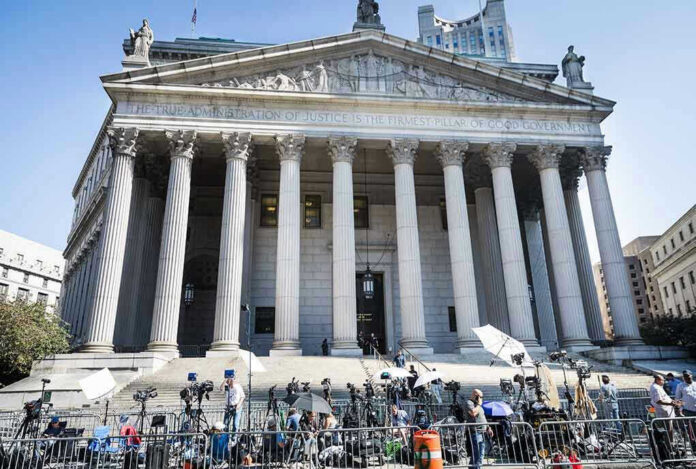
More than 280 arrests in a one-week federal sweep around Columbus reignited a raw fight over who keeps communities safe and who benefits from looking the other way.
Story Snapshot
- Federal officers arrested over 280 people in Ohio during a one-week operation targeting offenders.
- Columbus leaders say city resources should not aid immigration arrests without evidence of a crime.
- Research finds “sanctuary”-style limits do not raise overall crime rates.
- A 2027 Columbus mayoral race adds pressure as candidates stake out sharp positions.
What Triggered The Clash: A Week Of Federal Arrests
Immigration and Customs Enforcement said officers arrested more than 280 people across Ohio from December 16 to December 21. Officials described “Operation Buckeye” as a targeted effort that focused on people with criminal histories or pending charges. Local reporting tied several arrests to serious offenses, including assaults and drug crimes. The operation centered public attention on Columbus neighborhoods and workplaces, where residents saw visible federal activity and rapid detentions over several days.
Federal leaders framed the sweep as a necessary push to remove offenders who endanger public safety. Supporters argue that fast action is needed because repeat offenders often return to the streets. Critics counter that public messaging lumps all noncitizens together, which drives fear among law-abiding families. The weeklong timeline, the large number of arrests, and stark language from federal spokespeople set up a direct collision with the city’s approach and values.
City Hall’s Line: Police Trust First, Limited Role In Immigration
Columbus officials have said for years that city resources should not support federal immigration enforcement unless there is evidence of a crime. The policy aims to keep victims and witnesses willing to talk to local police. City leaders argue that federal raids can spread fear, reduce trust, and make neighborhoods less safe. The United States Department of Justice also sued the Franklin County Municipal Court in 2026 over alleged limits on arrests in court spaces, raising legal tensions in the region.
Mayor Andrew Ginther and other city leaders responded to past federal deployments by stressing that local police are focused on crimes under state and city law, not civil immigration status. They said this improves 911 reporting and helps solve cases. They also praised the cultural and economic role of immigrants in the city. City Hall’s position does not block federal officers from acting on their own authority; it only restricts city help without a criminal basis, which is a key legal and operational line.
What The Evidence Says: Crime Trends And “Sanctuary” Policies
Recent research reviewed by Congress found no crime increase in cities that adopted policies limiting help with federal civil immigration enforcement. One Stanford-linked summary reported no overall rise in crime tied to these policies. The analysis suggested that improved trust can even reduce some violent crimes, such as aggravated assault, by encouraging reporting and cooperation with police. That data challenges claims that any “sanctuary” limit automatically invites more crime.
Other studies have reached similar conclusions. A peer-reviewed overview found that “sanctuary” limits reduce deportations while not raising citywide crime rates. Researchers also reported that some neighborhoods in cities with constraints on local immigration enforcement saw lower homicide and robbery than those without such policies. The body of evidence remains mixed on some programs, but the core takeaway is steady: trust-based policing does not show a clear crime penalty in the data.
The Politics: A Mayor’s Race And A National Fault Line
Ohio State Representative Munira Abdullahi entered the 2027 Columbus mayoral race. Her bid challenges the City Hall status quo and signals a progressive platform on policing, housing, and civic inclusion. Local coverage notes she would be the city’s first female and first Muslim mayor if elected. The race forces sharper contrasts on immigration policy, public safety, and who City Hall should serve first when federal operations come to town.
This “population growth” comes with more crime, fraud, housing shortages, rising costs, terrible drivers, and English becoming uncommon in Columbus. Call it what it is: mass immigration and fake asylum seekers. The mayor and council call it growth. Residents get the consequences
— BigShoe (@biggiesshoe) November 22, 2026
Voters now face two linked questions. First, who decides the balance between federal enforcement and local trust, and what does that mean for safety on their block. Second, who gains from the systems in place—families seeking stability, officers trying to solve crimes, or political actors chasing headlines. Many residents on the left and right doubt that any level of government is putting them first. Clear data and plain accountability, not slogans, will decide whose approach earns public trust.
Sources:
youtube.com, centredaily.com, nbc4i.com, rairfoundation.com, virginialawreview.org
© newsalertdaily.org 2026. All rights reserved.