

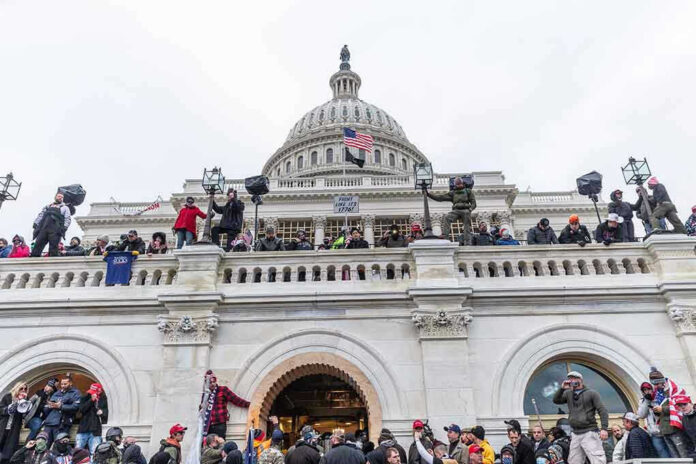
A federal judge just erased seditious conspiracy convictions for four Proud Boys leaders, raising sharp new questions about whether justice in America depends more on politics than on law.
Story Snapshot
- Trump’s Justice Department asked appeals courts to vacate 12 Jan. 6 seditious conspiracy convictions, including top Proud Boys leaders.
- A federal judge granted the motion for four Proud Boys, wiping out jury verdicts reached after full trials.
- Prosecutors cited “interests of justice” and broad discretion but offered no new evidence or clear legal error.
- Critics across the spectrum say the move deepens fears that elites can rewrite history and escape accountability.
What the judge just did — and why it matters
A federal judge vacated the seditious conspiracy convictions of four Proud Boys leaders after Trump’s Justice Department asked an appeals court to erase 12 Jan. 6 verdicts and send them back for dismissal with prejudice. These men had been found guilty by juries “beyond a reasonable doubt” for helping drive the Capitol attack that tried to stop the transfer of power on January 6, 2021. Vacating the convictions means, in legal terms, it is as if those jury findings never happened.
The motions were filed by U.S. Attorney Jeanine Pirro’s office in Washington, D.C., just before key briefing deadlines in the defendants’ appeals. Her filings said the Executive Branch believes it is “not in the interests of justice” to keep prosecuting these cases or similar ones, and asked the court to vacate the convictions so the indictments could be dismissed with prejudice. Dismissal with prejudice bars any future retry on the same charges, closing the door for good.
How this reverses some of the most serious Jan. 6 cases
The 12 affected defendants include leaders of the Proud Boys and Oath Keepers who had been convicted of seditious conspiracy, one of the most serious charges brought in the Jan. 6 prosecutions. Juries heard evidence of planning, communications, and coordinated actions aimed at disrupting Congress’s certification of the 2020 election, then returned unanimous guilty verdicts. Former Proud Boys leader Jeremy Bertino had even pleaded guilty in a separate seditious conspiracy case, admitting the group’s intent to stop the transfer of power.
These verdicts were not fringe outliers. By the time Trump returned to office, courts had convicted or accepted guilty pleas from hundreds of Jan. 6 defendants, with appeals rarely succeeding. Prosecutors and judges described seditious conspiracy as fitting organized efforts to use force to oppose the government’s lawful actions. For many Americans, these trials looked like proof that violent attempts to overturn elections would face serious consequences. Vacating the convictions cuts directly against that sense of finality.
The DOJ’s “interests of justice” argument — and what’s missing
In the new filings, Pirro’s office leaned on a long-standing concept: prosecutors have broad discretion to bring or drop charges, even after a conviction. The motions cite federal statutes and rules that let appellate courts vacate judgments and send cases back so the government can dismiss them. They also note that all 12 defendants had pending appeals, so acting now avoids full briefing and argument over whether their conduct met the legal standard for seditious conspiracy.
But the Justice Department did not point to any new evidence, constitutional violations, or clear trial errors to explain why these jury verdicts should vanish. There is no mention of faulty instructions, bad forensic work, witness lies, or withheld documents. The filings simply state that continuing the prosecutions is not in the “interests of justice,” without showing what changed. For citizens on both the right and the left who already suspect the system is rigged for the powerful, that silence feels like the government saying, “Trust us,” after the fact.
Reactions from critics and why both sides are uneasy
Democratic Representative Jamie Raskin, ranking member on the House Judiciary Committee, called the move “a humiliation for American democracy” and warned it lets the government “pretend these seditious conspiracies never happened.” Media outlets from PBS and CBS to NPR described the request as an effort to “erase” or “wipe away” core Jan. 6 convictions, fueling a narrative that Trump’s administration is rewriting history to protect political allies. High-profile legal commentary videos echo this theme, saying the vacatur shows political violence is acceptable when it serves those in power.
Major Jan. 6 case collapses: Federal judge grants DOJ motion to dismiss seditious conspiracy convictions against four Proud Boys members with prejudice. The ruling tosses some of the most serious criminal judgments from the… #January6 #ProudBoys #DOJhttps://t.co/RAtY6jUZ4O
— @GlobalRightWatch (@AutonomusRepost) July 11, 2026
Many conservatives are angry for a different reason. They remember years when federal agencies seemed weaponized against Trump supporters and skeptical voices, and they now see the Justice Department doing another about-face with no clear explanation. When one administration pushes maximum charges and another wipes them away, it looks less like blind justice and more like a tool of whichever party controls Washington. That fuels the shared belief, on both left and right, that elites in the “deep state” can flip the law on and off like a switch.
What this reveals about power, accountability, and the rule of law
Because Trump had already granted mass clemency to more than a thousand Jan. 6 defendants, only fourteen people still had convictions but reduced sentences. Twelve of those now face the prospect of seeing their records cleared entirely if all motions are granted. Supporters of the vacatur say it aligns with Trump’s promises to correct “weaponized” Biden-era prosecutions and reflects legitimate executive discretion. Opponents argue that without evidence or legal reasoning, it looks like raw power shielding loyalists from the normal consequences of breaking the law.
For everyday Americans who want fair courts, safe communities, and honest government, this case cuts to the core worry: if political violence can be punished one year and erased the next, then rules are not truly rules. When prosecutors can erase high-profile convictions without telling the public why, trust in the justice system weakens further. Whether you fear government overreach or government surrender, the Proud Boys vacatur is one more sign that the system serves insiders first and citizens last.
Sources:
cbsnews.com, pbs.org, facebook.com, youtube.com, democrats-judiciary.house.gov, yahoo.com, theepochtimes.com, justice.gov, abcnews.com
© newsalertdaily.org 2026. All rights reserved.