
When a country decides to celebrate its 250th birthday by trying to shatter a Guinness World Record with more than 850,000 fireworks over its capital, it is not just putting on a show; it is using spectacle as a deliberate statement about national identity, political power, and technological prowess.
Key Points
- Freedom 250’s “Salute to America” fireworks over Washington, D.C. were explicitly designed as a Guinness World Record attempt, with plans calling for roughly 850,000–860,000 pyrotechnic effects over about 40 minutes.
- The show was positioned by organizers and the White House as “the largest fireworks display in history” and “the largest pyrotechnics display in the history of the world,” surpassing the previous record set in the Philippines in 2016.
- Pyrotecnico, a major U.S. fireworks contractor, built a highly automated, multi-site display firing from ten locations around the National Mall, including eight river barges, to create an immersive panoramic experience.
- The event sits at the center of broader debates about political branding, funding, security, environmental impact, and whether patriotic mega-spectacles serve the public or the political figurehead most closely associated with them.
- While no detailed public counter-audit has emerged to dispute the technical claims, questions remain about verification, costs, and consequences, underscoring how modern record-setting celebrations increasingly require trust in institutions as much as engineering.
A Record-Breaking Birthday: What “Largest Fireworks Show in History” Really Means
The Freedom 250 fireworks in Washington, D.C. were conceived from the outset as both a national anniversary ritual and a record-breaking technical undertaking. The White House-backed Freedom 250 commission and its public-private partners did not simply scale up the standard National Mall display; they built the entire semiquincentennial program around the promise that July 4, 2026 would culminate in “the largest fireworks display ever staged anywhere in the world.”
The benchmark was clear. In 2016, a New Year’s Eve show in the Philippines’ Iglesia ni Cristo complex set the Guinness World Record with 810,904 fireworks fired over just more than an hour. Freedom 250’s plans, shared through outlets like The Hill and U.S. News & World Report, called for between about 850,000 and 860,754 pyrotechnic effects—comfortably above that mark—compressed into roughly 40 minutes. Event schedules from Freedom 250 itself describe “850,000 fireworks shells launched from 10 sites” as the capstone of the day’s programming.
That leap was not merely about quantity. It was framed as an emblem of American scale and ingenuity: the fireworks show described on the Freedom 250 site and in White House materials as “the largest pyrotechnics display in the history of the world” and “one of the grandest displays of patriotism that the world has ever seen.” In other words, the record attempt was built into the symbolism of America’s 250th birthday, not bolted on afterward.
How You Launch 850,000 Fireworks: The Pyrotechnic Mechanism
Delivering hundreds of thousands of shells safely in a dense urban core requires far more than extra trucks of firework racks. Freedom 250 hired Pyrotecnico, a Pennsylvania-based firm with extensive large-scale experience, to engineer what amounts to a semi-autonomous pyrotechnic machine stretched across the capital.
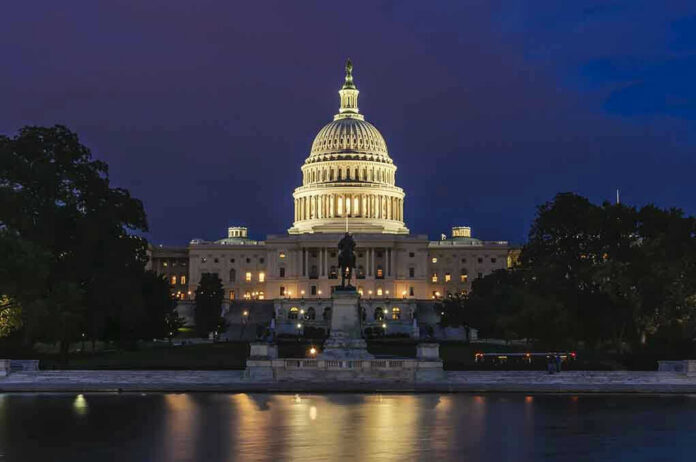
At the hardware level, the display relied on a network of electronically fired mortars and specialized “effects” devices distributed across ten sites: the Lincoln Memorial Reflecting Pool, West Potomac Park, and eight barges positioned along the Potomac River. Each site was effectively its own show, synchronized by digital firing systems and a shared soundtrack. This multi-node design did two things. First, it dramatically expanded the visual footprint, allowing spectators along the Mall, near the memorials, and on the riverfront to experience a panoramic canopy rather than a single focal point. Second, it made the record attempt technically feasible by distributing launch stresses—blast pressure, smoke, fallout—rather than pushing them through a single launch zone.
On the software side, the show was programmed as a continuous 40‑minute sequence, with technicians describing it as a performance that would “completely fire itself with the single press of a button.” That phrasing is not marketing hyperbole; modern pyrotechnic control systems allow firing cues timed to fractions of a second across hundreds of channels. For a show of this magnitude, the choreography involves mapping every effect—shell size, color, break pattern—to the music, then encoding those cues into firing scripts that take into account wind, safety distances, and launch site geometry.
The result is a show that feels overwhelming but is tightly constrained. Reports from Freedom 250 and local coverage indicate a run time of about 40 minutes, nearly double the typical 17–20 minute Mall show. Within that window, organizers promised more than 800,000 fireworks “over more than 30 minutes,” which multiple outlets, including Fox 5 DC and The Hill, amplify as an attempt to “break the world record for the largest fireworks display ever.” It is the density—tens of thousands of effects per minute at peak—that viewers register as unprecedented.
From Executive Order to Semiquincentennial Spectacle: Political and Historical Context
Freedom 250 did not emerge from the private sector alone. The initiative is rooted in a presidential executive order creating a commission to coordinate the United States’ semiquincentennial celebrations, with the fireworks acting as the climactic symbol of that program. Around the record bid, the commission built a 16‑day “Great American State Fair” on the National Mall, with all 50 states and multiple federal agencies hosting exhibits and performances.
For presidents, Independence Day has always been an opportunity to frame their relationship to the nation’s past and future. In this case, Donald Trump promised “the LARGEST FIREWORKS SHOW IN HISTORY, right here in our Nation’s Capital,” tying his personal role—he repeatedly claimed he would launch the show himself—to the grandeur of the anniversary. Freedom 250’s spokespersons described the record attempt as fitting the “historic significance of this milestone” and as a way to make the semiquincentennial “a celebration worthy of the occasion.”
Critics, including local media and national outlets, noted how thoroughly the celebration blurred patriotic ritual with partisan branding. NBC4 Washington highlighted concerns that the event was “different in scale, funding and politics,” effectively casting the fireworks as part of a broader “Trump rally” rather than a neutral civic commemoration. Coverage in The Independent raised questions about who was paying for a show expected by experts to “cost many millions,” given the public‑private funding model and security designation as a “national special security event” overseen by the Secret Service.
That tension—between the fireworks as a shared national moment and as a political performance—shapes how the record claim is received. Even when the technical numbers are uncontested, some observers treat them less as a neutral achievement and more as a data point in an ongoing debate over presidential spectacle and the use of national anniversaries for political messaging.
Verification, World Records, and the Role of Trust
On paper, the technical case for calling the Freedom 250 display “the largest fireworks show in history” is straightforward: published plans, official event materials, and post‑event reports converge around a figure in the mid‑800,000s, fired over 30–40 minutes from ten locations, exceeding the prior Guinness benchmark of 810,904. U.S. News, The Hill, and USA Today all reference the world record attempt explicitly, citing Freedom 250 and Pyrotecnico as sources for the shell count.
What is less transparent to the public is how those numbers were independently validated. Large pyrotechnic shows generally track inventory and firing logs as part of safety and permitting requirements, and Guinness World Records imposes its own documentation standards for counting individual fireworks launches. However, the detailed Guinness certification—exact audited count, any disqualifying factors, and formal “largest fireworks display” status—has not been widely circulated in the sources available here. Side‑B style skepticism points to the absence of a visible verification certificate and the lack of third‑party audits by entities like engineering departments or national academies.[COUNTER-EVIDENCE #2, #3]
This is a familiar pattern. In high‑profile record attempts tied to political leadership, the public often has to rely on institutional trust rather than raw data. We have detailed planning documents and media coverage repeating the 850,000+ figure; we do not, in open discourse, see a shell‑by‑shell tally. That does not mean the number is wrong; it does mean that, outside Guinness and regulatory files, the record exists as a widely accepted claim rather than a fully transparent dataset.
Consequences on the Ground: Security, Local Impacts, and Alternatives
Whatever the exact tally, transforming central Washington into a multi‑site launch range carries concrete consequences. The Department of Homeland Security designated the event a “national special security event,” which placed the Secret Service in charge of security operations and triggered “increased security measures” in the days around the Fourth. Crowd estimates above one million for the broader Freedom 250 festivities and roughly 150,000 packed onto the Mall for the evening program demanded National Guard support, extensive screening, and contingency planning, particularly when severe thunderstorms forced temporary evacuations and delays.[Newsmax transcript, 25]
Local businesses and residents experienced the record attempt less as an abstract number and more as logistical disruption. River cruise operators voiced anger that barge placements and safety zones “wreaked havoc” on their July 4 operations, as reported in regional outlets. Social media posts and local coverage also captured frustration from D.C. residents over noise, street closures, and the ways national spectacle regularly overrides local rhythms. In parallel, national conversation about fireworks shifted: while Washington pursued “fireworks or bust,” several cities experimented with drone shows and laser displays as cleaner, quieter alternatives.
There is also the environmental dimension. Hundreds of thousands of explosive effects translate into substantial particulate matter, chemical residues, and temporary air quality impacts. Though specific measurements from the semiquincentennial show are not front‑and‑center in the sources, the sheer scale invites reasonable questions about how often mega‑shows should be tolerated, even for symbolic anniversaries. Those questions are not unique to Freedom 250; they shadow every contemporary record attempt, from fireworks to stadium light shows.
FULL: America 250 4th of July fireworks show in Washington, DC https://t.co/GscGJ2zvzk via @YouTube
— Timothy R French (@RossManTRF) July 5, 2026
What This Mega‑Show Tells Us About Modern Patriotism and Power
Seen in isolation, the Freedom 250 fireworks are an extraordinary technical and artistic achievement: an intricate choreography of more than 800,000 individual explosions, carefully synchronized over a historic landscape to celebrate a quarter‑millennium of national existence. The visual impact—captured in extensive television and online coverage—is undeniable, and for many attendees, watching the sky above the Washington Monument erupt for 40 straight minutes will be a “where were you when” memory.
Seen in context, the show is also a case study in how modern states use spectacle. The record attempt sits at the intersection of Guinness metrics, presidential image‑making, defense‑adjacent displays of military hardware, and contested funding streams. It demonstrates that in the 21st century, patriotic celebration is no longer just about shared ritual; it is also about engineering ambition, media narrative, and institutional trust.
For future anniversaries—American or otherwise—the underlying question will not be whether a country can launch more shells than its rivals. The question will be whether record‑breaking spectacles genuinely deepen civic connection, or whether they primarily serve as towering, brief, and expensive monuments to whoever happens to occupy the executive office at the time. Freedom 250’s fireworks do not answer that question definitively, but they pose it in the most luminous way possible.
Sources:
facebook.com, nypost.com, usnews.com, npr.org, youtube.com, freedom250.org, reddit.com, instagram.com, the-independent.com
© newsalertdaily.org 2026. All rights reserved.