

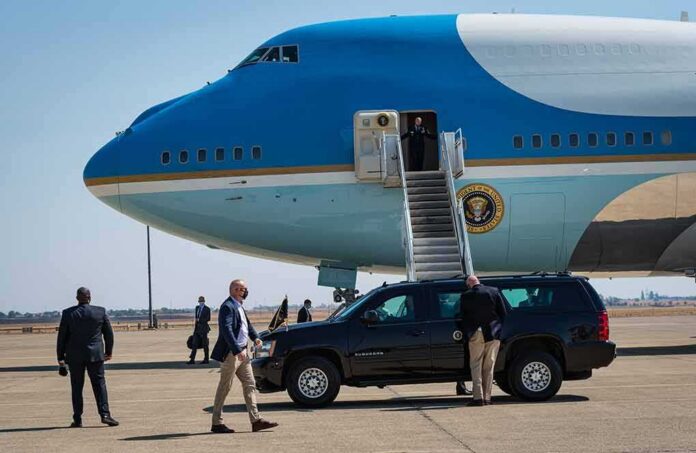
President Trump left Manila for Shenzhen to attend APEC and a first-of-its-kind meeting with China’s Xi and Russia’s Putin, putting the world’s biggest nuclear powers in one room by design.
Story Snapshot
- Trump departed the Philippines for southern China to attend the APEC leaders’ summit.
- The White House and China confirmed plans for a Trump–Xi–Putin meeting in Shenzhen.
- The summit runs November 18–19, with the trilateral planned for November 19.
- Trump said talks would include denuclearization and other global flashpoints.
What Happened: Departure and Destination
NBC News reported that President Trump left Manila shortly after 2:30 p.m. local time, heading to southern China for the Asia-Pacific Economic Cooperation leaders’ summit. CNN’s live updates identified Shenzhen as the destination and said the trip included plans for a three-way meeting with China’s Xi Jinping and Russia’s Vladimir Putin. These reports align on the key facts: departure from the Philippines, arrival plans in Shenzhen, and attendance at the regional economic summit where leaders gather annually.
Reuters set the broader timing, noting that the Asia-Pacific Economic Cooperation summit in Shenzhen is scheduled for November 18–19 and that Trump expected to meet Xi and Putin on the sidelines. Other outlets reported November 19 as the target date for the trilateral session, framing it as a capstone to the summit’s leader-level agenda. Together, these timelines place Trump’s travel within the standard window for head-of-state arrivals before formal sessions begin and side meetings take shape around them.
The Planned Trilateral: Who Confirmed What
The White House signaled the plan for a first three-way meeting, and China publicly confirmed that Xi would meet Trump and Putin in Shenzhen, making the session official on both ends. That alignment matters. It moves the event from rumor to scheduled diplomacy. Associated Press video coverage described the gathering as unprecedented, reflecting the stakes of three nuclear powers testing direct dialogue during a tense global period, from wars to trade fights to technology controls.
Trump previewed his aims before wheels up. Reuters quoted him saying he expected to meet Xi and Putin and planned to discuss denuclearization. That term covers nuclear risks from several fronts, including arms limits, missile tests, and unstable regions. While officials did not promise a signed deal, the fact that leaders would tackle nuclear risk signals a focus on first-order security issues, not only tariffs or standard summit themes. That scope often drives markets, energy prices, and defense planning.
Why This Matters at Home: Security, Prices, and Power
High-level talks can feel far away, but they touch daily life. When leaders discuss trade and technology, the results hit factory orders, small business costs, and consumer prices. When they discuss energy, decisions can affect fuel costs and home power bills. When they discuss war and nuclear risks, the stakes involve troop safety and global shipping lanes. Citizens across the spectrum worry that elites cut side deals while families struggle; this meeting will test whether open diplomacy can reduce risk or just shuffle headlines.
🇨🇳 🤝 #Chinese President Xi Jinping on Wednesday called for stronger global cooperation on artificial intelligence (#AI) and free #trade, as he opened the #APEC summit in Shenzhen ahead of an expected trilateral meeting with US President Donald Trump and Russian President… pic.twitter.com/9nTDVMvh3W
— FRANCE 24 English (@France24_en) November 18, 2026
For conservatives, the Shenzhen talks speak to borderless threats and supply chain leverage. For liberals, they touch social spending pressures from conflict and rising inequality tied to shocks in trade and energy. For everyone, the fear is the same: leaders meet, statements flow, and little changes at the kitchen table. Officials have said not to expect an agreement from this “first conversation,” which sets a realistic bar while still making room for steps that lower risk or cool tensions.
How to Read the Next 48 Hours
Watch the schedule and the readouts. Leaders often hold bilaterals before a three-way session to narrow gaps. Look for mentions of nuclear risk, the Middle East, Ukraine, and trade technology limits. A short, sober statement can sometimes matter more than a flashy pledge. Markets and allies will track tone and next steps, not just headlines. The basic facts stand: Trump left Manila, headed to Shenzhen for Asia-Pacific Economic Cooperation, and plans to meet Xi and Putin in the summit window.
Sources:
youtube.com, cnbc.com, edition.cnn.com, apnews.com, dw.com, nbcnews.com
© newsalertdaily.org 2026. All rights reserved.