

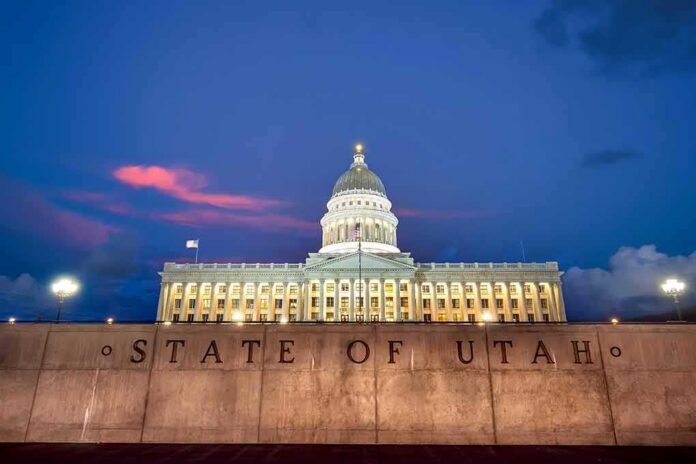
A sitting Republican governor warned his own party that history and voter anger could flip Congress in November, unless leaders change course.
Story Snapshot
- Utah Governor Spencer Cox said parties in power often “overreach,” sparking midterm backlash.
- Cox described 2026 as “politically difficult” for Republicans and flagged broad voter fatigue with extremes.
- Historical data show presidents’ parties usually lose House seats in midterms.
- Cox later sounded more upbeat, underscoring uncertainty about the final result.
Cox’s Warning About Overreach And Midterm Backlash
Utah Governor Spencer Cox told Politico that parties often mistake a narrow win for a broad mandate, then push too far and trigger a midterm swing. He said, “We overreach” and “there was no mandate,” linking that to big midterm losses for the party in power. His point was not abstract. Republicans now hold the White House and Congress, and he argued that both parties are acting in ways that could cost them votes in November.
Cox did not tie his warning to a seat count or a forecast model. He pointed to behavior and mood. He said he did not know a Republican who was not worried about the midterms and called the cycle “politically difficult” for his party. He also shared a message on social media saying both parties seemed to be “actively trying to lose” the midterms, a line that underscored his view that extremes repel voters.
Voter Fatigue, Polarization, And The 2026 Mood
Cox linked Republican risk to a deeper frustration with politics. He said about seven in ten Americans dislike where the country is and are tired of contempt and hyperpartisanship. That theme matches a broad concern shared by many voters on the right and left. People who feel shut out by elites want leaders to focus on costs, safety, and fairness. Cox’s message suggested the tone and choices in Washington can raise or lower those midterm risks.
Cox’s comments land in a year when the federal government faces trust gaps and rising anger. Conservatives blame inflation, border failures, and green energy costs. Liberals blame cuts to social programs, fossil fuel priorities, and widening inequality. Cox’s warning speaks to both groups. He argued that when parties talk past people, they invite a backlash. He framed that backlash as a consequence of behavior, not fate, and urged a reset toward normalcy.
What History Says About Midterm Losses
Historical patterns back part of Cox’s case. Since the 1930s, the party of the president usually loses seats in the United States House of Representatives during midterms. One analysis finds an average loss of about 28 House seats and four Senate seats across modern cycles. Scholars tie those losses to approval ratings, turnout shifts, and how many seats the party must defend, not only to “overreach” alone.
That history does not promise a landslide. It points to risk. The size of losses often tracks the president’s standing and specific local races. Parties also face different maps and candidate quality each year. Cox’s focus on behavior fits that frame. If leaders moderate, listen, and solve daily problems, they can blunt the midterm penalty. If they ignore that, the penalty can grow. The data set the baseline; choices can change the outcome.
Cox’s Mixed Signals And The Limits Of Prediction
Cox later sounded more confident about Republican chances. In a September 13 interview, he said he felt “much more bullish” about the party’s outlook and suggested Democratic positions had given Republicans “a big win” on the issues. That shift shows why forecasts should be handled with care. Campaigns evolve. Voters react to new events. Turnout can surprise both parties.
Cox’s comments matter because they highlight a simple test for leaders in power. Talk less about scoring points and more about making life better for families. Show work on costs, energy, safety, and fairness. Treat opponents as citizens, not enemies. History says presidents’ parties often pay a price in midterms. But history also shows that humility, focus, and practical wins can narrow that bill — or make it much steeper.
Sources:
youtube.com, cbsnews.com, pbs.org, ksl.com, hamilton.edu
© newsalertdaily.org 2026. All rights reserved.