

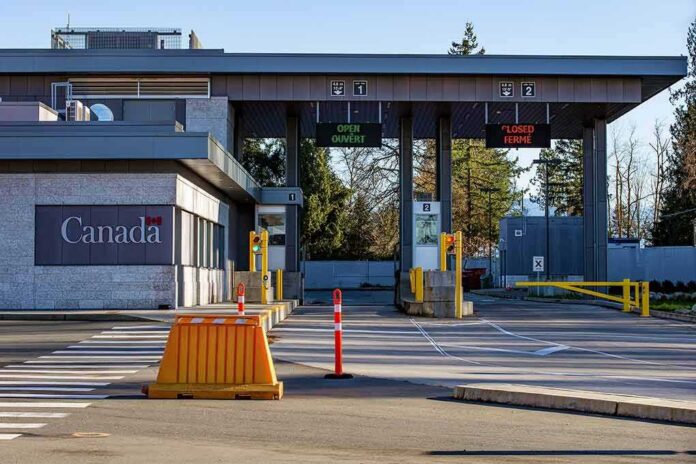
President Trump’s first-ever use of a 1930 law to slap 50% tariffs on Canadian goods has triggered a full-blown trade rupture that will raise costs and test North America’s economic ties.
Story Highlights
- Trump invoked Section 338 to add 50% tariffs on many Canadian imports, a first in U.S. history.
- Talks collapsed as Ottawa vowed “dollar for dollar” retaliation and decried CUSMA violations.
- Tariffs target autos, dairy, and alcohol, with broader product lists also flagged by trade lawyers.
- Consumers and integrated factories on both sides now face higher prices and supply strain.
What Washington Did and Why It Matters
On July 20, the White House said President Trump signed three proclamations to impose extra 50% duties on certain Canadian goods. Officials said Canada discriminated against American products and that the action protects U.S. workers. The move used Section 338 of the Tariff Act of 1930. Analysts noted this is the first time any president used this tool to impose tariffs, marking a legal and policy shift. The administration framed the tariffs as targeted relief for harmed sectors.
Policy experts at the Center for Strategic and International Studies said the tariffs cover a significant range of Canadian goods and were slated to take effect about a month after the proclamations. They warned the duties would raise costs for importers, downstream firms, and families. They also explained how a 50% add-on reshapes prices and squeezes supply chains that cross the border many times before a product reaches a showroom or shelf.
How Canada Responded and Why Talks Broke Down
Prime Minister Mark Carney said Canada would match U.S. tariffs “dollar for dollar” after trade talks fell apart. He argued last-minute U.S. changes were “unfair” and “uneconomic,” and said the measures violated the Canada‑United States‑Mexico Agreement. Canadian leaders warned that the dispute would raise costs for households, with the hit landing hard in the United States as well as Canada. Ottawa moved to counter the U.S. steps with its own tariff plans.
Canadian and U.S. officials disagreed over both cause and cure. The White House said Canada treated U.S. goods unfairly. Ottawa said the U.S. broke the regional trade pact and needlessly damaged a successful partnership. Reporters in Canada quoted Carney stating the U.S. actions were “in direct violation” of the agreement and that Canada had “merely matched those measures.” With each side hardening its stance, compromise grew less likely, and the tariff clock ran out.
What Gets Hit: From Cars to Dairy and Alcohol
Trade lawyers reviewing the proclamations said the package touches three headline areas: motor vehicles and parts, dairy, and alcoholic beverages. They also flagged dozens of product codes beyond the big three, which pull more firms into the fight. A 50% duty on vehicles, inputs, and branded beverages can upend price tags, reorder sourcing, and force small suppliers to choose between eating costs or cutting staff. Scope is wide enough to roil border communities.
Canada did not have to choose between a bad deal and a trade rupture. More time was an option. With jobs, prices and investment at stake, Ottawa should release the US offer and explain why it walked away. https://t.co/oNAp4qDW2t
— K (@kev4macro) August 23, 2026
Tax and trade analysts added that many businesses may be missing how deep the lists run. While cars, dairy, and alcohol drew the headlines, the annexes reached into chemicals, machinery, and consumer goods. Companies that rely on Canadian components could face higher bills within weeks. That means new cash strains, delayed orders, and pressure to pass costs to shoppers. Even brief tariff windows can cause big swings in inventory and pricing decisions.
Why Both Sides of the Aisle Should Care
Workers and families feel tariff pain first through prices and job risk. Factory towns that rely on cross‑border parts face the sharpest shock, even if they support tough trade enforcement. Consumers who already battle high bills may pay more for cars and groceries. The legal gamble also matters. Using an old law in a new way may speed action but invites court tests and tit‑for‑tat politics. That cycle can reward insiders while leaving citizens with the tab.
What Comes Next if the Standoff Holds
If both sides dig in, companies will reroute supply chains and delay investments. Some will seek waivers or carve‑outs, but relief could be slow. The longer the dispute runs, the more leverage, not law, sets terms. That dynamic often favors well‑connected groups. A fresh deal is still possible, but leaders would need to trade headline wins for steady fixes. Until then, expect higher costs, slower growth in border regions, and more pressure on local jobs.
Sources:
whitehouse.gov, theglobeandmail.com, ustr.gov, conference-board.org, canada.ca
© newsalertdaily.org 2026. All rights reserved.