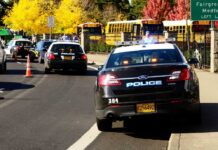

Federal agents shot and killed a Houston father during a botched traffic stop, and none of the officers on scene had body cameras rolling to show the country what really happened.
Story Snapshot
- Federal officials say Lorenzo Salgado Araujo tried to run over an officer with his van before he was shot.
- The Department of Homeland Security (DHS) now admits the Houston agents had no body cameras, leaving key moments off video.
- Family members, community leaders, and Mexico’s government are demanding an independent investigation and public evidence.
- The case fits a wider pattern where immigration agents claim drivers “weaponized” cars, only to have later footage undercut official stories.
What DHS says happened in the Houston shooting
The Department of Homeland Security says the shooting happened during a “targeted enforcement operation” in Houston aimed at arresting an illegal immigrant from Mexico. Officials say agents stopped a van driven by 64-year-old Lorenzo Salgado Araujo. According to DHS, Araujo rammed an Immigration and Customs Enforcement vehicle, ignored “multiple verbal commands,” and then “weaponized his vehicle” by trying to run over a federal officer. Agents say they fired in self-defense to stop an assault on law enforcement.
DHS also says the Federal Bureau of Investigation (FBI) office in Houston is leading a criminal probe into a possible assault on a federal officer. The Department of Homeland Security Office of Inspector General is in charge of reviewing the agent-involved shooting itself. On paper, that means both an outside criminal review and an internal oversight review are underway. For many Americans, though, both left and right, “the government will investigate itself” no longer feels like real accountability.
Gaps, contradictions, and a missing video record
Key details that could prove or disprove the official story are missing or muddled. DHS has not released any photos showing clear damage to the Immigration and Customs Enforcement vehicle that was allegedly rammed. Community leaders and family members say the available images show no visible damage, which they argue clashes with claims of a hard impact. DHS also has not shared audio of the “multiple verbal commands,” so the public cannot hear what was said, how it was given, or how Araujo responded.
The most explosive admission is that Houston-based Immigration and Customs Enforcement officers still have not been outfitted with body cameras. CBS News reports DHS confirmed the agents involved in the shooting were not wearing cameras, creating a major evidence gap that makes it impossible to independently verify the ramming or the moment shots were fired. This is not a one-off problem. A 2025 report on another fatal Immigration and Customs Enforcement shooting in the Chicago area found those agents also lacked body cameras, even after a policy saying cameras should be used where available.
Side B: family, eyewitness concerns, and a broader pattern
Araujo’s family describes him as a longtime Houston resident, a working father who had lived in the city for decades and had no serious criminal record. Bystander video shared by local outlets shows him on the ground bleeding and begging for help after the shots, but it does not show him ramming a vehicle or racing toward agents. DHS later clarified that Araujo himself was not the original target; agents stopped his van because it looked like a suspect’s vehicle. That walk-back makes the phrase “targeted operation” sound less precise than the first press release.
This clash is not happening in a vacuum. Investigations into past Immigration and Customs Enforcement shootings show a repeat pattern: DHS issues a statement saying a driver “refused commands” and “drove at officers,” often claiming an agent was hit or dragged, only for later body camera or surveillance video to undercut those claims. A 2024 investigation found 59 shootings by Immigration and Customs Enforcement officers over six years, with about 10 percent involving claims that drivers used vehicles as weapons and many cases lacking body camera footage. When outside video later surfaces, it has sometimes shown cars moving slowly, or agents not appearing as injured as statements first claimed.
Why this case hits the same nerve for both right and left
Conservatives who back strong borders still worry about unaccountable federal power. Many remember how the “deep state” pushed secret surveillance or misled Congress and ask why armed agents are operating major enforcement actions without basic cameras. Liberals who fear aggressive deportation see another example of lethal force used against a long-settled immigrant, followed by rapid control of the story from Washington. Both sides see a system where the government writes the first draft of the truth and keeps the receipts locked away.
Who are Lorenzo Salgado Araujo's wife and sons? Family speaks out after fatal Houston ICE shooting; GoFundMe launchedhttps://t.co/DKQv4mmwAP
— Hindustan Times (@htTweets) July 10, 2026
People are also asking why key witnesses may vanish. Reports say three other men in Araujo’s van were detained and could face fast deportation, which might remove crucial eyewitnesses before any public hearing. Mexico’s president has already condemned the shooting and is exploring legal steps, putting international pressure on the United States to open the books. Meanwhile, Houston’s mayor has pointed to jurisdiction limits and declined to launch a local criminal probe, leaving the case fully in federal hands and deepening distrust among residents who already feel shut out.
What accountability would actually look like
For citizens across the political spectrum, some fixes are obvious. First, Immigration and Customs Enforcement and the Department of Homeland Security need to release every scrap of non-sensitive evidence in this case: dash camera video from federal vehicles, any nearby surveillance footage, radio traffic, and the full autopsy once complete. Second, Congress should ask why, two years into the current term, frontline agents in a major city like Houston still lack body cameras despite earlier promises and deadly incidents elsewhere.
Broader reforms are on the table as well. Department policy already says officers can only fire at cars when they reasonably fear death or serious injury. But paper rules mean little if the public never sees the evidence used to decide a shooting was “reasonable.” Independent state or local reviews, or even bipartisan congressional hearings, could force sunlight onto a growing list of fatal Immigration and Customs Enforcement encounters. For a country built on the idea that government answers to the people, proving what really happened in Houston is about more than one tragedy. It is a test of whether any federal agency is still fully accountable to the citizens it serves.
Sources:
independent.co.uk, x.com, cbsnews.com, facebook.com, instagram.com, click2houston.com, pbs.org, abc13.com
© newsalertdaily.org 2026. All rights reserved.