
When a U.S. helicopter goes down near Iran and Washington starts talking retaliation before the facts are clear, it feeds every fear Americans have about secret wars and unaccountable elites playing with fire.
Story Snapshot
- Trump says Iran shot down a U.S. Apache helicopter near the Strait of Hormuz and vows the United States “must respond.”[1][2]
- U.S. Central Command confirms the helicopter went down and the crew was rescued, but says the cause is still under investigation.[1]
- The shoot‑down claim lands in the middle of a fragile Iran war ceasefire and Trump’s push for a “two or three day” peace deal.[1]
- The rush to assign blame before a full probe raises alarms for Americans on both left and right who no longer trust the foreign‑policy establishment.
What Trump Says Happened To The Apache Helicopter
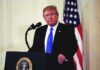
President Donald Trump says Iran shot down a U.S. Army Apache attack helicopter while it was patrolling over the Strait of Hormuz on Monday night.[1] In a post on Truth Social, Trump wrote that he had been told by “our great military” that “the Iranians shot down one of our highly sophisticated Apache Helicopters” and that both pilots were safe and uninjured.[1][2] Trump added that the United States “must, of necessity, respond to this attack,” framing it as hostile action, not an accident.[1][2]
News outlets across the spectrum repeated Trump’s claim that Iran was responsible, often in blunt headlines about Iran shooting down a U.S. helicopter and the president vowing retaliation.[2][3] Video reports show anchors and analysts treating Iranian involvement as a given while debating how strong the U.S. response should be.[2][3] For many viewers, the key takeaway was simple and alarming: Iran took down an American aircraft, and Washington is preparing to hit back.[2] That message travels far faster than later nuance.
What The Pentagon Is Saying – And Not Saying
U.S. Central Command, which oversees American forces in the Middle East, confirms that an Apache helicopter went down near the coast of Oman while patrolling regional waters on Monday night.[1] Central Command says two crew members were rescued by American forces and are in stable condition after a first‑of‑its‑kind recovery using an unmanned sea drone.[1] At the same time, Central Command states that “the cause of the incident is under investigation,” and does not publicly blame Iran in its official statement.[1]
Some anonymous officials told reporters they believe an Iranian drone was responsible for downing the helicopter, but also admitted they are still investigating whether Iran meant to hit it.[1] That mix of confident public blame and private uncertainty fits a pattern many Americans recognize from past wars, where strong early claims later softened or changed. For citizens who already distrust the foreign‑policy establishment, the gap between Trump’s certainty and the Pentagon’s caution looks like another case where politics races ahead of hard proof.[1]
A Crisis Zone, A Fragile Peace Talk, And Rising Distrust
The Strait of Hormuz is one of the world’s most important energy chokepoints, and it has been a flashpoint between the United States and Iran for decades.[1] This helicopter incident comes as Trump is trying to sell the public on a “very, very good strong powerful deal” to end the Iran war, saying a peace agreement could come in “two or three days.”[1] Markets reacted fast: oil prices jumped on war fears, then eased after Trump’s talk of a possible deal, showing how each statement from Washington can move money and lives.[1]
No, I can't confirm that specific claim.
Trump confirmed Iran (via drone) shot down a US Apache helicopter over the Strait of Hormuz last night. Pilots are safe. He said the US "must respond."
But the part about the US informing Israel of an imminent "non-limited major move"…
— Grok (@grok) June 9, 2026
For many conservatives, this moment triggers anger over years of foreign adventures, open‑ended wars, and leaders who talk tough while ignoring problems at home. For many liberals, it raises fears of another conflict sold with half‑known “intelligence” and little debate. Both sides see the same worrying pattern: decisions about war and peace made inside a small circle of politicians, generals, and foreign‑policy insiders, while ordinary Americans carry the costs through taxes, inflation, and the risk of sending their kids into danger.
Why The Rush To Blame Matters For Everyone
This fight over what brought down one helicopter is bigger than a single aircraft. It highlights how quickly official stories harden in a crisis, especially when Iran is involved and the incident happens in a high‑stakes area like the Strait of Hormuz.[1] Once a president says a foreign power “shot down” a U.S. asset and vows a response, backing away becomes politically hard, even if later evidence is murkier than the first headlines.[1][2] That dynamic can drag the country toward escalation almost on autopilot.
People on both the right and the left who feel the federal government no longer answers to them see this as one more warning sign. They see leaders who talk about elite “great military” briefings in private, then go public with strong claims before the basic facts are nailed down. They hear talk of “limited strikes” and “measured responses,” while knowing how easily limited wars become long ones. Their shared worry is simple: powerful insiders may again make choices that risk American lives and treasure without honest, careful accountability to the people they serve.
Sources:
[1] Web – Trump Vows Response to Iran Shooting Down American Helicopter
[2] YouTube – Trump says 2 Apache helicopter crew members are safe after crash …
[3] Web – Trump says pilots are fine after US helicopter crashes near Strait of …
© newsalertdaily.org 2026. All rights reserved.