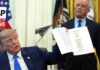


President Trump said $4 gas is “OK” and asked Americans to “live with it” to stop Iran from getting a nuclear weapon, turning pain at the pump into a national security test.
Story Snapshot
- Trump tied higher gas prices to blocking an Iranian nuclear weapon and said he will not apologize.
- Reports describe gas near $4 per gallon after war-driven oil spikes; Trump says the rise is temporary.
- Polling shows broad voter anger over gas costs, including among Republicans.
- Evidence linking higher prices to nonproliferation results remains publically thin in the provided record.
What Trump Said And Why It Matters
President Trump argued that paying a “tiny little bit more” for gasoline is worth it if it prevents Iran from getting a nuclear weapon. He said he would “never apologize” for gas prices rising during the conflict and called Iran the top state sponsor of terror. He also said prices would fall after a deal or when the conflict ends, framing the increase as a short-term tradeoff for safety. His message aims to turn a pocketbook hit into a security case.
Trump also linked price moves to Iran’s actions at sea and in the region, saying the conflict pushed costs higher. Business coverage and energy reporters have noted that oil jumped after the war escalated, with pump prices moving up alongside crude. This tie between war risk and gas costs is not new, but it is politically charged. Every uptick shows up daily on station signs, and voters tend to blame whoever runs Washington when those signs spike.
What The Numbers Show At The Pump
Independent analyses and think tanks say national averages have climbed toward $4 per gallon, the highest since 2022. Brookings wrote that the full shock may not be felt yet, even as prices reach that mark. During the war’s early weeks, public media tracking also showed the national average rising from just under $3 to the mid-$3 range, reflecting fast market shifts tied to conflict risks and supply fears. That movement matches past patterns during Middle East crises.
News outlets reported that crude oil moved above $100 per barrel as the Iran war flared, a level that often pushes retail gas higher. Coverage linked the jump to attacks and wider regional tension, which raised shipping and insurance costs and stirred worries about supply routes. This chain—war risk to oil price to pump price—is well known. But how long it lasts depends on the conflict path, global supply, and any deals that cool the market.
Public Backlash And The Politics Of Price
Polling cited by major outlets shows voter anger over gas costs cutting across party lines. A CNN roundup found Trump’s gas-price approval deep underwater, including with a majority of Republicans. That tracks with decades of research: gas prices are one of the strongest drivers of how people rate leaders. Early spikes do the most political damage, and many voters judge presidents by what they pay to fill up, not by global oil math.
🚨 WATCH: President Trump addresses gas prices reaching $4 per gallon
“I’ll never apologise, you have to live with it, I did the right thing”#usa #trump pic.twitter.com/osE7MOFdQo
— why Americans (@BlueSky448248) August 16, 2026
Trump’s claim sets a clear tradeoff: accept higher prices now to block a nuclear threat. That is a bold ask in a country already strained by high living costs. The provided record shows consistent messaging from Trump, but it does not include declassified intelligence, economic models, or agency studies proving higher retail prices are necessary to delay Iran’s program. Without that, many see the pain as cost without proof of payoff, feeding distrust of Washington’s decisions.
Why Both Sides Feel Burned
Conservatives who want cheap energy see a promise broken when war risk lifts prices. Liberals focused on household relief see working families hit again while leaders say “live with it.” Both groups share a deeper worry: elites make choices, and regular people pay. When the White House asks families to absorb higher fuel bills, citizens want clear evidence, timelines, and accountability. Absent public proof, the spike looks like another burden shifted onto drivers while insiders steer from behind closed doors.
What To Watch Next
Watch for any deal signals that cool markets, and for federal data on supply, refinery output, and shipping routes. Look for Congress or agencies to release assessments that connect security steps to price impacts with dates and numbers. If the war risk fades, prices could ease. If fighting or threats widen, costs may climb. Clear records—intelligence summaries, energy analyses, and testimony—would help the public judge whether this tradeoff protects the nation or simply taxes the commute.
Sources:
reddit.com, youtube.com, transcripts.cnn.com, timesofindia.indiatimes.com, yahoo.com, bbc.com, reuters.com, cnbc.com, theguardian.com, nytimes.com
© newsalertdaily.org 2026. All rights reserved.