

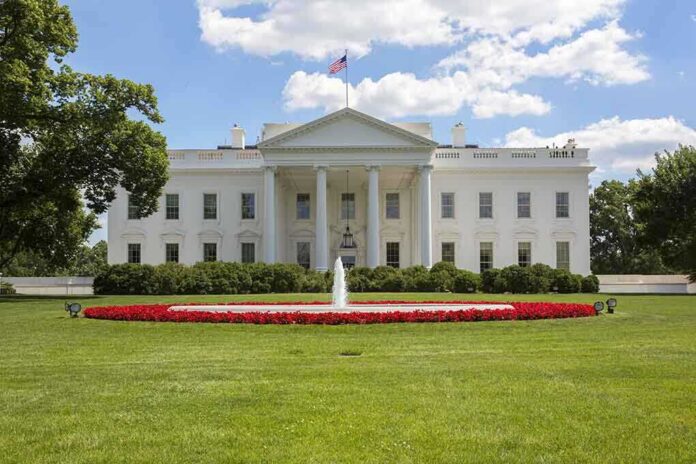
President Trump has launched construction on a grand White House ballroom—a 150-year dream finally realized—funded entirely by private patriots, proving conservative Americans can build national treasures without burdening taxpayers with another dime of government waste.
Story Highlights
- Trump breaks ground on historic White House ballroom, privately funded with zero taxpayer dollars
- Construction continues through October 2025 despite federal shutdown, demonstrating project’s independence from government spending
- Project creates jobs and enhances America’s diplomatic capabilities without adding to national debt
- Ballroom represents lasting presidential legacy, addressing 150-year infrastructure gap at the White House
Private Funding Delivers Where Government Failed
President Donald Trump announced the White House State Ballroom project on July 31, 2025, with construction commencing in September 2025. The ballroom addresses a longstanding deficiency in the White House’s ability to host large-scale diplomatic events and state visits. For over a century, presidents have relied on temporary tents for major gatherings, an inadequate solution for the world’s most powerful nation. Trump secured complete private funding from patriotic donors and American companies, ensuring taxpayers bear zero financial burden. This approach demonstrates how private sector efficiency can accomplish what decades of government bureaucracy could not.
Construction Advances Despite Federal Shutdown
Demolition work on the East Wing began as scheduled, with Clark Construction managing the build, McCrery Architects handling design, and AECOM providing engineering support. The project continues uninterrupted through the October 2025 federal government shutdown, showcasing the wisdom of private funding. While government operations falter, this privately-backed initiative proceeds on schedule, creating construction jobs and stimulating local economic activity. The ballroom’s completion timeline targets before Trump’s term ends in 2029, establishing a permanent venue for hosting dignitaries without the embarrassment of makeshift tent arrangements that previous administrations accepted as normal.
Historical Significance and National Pride
The ballroom represents more than architectural enhancement—it embodies American exceptionalism and proper stewardship of national symbols. Previous administrations discussed this project for decades but lacked the vision and leadership to execute it. Trump’s ability to marshal private resources for public benefit sets a precedent for future infrastructure development, demonstrating that patriotic Americans willingly invest in their nation’s prestige when leadership inspires confidence. The project enhances America’s diplomatic standing by providing appropriate venues for international events, potentially boosting tourism and related industries while cementing Trump’s legacy as a president who delivered tangible improvements to American institutions.
Economic and Diplomatic Benefits
The ballroom creates immediate construction employment while establishing long-term economic advantages. Enhanced hosting capabilities position the White House to attract more international dignitaries and events, strengthening diplomatic relationships crucial to American interests. Unlike typical government projects plagued by cost overruns and delays, private funding ensures accountability and efficiency. This model protects taxpayers from the fiscal mismanagement that has characterized so many federal initiatives, offering a blueprint for future projects. The ballroom serves as a testament to what Americans can achieve when freed from government bureaucracy and empowered by leadership that respects both fiscal responsibility and national pride.
Sources:
White House State Ballroom – Wikipedia
White House East Wing construction ballroom photos – Axios
Statement on the proposed ballroom addition at the White House – Society of Architectural Historians