

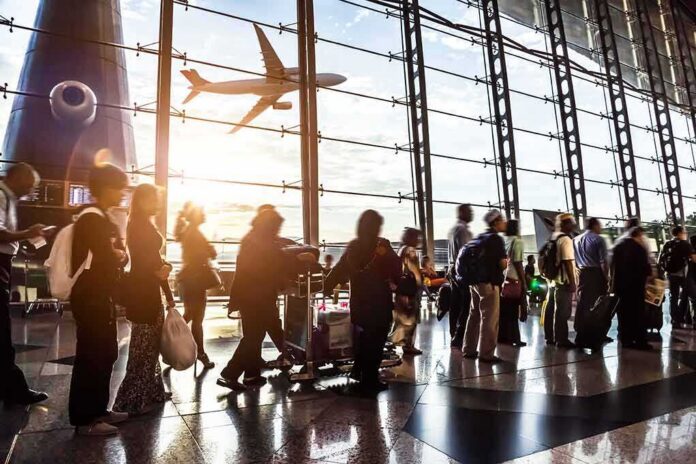
A deadly strike on Riyadh’s airport pushed thousands to seek a safer route through Bahrain as Saudi Arabia’s “safe hub” image took a hit.
Story Snapshot
- A Houthi missile hit a Riyadh airport terminal, killing 13 and injuring 300, disrupting travel.
- Many travelers looked to Bahrain’s land bridge as a four-hour alternative to reach flights.
- Bahrain condemned the attacks and tied Saudi security to its own national security.
- Regional statements backed Saudi defensive measures under the United Nations Charter.
What Triggered The Rush To Bahrain
Reuters reported that a Houthi missile struck a departure terminal at an airport in Riyadh on October 14, killing 13 people and injuring about 300. The blast forced cancellations and delays that stranded pilgrims, business travelers, tourists, and foreign residents. With flights disrupted, many considered driving four hours to Bahrain to catch outbound flights. Others weighed longer paths to Qatar and Dubai as they searched for a way out of the chaos and fear at Saudi hubs.
The incident dealt a blow to Saudi Arabia’s image as the region’s secure travel anchor. For years, the kingdom marketed itself as a steady gateway for pilgrimages and commerce. The strike showed how one attack at a key airport can ripple through travel plans, supply chains, and family visits. It also underscored how quickly people shift to nearby exits. The land causeway to Bahrain became a pressure valve as travelers tried to get back on schedule or reach safety.
Bahrain’s Official Response And Security Link
Bahrain’s Ministry of Foreign Affairs condemned ongoing missile and drone launches by the Houthi movement toward cities such as Riyadh, Dhahran, and Khamis Mushait. The ministry called the strikes a threat to civilian lives and regional stability. Bahrain also stated that Saudi security and stability are an integral part of Bahrain’s own national security. That language signaled that spillover risk across the causeway is not only about travel but also about national defense.
Bahrain reaffirmed support for Saudi defensive measures under Article 51 of the United Nations Charter, which protects the right to self-defense. That statement fit a wider Gulf stance that attacks on one state endanger all. It also framed the crisis as a test of international law, civilian protection, and the security of vital infrastructure. The message was meant to reassure residents and visitors while backing Saudi steps to deter future strikes and to protect airports and other key sites.
Why Travel Disruption Hits Ordinary People First
Airport strikes do more than halt flights. They upend plans for pilgrims who saved for years, workers on tight visas, and families on medical trips. When one major hub is hit, people seek the next best option. In this case, many looked to Bahrain because the road link is close, border rules are known, and airlines there can reroute tickets. Quick shifts also strain border posts, rental cars, and hotels as demand jumps overnight and normal systems struggle to keep up.
The US is evacuating some diplomatic staff from Saudi Arabia following Houthi attacks that killed 3 in Dammam. Despite rumors regarding UAE, Qatar, and Bahrain, Washington clarified the order applies only to Riyadh. The move coincides with new military plans targeting Iran. pic.twitter.com/wVxl3N7Z2Q
— Mintel World (@mintelworld) October 22, 2026
United Nations Security Council records show years of concern about how the Yemen conflict threatens civilians and cross-border stability. The latest airport strike fits that pattern: weapons fired from Yemen reach deep into populated areas. Each incident adds pressure on governments to harden airports and reassure travelers, airlines, and insurers. It also raises costs that end up in ticket prices and delays. Ordinary people and small businesses feel those costs the most, long after headlines fade.
What To Watch Next For Travelers And The Region
Travelers should watch airline notices from Saudi and Bahraini airports, plus updates on the King Fahd Causeway. If strikes persist, airlines may adjust routes, shift crews, or move aircraft to reduce risk. That could make Bahrain a more common exit point when Saudi hubs face brief shutdowns. Government security steps, like better interception and hardened terminals, could help restore confidence. Clear public updates will matter most to people deciding whether to fly, drive, or delay trips.
For the region, the stakes go beyond one deadly strike. Gulf economies rely on the steady flow of people and goods. A single breach at a busy terminal hurts that trust. Bahrain’s stance, tying its security to Saudi stability, shows how linked the neighborhood is. Regional diplomacy, defense upgrades, and proven protection of civilian sites will shape whether the Gulf keeps its role as a reliable crossroads for worship, work, and trade in the months ahead.
Sources:
youtube.com, spa.gov.sa, transcripts.un.org
© newsalertdaily.org 2026. All rights reserved.