
newsalertdaily.org — Three decades after a Cuban fighter jet downed unarmed civilian planes over international waters, the United States has finally indicted Raúl Castro and several other Cuban officials—raising as many questions about delayed justice, political theater, and government priorities as it answers.
Story Snapshot
- Federal prosecutors have indicted former Cuban leader Raúl Castro over the 1996 shootdown of Brothers to the Rescue aircraft, which killed four men, including three Americans.[1][4]
- The case centers on allegations that Castro and other officials ordered or authorized the attack on unarmed civilian planes operating outside Cuban airspace.[1][3]
- The indictment comes after decades in which earlier charging drafts reportedly existed but were never approved by previous administrations.[4]
- The move highlights how U.S. criminal law is being used in long-running foreign-policy conflicts, pleasing some exile communities while leaving major evidentiary and enforcement questions unresolved.[1][4]
What The Indictment Claims And What We Actually Know
United States officials have confirmed that the Department of Justice has secured a federal indictment against Raúl Castro, the ninety-four-year-old former president of Cuba, in connection with the 1996 downing of two Cessna aircraft flown by the exile humanitarian group Brothers to the Rescue.[1][3][4] Coverage describes the charges as focused on Castro’s alleged role in ordering or authorizing Cuban military forces to shoot down the planes, which were conducting search missions for rafters fleeing Cuba.[1][3] Prosecutors also reportedly charged at least five additional Cuban officials, though their names and roles have not surfaced in the material provided.[1][4] The charging document itself, including counts and jurisdictional theory, has not been made public in the sources we have, which means critical legal details and specific evidence remain outside the public record.[1][4]
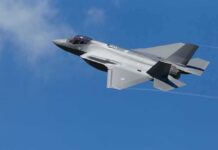
Journalists and commentators say the indictment rests heavily on the February 24, 1996 incident when a Cuban MiG-29 fighter jet shot down two Brothers to the Rescue planes in airspace that the Organization of American States later concluded was outside Cuban territorial limits, killing four people.[1] The group’s flights had long angered Havana, which accused it of violating Cuban airspace and planning sabotage, while U.S.-based investigators and exile advocates depict the planes as unarmed civilian aircraft conducting humanitarian search operations.[1] A prior U.S. prosecution in Miami led to a murder-conspiracy conviction for Gerardo Hernández, a member of a Cuban spy ring accused of providing information on Brothers to the Rescue to Cuban intelligence.[1] That case demonstrated willingness to attach individual criminal liability to the shootdown, but it did not reach senior Cuban leadership.
Decades-Long Delay Fuels Questions About Politics And Justice
Multiple reports say former federal prosecutors had previously drafted indictments naming both Fidel and Raúl Castro, but that the Department of Justice under President Bill Clinton never approved filing them.[1][4] Those earlier efforts reportedly drew on declassified Federal Aviation Administration records and intelligence suggesting the planes were over international waters and that the attack violated international law, but the actual memoranda and draft charging instruments are not included in the current record.[1][4] The long delay fuels suspicion across the political spectrum that decisions about prosecuting foreign leaders can hinge less on evidence and more on larger diplomatic calculations: what each administration wants from Havana, how badly Florida politicians are demanding action, and whether Washington believes it can enforce any conviction. Critics who already distrust “deep state” priorities see confirmation that powerful officials can sit on serious cases for decades while ordinary citizens face swift punishment for far lesser crimes.
Current coverage frames the new indictment as part of a broader pressure campaign against Cuba that includes financial and diplomatic measures, again underscoring how law enforcement tools often double as foreign-policy levers.[1][2][3] Florida lawmakers like Senator Rick Scott and South Florida House members have pushed aggressively for these charges, publicly demanding that the Department of Justice “bring Castro to justice in the United States.”[1] Events surrounding the announcement have been staged at Miami’s Freedom Tower, a highly symbolic site for Cuban exiles, reinforcing the sense that the case is meant not only to punish but to send a message to both Havana and a key domestic constituency.[4] Supporters in the exile community view the indictment as long-overdue recognition that the lives of four men—three of them Americans—cannot be quietly written off as an unfortunate incident of geopolitics.[1][4] Others, including some legal analysts, worry that when prosecutors unveil sweeping international cases without quickly releasing detailed evidence, they invite doubts that cases are more about headlines than courtroom outcomes.
Legal, Moral, And Practical Limits Of Going After Foreign Leaders
The supplied research indicates that the public still lacks answers to core legal questions: which statutes the government is using, how it asserts jurisdiction over a foreign-state military action in 1996, and how it addresses issues like sovereign immunity or statute-of-limitations constraints.[1][4] There is also no direct evidence in the public record tying Raúl Castro personally to the concrete decision to fire missiles at the Cessnas—no taped orders, written directives, or declassified communications are included here.[1][2][3][4] That gap does not mean the evidence does not exist; it means that, so far, the case is being discussed largely through news reports that depend on unnamed officials and prior secondary accounts. For citizens already skeptical that elites operate under different rules, this pattern is familiar: sweeping claims, limited documents, and little ability for the public to independently verify what the government says it knows.
By JOSHUA GOODMAN, ALANNA DURKIN RICHER and ERIC TUCKER MIAMI (AP) — The Justice Department is preparing to seek an indictment against former Cuban President Raúl Castro, three people familiar with the matter told The Associated Press on Frid… https://t.co/VEJAMjmw8W
— Capital Gazette (@capgaznews) May 15, 2026
At the same time, nothing in the counterarguments presented denies that the shootdown happened or that four people died in an attack condemned internationally at the time as a likely violation of international law.[1][4] The core dispute is not about whether the victims were killed but about who, exactly, should be held criminally responsible and under what legal authority. Using U.S. courts to pursue a ninety-four-year-old former head of state who is unlikely ever to appear in an American courtroom can look, to some, like symbolic justice—an official narrative written into the legal record rather than an enforceable punishment.[1][4] Symbolic justice can matter; it tells victims’ families that their government did not forget them and that powerful foreign leaders are not automatically untouchable. Yet when symbols dominate and practical accountability remains doubtful, Americans on both left and right are left asking a deeper question: if Washington can expend this kind of energy on a decades-old international case, why does it seem so incapable of delivering timely, transparent justice in the crises that are crushing ordinary families here at home?
Sources:
[1] Web – U.S. moving to indict Cuba’s Raúl Castro, sources say – CBS News
[2] YouTube – U.S. takes steps to indict former Cuban President Raul Castro
[3] YouTube – U.S. moving to indict Cuba’s Raúl Castro, sources say
[4] YouTube – Justice Department plans to indict Raúl Castro
© newsalertdaily.org 2026. All rights reserved.