
Israel’s airstrikes in Lebanon are drawing fire because the fighting now looks like a war of retaliation, not a clean one-sided response.
Quick Take
- Hezbollah fired rockets and drones toward Israel before the latest Israeli strikes.
- Israel says its attacks are aimed at Hezbollah military targets and border security.
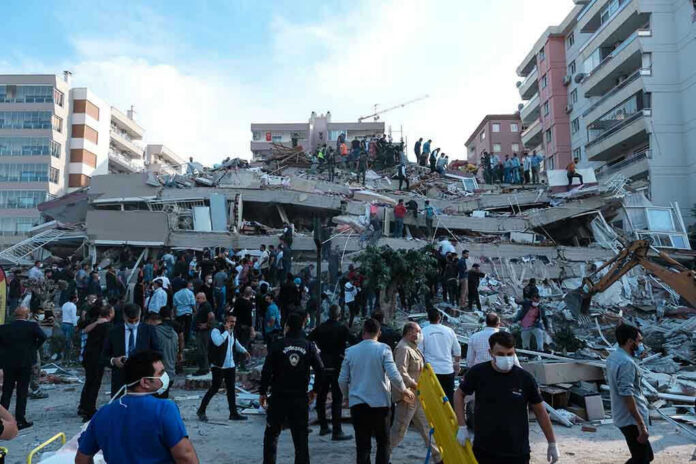
- Human rights groups report heavy civilian harm and major destruction across southern Lebanon.
- The record provided does not show strike-by-strike evidence for every target.
Hezbollah Fire Set Off the Latest Round
The latest escalation did not begin in a vacuum. Hezbollah launched rockets and drones toward Israel during the broader border fight, and contemporaneous reporting says Israel answered with airstrikes and a limited ground move into southern Lebanon.[1][2] That sequence matters because it gives Israel a factual basis for claiming self-defense, even as critics question how far that defense can go once the strikes spread across towns and civilian areas.
Israel and Hezbollah have spent months trading blows, with each side blaming the other for keeping the conflict alive. Amnesty International’s timeline says Hezbollah began firing rockets in October 2023, and the fighting later escalated sharply into a larger Israeli campaign in 2024.[4] That history helps explain why Israeli officials describe their actions as part of a continuing security fight rather than a new war of choice.
What Israel Says It Is Trying to Do
Israel’s stated aim is to stop Hezbollah from rebuilding military power and to push the threat away from Israel’s north. The Conflict with Hezbollah tracker says Israel has justified its attacks by saying they prevent Hezbollah from rebuilding its capabilities, while Amnesty reports Israel described its broader goal as repelling the threat and helping northern residents return home.[2][4] Those claims fit a defensive frame on paper, but the record also shows broader military aims.
Coverage in the supplied material says Israeli Defense Minister Israel Katz ordered the military to intensify destruction in southern Lebanon and described a buffer zone reaching the Litani River.[4] That language is important because it goes beyond a narrow strike-for-strike response. It suggests Israel is also trying to change facts on the ground near the border. For conservatives who value strong national defense, that distinction matters. Defense can be justified. Open-ended territorial pressure is harder to defend.
Civilian Damage Raises Serious Questions
The strongest challenge to Israel’s account is the civilian toll. Amnesty says Israeli forces extensively destroyed and damaged civilian structures and agricultural land in southern Lebanon after the ceasefire period.[4] The New Yorker says Israeli actions in Lebanon have killed more than a thousand people and displaced more than a million.[1] Those figures do not settle intent, but they do show why many observers see the campaign as far wider than a limited military response.
Overnight, 4 Israeli Troops were killed and around a dozen more people injured by Hezbollah (LH) attacks.
Israel has responded with over 150 airstrikes against LH in southern Lebanon. The IRGC issued radio warnings in the Strait of Hormuz announcing yet another closure.
About an…— artidiana (@artidiana2) June 20, 2026
The provided sources also do not supply the kind of proof needed to judge each strike on its own. They do not include target files, after-action reports, or independent battle-damage assessments for the specific strikes mentioned in the research. That gap leaves room for Israel’s self-defense claim, but it also leaves room for critics who say the attacks were not narrowly tied to military necessity or proportionality.
Why the Narrative Fight Matters
This dispute is about more than Lebanon. It is about whether a state can keep using broad security language while striking across populated areas and causing mass displacement. The material here shows two truths at once: Hezbollah has kept up armed pressure on Israel, and Israeli strikes have hit civilians, homes, and infrastructure on a large scale.[2][4] For readers wary of endless foreign entanglements, the bigger warning is simple. Once a border war expands this far, the promise of “limited” action often disappears.
The reporting also shows why the public argument keeps turning on trust. Israel says it is acting against Hezbollah threats. Critics point to the scale of death, destruction, and displacement as proof the response was too broad.[1][4] Without full operational records, outside readers are left balancing a real security threat against a record of heavy civilian harm. That is why the story remains unsettled and politically charged.
Sources:
[1] Web – Israel Launches Airstrikes in Lebanon…
[2] Web – Israel’s extensive destruction of Southern Lebanon
[4] Web – Why Israel Is Attacking Lebanon | The New Yorker
© newsalertdaily.org 2026. All rights reserved.