
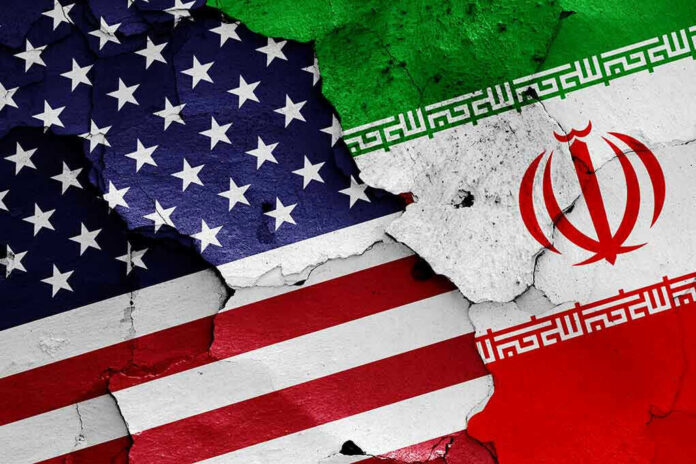
As Iran and U.S. negotiators gather in the Swiss Alps, conservatives are asking whether this “peace framework” truly blocks a nuclear Iran or quietly trades away leverage for promises that may never be kept.
Story Snapshot
- A 14‑point U.S.–Iran memorandum promises no nuclear weapons and a wider ceasefire, but leaves key details unsettled.
- Talks in Switzerland have been postponed, restarted, and reshaped, raising doubts about how firm the deal really is.
- The deal ties sanctions relief and a massive reconstruction fund to Iranian “performance,” yet verification rules remain murky.
- A 60‑day clock is running to hammer out nuclear limits, while fighting in Lebanon and regional pressures threaten to derail talks.
What This New Iran Deal Really Says
The heart of this story is a 14‑point memorandum of understanding that Washington and Tehran have now signed electronically, with the text released by outlets like the BBC and others. That document says Iran “reaffirms its commitment not to acquire or develop nuclear weapons,” and lays out a phased ceasefire, reopening of the Strait of Hormuz, and step‑by‑step lifting of the United States blockade and some sanctions over 30 to 60 days.[1] It also talks about longer nuclear talks and a push to set up major reconstruction money for Iran.
For many Americans, the key phrase is simple: Iran says again it will not build a bomb. That sounds good, but the memorandum made public so far does not spell out the full inspection and enforcement system that would prove that promise is real.[1][6] Past nuclear deals only worked when inspectors from the International Atomic Energy Agency had deep access and clear rules. Here, we mostly see a political pledge and a timeline, not yet the hard technical rules that make cheating costly and visible.[23]
How Switzerland Became Ground Zero For High‑Risk Talks
Switzerland is not a random backdrop for this drama. The Swiss Foreign Ministry confirmed that detailed follow‑up talks were planned at the Bürgenstock resort with the United States, Iran, Pakistan, and Qatar acting as mediators, before being postponed.[3] Pakistan and regional media say the same mountain venue will now host technical‑level talks meant to turn the memorandum into a final agreement within 60 days, including on nuclear limits and the future of the Strait of Hormuz.[10] That careful setup shows a serious diplomatic track, not just a photo‑op.
At the same time, this neat plan has already hit bumps. Switzerland and multiple outlets report that the opening round of technical talks was called off after Iran pushed for guarantees tied to the war in Lebanon, even though the memorandum had just started the 60‑day clock for a final deal.[9][13] Vice President JD Vance even scrapped an early trip to Switzerland when the first follow‑up meeting fell apart.[13] That kind of stop‑and‑go pattern tells us the paper deal is ahead of real trust, and any final package is still fragile and subject to regional flare‑ups.
Sanctions Relief, Big Money, And The Nuclear Tradeoffs
The stakes go far beyond a ceasefire. Reporting tied to the memorandum highlights expectations of sanctions relief, unfreezing of Iranian assets, and even a proposed $300 billion reconstruction fund backed by the United States and its partners.[5][13] Iran’s side clearly views these talks as a path to economic normalization and recognition of its sovereignty, not just a narrow nuclear cap. That is why Tehran keeps saying its missile program is off the table and its defense “rights” are not up for negotiation.[1] For conservatives, that raises a core issue: are we paying too much up front for promises later?
On paper, Trump officials stress that sanctions relief and economic rewards only arrive if Iran performs, not just because it signed.[3][12] Media accounts quote Vance and other envoys saying benefits are “performance‑based,” and that Iran must dismantle or neutralize its enriched uranium stockpile to prevent rebuilding its nuclear program.[3][12] Yet the public record so far does not include the detailed annexes that would show how inspectors confirm that stockpile is gone, what happens if Iran hides material, and how fast sanctions snap back if cheating is caught.[1] Without those teeth in public view, critics can fairly argue this looks like another “trust us” deal.
Why The Nuclear Piece Is Still The Riskiest Part
Analysts across the spectrum warn that the nuclear section is the hardest part to lock down. One expert told Russia’s TASS that while Iran again renounces nuclear weapons, it still insists on its right to enrich uranium, and the United States will likely demand strict caps, International Atomic Energy Agency access, and a sanctions schedule that Congress can accept.[6] Other reporting outlines U.S. ideas for long moratoriums on enrichment and enhanced snap inspections, while Iran pushes shorter limits and rejects sending uranium abroad.[5] That tug‑of‑war mirrors decades of past talks where small technical gaps later blew up fragile deals.[23]
For conservative readers, this history matters. The record of U.S.–Iran diplomacy shows a pattern: announce a framework, argue over enrichment and inspections, and either get narrow implementation or watch the whole thing collapse under pressure from hard‑liners in Tehran and politics in Washington.[19][20] This new memorandum fits that mold. It offers a chance to keep Iran’s program “in a box” again, but only if enforcement, verification, and snapback sanctions are real, automatic, and transparent. Until the full annexes, inspection authorities, and legal tools are public, the safest stance is sober skepticism and close oversight from Congress and the American people.
Sources:
[1] YouTube – LIVE: Outside the venue of Iran-US talks in Switzerland
[3] Web – Iran, US presidents sign deal to extend ceasefire, reopen Strait of …
[5] YouTube – US and Iran prepare for crucial talks in Switzerland
[6] Web – The US and Iran are expected to formally sign a memorandum of …
[9] Web – 2025–2026 Iran–United States negotiations – Wikipedia
[10] Web – Opening round of US-Iran talks canceled as Tehran said to demand …
[12] Web – U.S.-Iran accord hits early snag after Swiss talks fail to proceed as …
[13] YouTube – US-Iran Peace Talks Postponed in Switzerland
[19] Web – What Has Impeded Progress in U.S.-Iran Relations?
[20] Web – Iran–United States relations – Wikipedia
[23] Web – US-Iran Relations: A Complex History of Conflict and Change
© newsalertdaily.org 2026. All rights reserved.