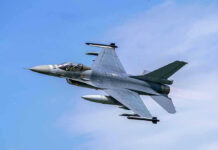

A federal jury just shut down a high-profile “cover-up” case tied to a Marine crash that killed 16 service members—raising hard questions about how Washington investigates tragedy without scapegoating the people lowest on the totem pole.
Story Snapshot
- Mississippi jurors acquitted retired Air Force civilian engineer James Michael Fisher of obstruction and false-statement charges tied to the 2017 “Yanky 72” KC-130T crash.
- Prosecutors alleged Fisher hid his role in approving inspection changes that reduced the chance of catching cracks or corrosion in a propeller blade.
- The crash killed 15 Marines and one Navy corpsman after a propeller blade failed mid-flight over rural Mississippi.
- The case highlighted tensions between accountability for leadership decisions and blame placed on frontline technicians following manuals.
Jury Acquits Engineer in “Yanky 72” Federal Case
A Mississippi federal jury found James Michael Fisher not guilty on all charges after an eight-day trial in Greenville, ending a case that centered on what Fisher told investigators during a probe into the deadly 2017 Marine KC-130T crash known as “Yanky 72.” Fisher, a former Air Force civilian propulsion engineer at Robins Air Force Base in Georgia, faced allegations of obstruction of justice and making false statements.
Investigators traced the case back to maintenance and engineering decisions surrounding propeller blade inspection procedures. Prosecutors argued Fisher concealed knowledge of key paperwork and approval trails related to changes that allowed inspection methods other than penetrant (dye) checks, which are used to detect surface cracks and corrosion. Fisher’s defense countered that the government could not prove he intentionally lied or obstructed investigators.
What Happened in the 2017 KC-130T Crash
The KC-130T departed from Marine Corps Air Station Cherry Point, North Carolina, headed toward Naval Air Facility El Centro, California, when a propeller blade disintegrated over Mississippi soybean fields near Itta Bena on July 10, 2017. The aircraft went down, killing all 16 aboard—15 Marines and one Navy corpsman. The tragedy triggered fleet-wide scrutiny and significant operational disruption as aircraft were inspected and parts replaced.
The safety debate focused on how inspections were conducted and how procedural changes were approved over time. The research indicates that from roughly 2008 through 2017, the depot environment saw numerous alterations to propeller inspection steps. At issue were decisions about whether to rely on penetrant inspection versus eddy current methods. The dispute mattered because the alleged failure mechanism involved cracks or corrosion that might be missed depending on technique and execution.
Engineering Authority vs. Frontline Blame
One of the most politically and institutionally sensitive aspects of the case was the contrast between decision-makers who shape technical procedures and technicians who must follow them. The research describes how an earlier military investigation blamed maintenance technicians, with findings that framed them as grossly negligent. Later reporting emphasized that certain documents and internal approval records were not fully surfaced early on, fueling arguments that accountability was being pushed downward.
That dynamic is familiar to many conservative-leaning voters who distrust bureaucracies that protect their own leadership layers while punishing workers who complied with official guidance. In this case, the jury’s verdict does not determine what maintenance policy was “best,” but it does establish that prosecutors did not meet the burden of proof that Fisher intentionally obstructed the federal investigation or knowingly made false statements.
What Prosecutors Alleged—and What the Verdict Means
Federal prosecutors built their theory around a paper trail involving inspection waivers and forms that documented changes in blade inspection requirements. The allegation was not manslaughter; it was obstruction and false statements—charges that require proof of intent and material deception. Defense arguments emphasized alternate explanations for how defects can be missed, and disputed whether Fisher personally authorized the contested changes as prosecutors described them.
The acquittal is a reminder that “someone must pay” is not the same thing as “the government can prove a crime.” That distinction matters for constitutional governance because the justice system is supposed to punish proven wrongdoing, not simply deliver closure. The families of the fallen still deserve transparency about decision chains, document handling, and the adequacy of depot oversight—questions that remain bigger than one defendant.
Where Accountability Questions Go From Here
The crash forced reforms and inspections across fleets, but the trial highlighted process vulnerabilities that Washington will have to address if it wants public confidence. The research points to internal procedure changes, form approvals, and expert consultation gaps as core friction points. In practical terms, the military services and depots will need robust documentation controls, clear technical authority lines, and inspection standards that can withstand both audits and courtroom scrutiny.
Air Force engineer found not guilty of cover-up in deadly Marine KC-130 crash https://t.co/65kO5Xb9fc
— Task & Purpose (@TaskandPurpose) March 13, 2026
For the public, the case leaves two truths on the table at the same time: a catastrophic loss occurred, and a jury found the government did not prove this specific engineer committed the charged crimes. In an era when Americans are tired of politicized institutions and selective enforcement, the lesson is straightforward—demand answers and reforms, but insist that prosecutions stay anchored to evidence, intent, and due process.
Sources:
Air Force Engineer Charged with Cover-Up in Marine KC-130 Crash
Mississippi jury acquits engineer accused of lying about 2017 military plane crash
Engineer charged obstructing criminal investigation into cause of “Yanky 72” plane crash