
A deadly Austin bar shooting is now being probed for a possible terrorism nexus—raising hard questions about radicalization, security, and how fast law enforcement can stop the next attack.
Quick Take
- Three people were killed and 14 were wounded outside Buford’s Backyard Beer Garden on Austin’s West 6th Street early Sunday, March 1, 2026.
- Police identified the shooter as Ndiaga Diagne, a 53-year-old naturalized U.S. citizen originally from Senegal, who was killed on scene after firing at officers.
- Federal investigators say early indicators suggest a potential terrorism link, but they have not finalized motive and are also weighing mental health history.
- Evidence cited in briefings included pro-Iran or Islamist-themed items and clothing, with the attack occurring one day after U.S.-Israel strikes in Iran reportedly killed Iran’s supreme leader.
What Happened on West 6th Street
Austin police and federal partners say the attack unfolded around bar-closing time in the city’s crowded Sixth Street entertainment district. Reports described a shooter circling the block in an SUV and firing a handgun from the vehicle toward people outside Buford’s Backyard Beer Garden on West 6th Street. The suspect then reportedly stopped, exited with a rifle, and continued shooting at pedestrians. Three people died, and 14 others were hospitalized, including several in critical condition.
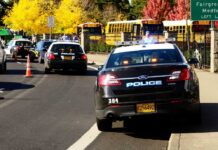
Officials credited a rapid response for limiting the carnage in a packed nightlife corridor near the University of Texas. Austin-Travis County EMS said first responders arrived within about a minute of the initial call, and police engaged the shooter quickly after he fired at officers. Authorities said three officers returned fire, killing the suspect at the scene. Investigators asked the public for tips, photos, and video as they reconstructed movements, shots fired, and the exact sequence of events.
Who the Suspect Was, and Why Motive Is Still Not Settled
Authorities identified the suspect as Ndiaga Diagne, 53, described as Senegal-born and later a naturalized U.S. citizen. Investigators said he entered the United States in 2000 on a tourist visa, obtained a green card in 2006, and became a U.S. citizen in 2013. He reportedly lived in New York before moving to Pflugerville, a suburb outside Austin. Officials also referenced prior mental-health episodes in the Austin area, a factor now being weighed alongside other evidence.
Federal officials stressed that “potential nexus” does not equal a final conclusion, and the investigation is still in an early stage. The FBI’s Joint Terrorism Task Force is working alongside local and state partners to determine whether this was terrorism, a mental-health-driven act of violence, or a mix of factors. Sen. Ted Cruz publicly cautioned that investigators did not yet know for sure whether terrorism was the driving motive, underscoring the need for evidence-based conclusions rather than instant narratives.
Evidence Fueling the Terrorism Line of Inquiry
Investigators cited specific indicators they say justify examining terrorism. Reports said the shooter wore clothing with explicit religious and geopolitical messaging, including a “Property of Allah” hoodie and an Iran-flag T-shirt. Authorities also described items recovered during searches, including an Iranian flag and photos of Iranian leaders at the suspect’s home. In the suspect’s vehicle, reports said investigators found a Quran along with weapons. Those details, while not proof of operational ties, are central to the current motive review.
The timing also pushed the case into national-security territory. The shooting occurred the day after U.S. and Israeli forces reportedly carried out strikes in Iran that killed the country’s supreme leader, Ayatollah Ali Khamenei. Officials have not publicly confirmed any direct coordination between the suspect and a foreign group, and early reporting described the suspect as acting alone. Even so, when an attacker pairs mass violence with overt ideological signals, investigators typically treat it as a potential inspired attack until facts rule it out.
Political and Public-Safety Stakes for Texas—and the Country
Texas leaders condemned the attack and framed it in terms of public safety and threats that can spill over from overseas conflict. Gov. Greg Abbott said Texas would respond decisively to threats, while local leaders praised first responders for a rapid stop. For many Americans—especially those frustrated by years of elite excuses and bureaucratic delay—the immediate concern is straightforward: public places can become targets fast, and government’s first job is protecting citizens’ right to live free and safe.
Here's More Info on the Terror Attack at an Austin Bar
https://t.co/UD2bMK592L— Townhall Updates (@TownhallUpdates) March 2, 2026
For conservatives watching this unfold in 2026, the facts point to a familiar lesson: rapid, competent law enforcement presence saved lives, while the motive question must be answered with evidence, not political talking points. The public still lacks a final determination on whether this was terrorism, how the suspect radicalized (if he did), and what warning signs existed. Investigators say the case remains active, and the public’s role—tips, videos, and verified information—will matter as officials build a clear timeline and motive.
Sources:
Mass shooting at Austin, Texas bar leaves at least 3 dead, multiple people wounded