

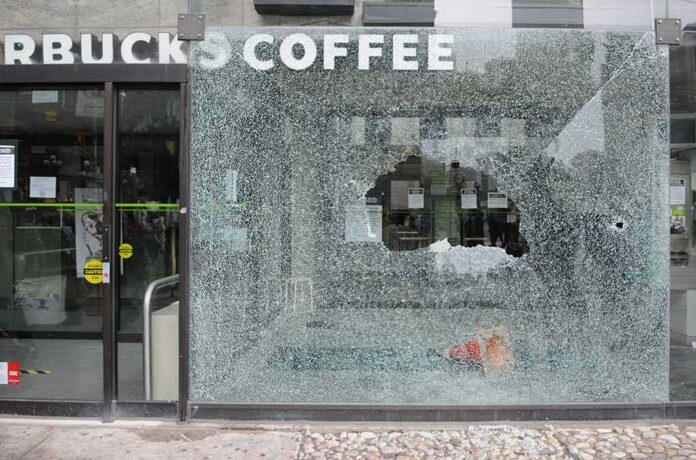
Shattered storefronts and at least 22 injuries after a pre-dawn quake in central Japan show how fast a normal night can turn dangerous.
Story Snapshot
- A strong earthquake struck central Japan early Sunday, injuring at least 22 people.
- Japanese television showed broken windows and glass on streets in several towns.
- Japan’s Meteorological Agency measured magnitude 5.7; the U.S. Geological Survey listed 5.5.
- Some injuries happened as people fell on stairs while rushing to evacuate.
What Happened In Central Japan
Local media in Japan reported at least 22 people were hurt after a strong earthquake shook central regions early Sunday. The Associated Press said the quake shattered store windows, and television images showed glass spread across sidewalks and streets. Reporters described people who fell on stairs while trying to flee buildings during the shaking. Japan’s Meteorological Agency put the magnitude at 5.7, while the United States Geological Survey listed 5.5 for the same event, a small difference common in early reports.
Footage aired in Japan showed broken storefronts and workers sweeping up shards. These scenes matched the reports of damage in commercial areas. The injuries, while not all severe, underline how even moderate earthquakes can cause harm when glass breaks and people rush to exit. The Associated Press video package highlighted the scattered debris and emergency responses after the tremor, giving a clear view of the impacts in several locations across central Japan that felt strong shaking.
Where The Injury Numbers Come From
The Associated Press attributed the injury count to local media tallies, which is common in the first hours after a quake. The report said at least 22 were hurt, a figure that can change as officials gather more complete information. The account also detailed how some people were injured on stairs during evacuations. That detail fits known patterns in quake response, where fear of aftershocks and falling objects pushes people to move fast, sometimes without light or clear exits.
Other outlets that carried the same Associated Press dispatch repeated the key facts: a strong quake in central Japan, at least 22 injuries, and shattered windows in shopping areas. Several carried the same magnitude notes, with 5.7 from Japan’s Meteorological Agency and 5.5 from the United States Geological Survey. This broad pickup helps confirm the basic timeline and effects, even as official agencies may later refine the magnitude or the injury count.
Why Magnitude Reports Can Differ
Japan’s Meteorological Agency and the United States Geological Survey use different data networks and methods to estimate size in the first minutes after a quake. That is why one agency listed 5.7 and the other 5.5. Scientists often update numbers as more stations report in. Magnitude describes the energy at the source, not the shaking any one person feels. A small change, like 0.2, is normal and does not change the on-the-ground facts of broken glass and injured people.
JAPAN: At least 22 people have reportedly been injured after a magnitude 5.7 earthquake struck central Japan.
The strongest shaking was recorded in Chita, Aichi Prefecture, with reports of injuries emerging following the tremor.
Emergency authorities are assessing the situation…
— Naveed Khan (@i_Naveediqbal) November 8, 2026
Magnitude is also not the same as intensity. Magnitude is one number for the quake’s size. Intensity varies by place and depends on local soil, depth, and distance from the epicenter. That is why a mid-five magnitude quake can still break windows and cause injuries in certain areas. The United States Geological Survey explains that small differences in early magnitude estimates are common and can reflect updates to the data set and the scale used for calculation.
What It Means For Public Safety
The reported injuries, many tied to fast evacuations, point to a basic safety gap. People often face darkness, broken glass, and crowded stairwells. Simple steps help: keep shoes and a flashlight by the bed, know two exits, and avoid running. In glass-heavy districts, owners can use safety film and secure displays. These are low-cost moves that cut risk when the ground shakes at night. Japan’s quick cleanup shows the value of drills and clear roles in the first hours after a quake.
For readers in the United States, this is a reminder that preparedness is a local job first. National leaders talk about resilience, but help often arrives after the first, most dangerous minutes. Families, stores, and schools can plan for those minutes now. Keep first aid kits close, practice drop-cover-hold on, and stage water and battery power. Earthquakes give no warning, and government cannot be at every door. Personal readiness turns a bad night into a safer one while officials coordinate wider aid.
Context On Nearby Seismic Activity
News outlets also reported a separate magnitude 6.1 earthquake off Tokyo around the same period, with no immediate damage or injury reports. That event was distinct from the central Japan quake that injured at least 22 people, and it did not trigger a tsunami alert, according to coverage at the time. Early hours after quakes can bring overlapping headlines, so matching location, time, and effects helps keep the two events straight in public updates.
Japan’s dense seismic networks and building codes save lives, yet glass hazards and stairwell falls still injure people. The images of broken shopfronts in central Japan underline that risk. The key takeaway holds across borders: know how to move safely when alarms sound, and plan for darkness, debris, and crowds. That personal plan, plus steady local response, is what turns fast-moving danger into a manageable scene once the shaking stops.
Sources:
youtube.com, apnews.com, indianexpress.com, orbisweather.com
© newsalertdaily.org 2026. All rights reserved.