

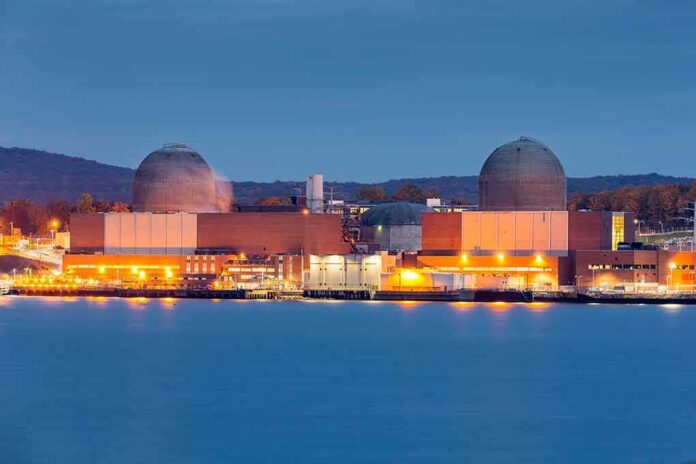
Kentucky just jumped from zero reactors to a proposal for a six‑reactor nuclear campus that could be the largest in America if fully built.
Story Highlights
- A developer proposed up to six Westinghouse AP1000 reactors at Carrs Bottom in Lewis County.
- The first phase targets two reactors, with work toward federal approvals and site development next.
- The site has local partners and land control through an option, but no federal license or grid deal yet.
- If all six units are built, the campus could reach about 6.6 gigawatts of power.
What Was Announced and Where It Would Go
The Nuclear Company announced plans for “Prosperity One,” a nuclear campus on the Ohio River at Carrs Bottom, about seven miles west of Vanceburg. The developer says the site could host up to six Westinghouse AP1000 reactors with about 6.6 gigawatts of capacity, enough power to serve several million homes in total output terms. Company materials identify an option agreement for the land and name local participation through Trace Creek and landowner Sam Howard.
The plan sets a phased path. The first phase aims to build two AP1000 reactors with about 2.2 gigawatts combined. Later phases could add up to four more units if conditions allow. The AP1000 is a full‑size commercial design already operating in the United States and abroad, which means the reactors are not a novel, first‑of‑a‑kind concept. Project backers say they will begin site work and pursue federal approvals, with a goal to start construction in 2028.
Licensing, Grid Access, and What Still Must Happen
The proposal remains at an early stage. Reports say the company has not filed its license application with the Nuclear Regulatory Commission. It also has not secured a grid interconnection agreement with the regional grid operator. No federal loan has been awarded. Those steps are standard for any large nuclear project and will shape if and when construction can begin. Local officials and trade groups have stressed the need for studies and formal reviews before any build.
The company frames the full six‑reactor buildout as the site’s potential rather than a firm commitment. That difference matters in public claims. The “largest in the United States” label depends on later phases moving forward after the first two units. Power output, financing, transmission, and environmental reviews will all influence the final size and timing. The developer has said it will conduct site studies on geology, flooding, water use, and emergency planning as part of the federal process.
Why This Matters for Power, Jobs, and Reliability
A campus of this scale would be a major source of steady, low‑carbon electricity. Big reactors can run around the clock and support factories, data centers, and homes when the wind is still and the sun is down. For eastern Kentucky, years of job losses and rising power demands make firm power attractive. The plan highlights local partners and possible construction and permanent jobs, along with new tax base. Those claims will need modeling and agreements as planning advances.
For families frustrated by high electric bills and blackouts, new baseload power is a clear draw. For environmental advocates concerned about emissions, nuclear power offers low‑carbon generation at large scale. For people on both the left and right who doubt that Washington can deliver, the key test will be execution. Clear milestones, transparent permits, and real financing will matter more than lofty press events. Communities often judge these projects by whether promised jobs and rates actually show up.
Track Record: Promise and Pitfalls in Big Nuclear Builds
Recent history shows both success and struggle. Two AP1000 units at Plant Vogtle in Georgia entered service after long delays and higher costs than first planned. Those units now supply large amounts of steady power. Earlier, many United States reactor orders were canceled in the 1970s and 1980s as costs rose and timelines slipped. By 1983, about 100 nuclear units had been delayed or canceled, nearly 45 percent of planned capacity at that time.
☢️🇺🇸 BIG NUCLEAR ENERGY PLANS IN KENTUCKY!
The Nuclear Company has announced Prosperity One, a proposed 6.6-gigawatt nuclear power campus in Lewis County, Kentucky.
If fully built, it would become the LARGEST nuclear energy site in America! ⚡ pic.twitter.com/8Gn9Mxditg
— Greg 🇺🇸 ✭ (@GregB_TX) October 26, 2026
That pattern is why the Kentucky plan splits into phases. Starting with two units can lower risk and let the developer prove timelines and costs before adding more. The Westinghouse AP1000 design has operating references, which can aid licensing and public review. Even so, success will hinge on steps the company has not yet reached: a complete license application, a grid interconnection deal, construction financing, and a buyer for the power. Each step is a gate the project must clear.
What to Watch Next
Watch for the Nuclear Regulatory Commission pre‑application meetings and a docketed license filing. Look for the grid interconnection request to appear and move through study queues. Check for firm financing announcements or federal loan decisions. Follow any state or county economic analyses on jobs, wages, and taxes. These actions will show if Prosperity One is moving from concept to construction, and whether Kentucky can move from zero reactors to a flagship nuclear site.
Sources:
publicpower.org, aapnews.aap.com.au, lewiscountyherald.com, wowktv.com, ans.org, kentuckytoday.com, michiganintheworld.history.lsa.umich.edu
© newsalertdaily.org 2026. All rights reserved.