
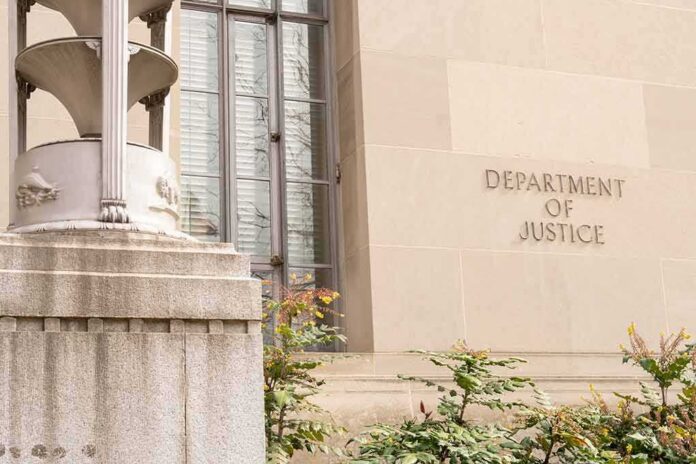
Federal prosecutors charged two former Federal Bureau of Investigation officials with lying to Congress about the Hunter Biden laptop investigations, reviving concern about honesty inside the nation’s top law enforcement agency.
Story Snapshot
- Justice Department charged two ex-officials over 2023 testimony to the House Judiciary Committee.
- Case centers on statements about the Foreign Influence Task Force and Hunter Biden probes.
- Both defendants surrendered on arrest warrants and face a single false-statements count each.
- Charges sharpen the fight over how federal agencies police politics-adjacent cases.
What Prosecutors Allege In The Case
The Department of Justice said Nikki Cole Floris and Bradley Benavides lied to Congress about their roles and awareness of investigations tied to Hunter Biden and his laptop. Prosecutors allege both made materially false statements during 2023 testimony to the House Judiciary Committee. The criminal complaint says those statements hid their involvement and insight into work by an FBI unit that tracked foreign influence. Each faces one count for false statements to Congress and has surrendered to authorities.
A sworn Statement of Facts outlines dates and content of the alleged false answers. Prosecutors wrote that Floris on July 19, 2023, and Benavides on September 28, 2023, denied or downplayed knowledge of related investigative activity. The document links those denials to the panel’s authorized inquiry into the Foreign Influence Task Force. It argues the statements were important to Congress because they touched on how the FBI handled politically sensitive matters near a national election.
Why The Foreign Influence Task Force Matters
The Foreign Influence Task Force operated inside the FBI to guard against foreign meddling. Its work during the 2020 cycle drew attention, since any call it made could shape what voters saw or did not see. The current case does not claim the task force itself broke a law. It focuses on whether two former officials lied about their roles and awareness. That is a narrower legal issue but sits inside a larger trust debate over federal power.
Congressional oversight often doubles as a legal and political process. Lawmakers seek facts to write laws and run checks on agencies. Witnesses swear an oath to tell the truth, and false statements can become crimes if they are knowing and material. Past episodes show that prosecutions for testimony are selective, but they do happen. The Justice Department has charged figures in both public and private life when it believes the evidence is strong.
How This Fits Today’s Political Landscape
President Trump and a Republican Congress have pressed for tougher oversight of the security state. Many conservatives argue that prior years saw bias inside major agencies. Many liberals argue that “America First” politics threaten independent law enforcement. Yet a growing share on both sides now complains that powerful insiders protect their own. This case will test whether the system can hold former senior officials to the same rules as everyone else, based on facts and law.
JUST IN: Two former senior FBI officials surrendered Friday after DOJ charged them with lying to Congress about the Hunter Biden investigations.
U.S. Attorney Jeanine Pirro announced the charges. FBI Director Kash Patel says documentary evidence, contemporaneous communications…
— The Scoop (@TheScoop_US) October 24, 2026
The charges do not decide guilt. The government must prove the statements were knowingly false and material to Congress. The defense can argue memory errors, unclear questions, or lack of intent. Still, the filing itself is notable. It shows the Justice Department is willing to bring a case that cuts into the FBI’s past handling of an election-season flashpoint. That step alone signals pressure to rebuild trust through clear records and sworn accountability.
What To Watch Next
Key next steps include any indictment by a grand jury, motions that challenge how questions were asked, and possible releases of transcripts. Lawmakers may seek more documents from the FBI to map who knew what and when. If the court allows more evidence, the public may gain a sharper view of how the task force worked in 2020. The outcome will shape how future witnesses approach Congress and how agencies record decisions in hot political moments.
Sources:
thegatewaypundit.com, abc7.com, cbsnews.com, yahoo.com, ijpr.org, justice.gov
© newsalertdaily.org 2026. All rights reserved.