
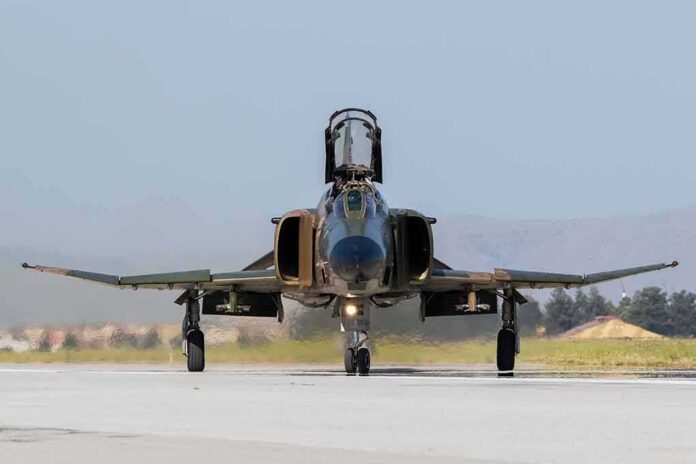
A Hellenic Air Force F-4 Phantom crashed during a packed air show near Athens, killing both pilots, as officials confirmed the cause remains under investigation.
Story Highlights
- Greek F-4 Phantom crashed during Athens Flying Week at Tanagra Air Base; both pilots died.
- Officials said the jet went down outside the airport; no bystander injuries were reported.
- The Hellenic Air Force named the unit and time, and opened a formal investigation.
- Thousands attended; early reports differed before officials confirmed the fatalities.
Crash During Public Demonstration Near Athens
Greek defense officials said a two-seat F-4 Phantom fighter crashed during the Athens Flying Week show at Tanagra Air Base, north of Athens, on Saturday. Two officials told Reuters both pilots were killed, and authorities reported no injuries among spectators or nearby residents. The Associated Press also confirmed the fatal crash during the annual event with thousands present. Organizers and media described a display flight that ended in a loss of altitude and impact near the base.
Reuters reported the aircraft went down about two kilometers outside the airport perimeter, limiting harm on the ground. The Hellenic Air Force later identified the aircraft as an F-4E Phantom II from the 338th Squadron, 117th Fighter Wing, and listed the crash time at 14:55 local. The service reported fatal injuries to both crew members and said a competent Air Force committee launched a formal inquiry into the cause. Officials did not release a preliminary cause.
What Officials Have Confirmed So Far
The public record lines up on key facts: the aircraft type, the unit, the location near Tanagra, the time window, and the deaths of both aviators. Early dispatches differed on the pilots’ status before authorities confirmed the fatalities, which is common during fast-moving incidents. Reports also vary in describing the exact crash point, using either nautical miles from a nearby wing or distance from the airport. That difference does not change the core event.
The Hellenic Air Force said investigators will examine the wreckage and records to determine what failed. Aviation investigations often start with clear facts about who, what, and where, while the why takes longer. Prior airshow probes show that final findings can blend pilot actions, display planning, and equipment or maintenance factors rather than one single error. United States investigators have documented similar step-by-step reporting in airshow cases before final cause rulings.
Safety, Public Trust, and Why This Matters
Thousands of people attended a government-run event and watched a military jet fall from the sky. That shakes public trust in basic safety. People on the right and left share a simple expectation: when the state invites families to a show, it must guard life first. Clear rules, honest communication, and full release of investigation findings help restore that trust. Many readers see a larger pattern where officials speak late and release little until pressure builds.
BREAKING | GREEK FIGHTER JET CRASHES DURING AIR SHOW, KILLING BOTH PILOTS
Thousands of spectators watched in horror as a Greek F-4 Phantom fighter jet crashed during an air show, killing both pilots on board.
The aircraft was reportedly flying just meters above the ground during… pic.twitter.com/hAdrw50Iz5— CSB News USA (@csbnewsus) September 6, 2026
Greek authorities control the most important evidence, including maintenance logs, pilot communications, radar, and video. Timely disclosure will matter. Families deserve facts. So do citizens who fund the force and attend public events. Past cases show that early headlines can set a story before facts are complete. Officials can counter that by sharing verified timelines and safety steps, and by explaining how future shows will keep aircraft and crowds well apart while crews fly within safe margins.
What Comes Next in the Investigation
Investigators will map the flight path, analyze debris, and study engine and control systems. They will review the display plan, altitudes, and speeds, plus crew training and rest. They will align video frames with radar data to define the final seconds. They will test whether a mechanical fault, a misjudged maneuver, or a different factor best fits the evidence. The Air Force has said only that the cause is under review; that is the firm boundary today.
Sources:
insiderpaper.com, nypost.com, euronews.com, straitstimes.com
© newsalertdaily.org 2026. All rights reserved.