
A fragile, conditional Israel–Lebanon truce hangs on Hezbollah standing down and pulling back—an uneasy peace that could snap the moment terrorists test the line.
Story Snapshot
- Israel and Lebanon confirmed a conditional ceasefire after United States–mediated talks in Washington, tied to Hezbollah halting all fire [1][2].
- The framework reportedly envisions “pilot” security zones in southern Lebanon under exclusive Lebanese Armed Forces control [2].
- The truce’s success depends on verifiable Hezbollah withdrawal from areas south of the Litani River [1][2].
- Defense delegations met in a first-ever Pentagon setting to curb escalation and formalize security steps [5].
Conditional Truce Hinges On Hezbollah Compliance
United States mediation produced a ceasefire framework that both Israel and Lebanon publicly confirmed, but only on the condition that Hezbollah fully stops firing and pulls its operatives out from south of the Litani River [1][2]. The structure aims to freeze hostilities if the armed group stands down, reducing cross-border rocket and missile threats. The conditional nature underscores that the deal is not self-executing; it requires steps on the ground and verification before residents along Israel’s north can truly breathe easier [1].
Israeli and Lebanese representatives described the plan as a step toward securing the border, not a final peace, by tethering quiet to demonstrable changes in Hezbollah’s posture [1][2]. By building the ceasefire around compliance, Washington’s framework seeks to turn off the daily trigger for escalation. If enforced, that condition could throttle the flow of Iranian-supplied rockets toward Israeli communities. If ignored, it risks reverting to the cycle of warning shots, reprisals, and wider confrontation that punishes civilians first [1][3].
Security ‘Pilot Zones’ And The Role Of Lebanese Forces
Diplomatic briefings and public statements referenced “pilot” security zones inside Lebanon where only the Lebanese Armed Forces would operate, displacing non-state fighters from immediate border proximity [2]. That approach mirrors prior blue-line stabilization tactics: put a national military in the lead and reduce the space for militias to dig in. For Israel, the concept addresses infiltration routes and launch points near farms, towns, and ridgelines that have long enabled harassment fire against border communities [2].
Placing the Lebanese Armed Forces in sole control tests Beirut’s ability and will to confront or sideline Hezbollah in sensitive terrain. Effective execution would signal that the central government can secure its south without militia muscle. Weak enforcement would leave a familiar pattern: declarations in Washington followed by hedging on the ground. The plan’s “pilot” label acknowledges this reality, phasing implementation to measure whether the model actually reduces the risk of renewed barrages and cross-border ambushes [2][6].
Washington Talks And The Risk Of A Fragile Pause
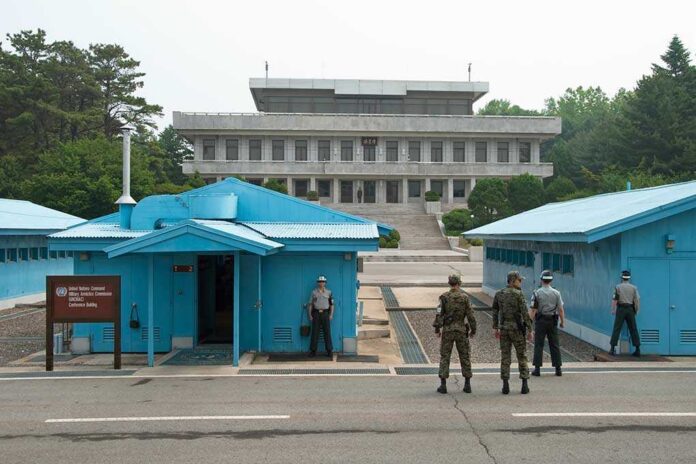
Pentagon-hosted meetings between Israeli and Lebanese military delegations marked a notable first and aimed to build a channel for managing incidents that could otherwise spiral into war [5]. That forum matters when a single rocket, drone, or border breach can spark retaliation. Trilateral coordination under United States stewardship gives both sides a place to press complaints, request clarifications, and set technical steps—like patrol patterns or sensor placement—to keep the ceasefire from unraveling under pressure [5].
Regional reporting still describes a volatile environment where ceasefire language is stress-tested by sporadic violence and wider tensions, including strikes and counterstrikes linked to Iran’s network [3]. Such pressures can quickly erode confidence if compliance falters or verification lags. The framework’s success therefore turns on two immediate tasks: ensuring Hezbollah’s verifiable pullback and empowering the Lebanese Armed Forces to police the pilot zones credibly. Without both, the truce remains paper-thin and vulnerable to the next provocation [1][3].
What It Means For U.S. Interests And Conservative Priorities
United States leadership leveraged diplomatic capital to lower the odds of a wider northern war that would endanger an ally, spook energy markets, and distract from domestic priorities. Tying calm to Hezbollah’s stand-down sets a standard that rewards lawful border security, not militia intimidation. That aligns with a peace-through-strength approach: deter terrorists, back allies, and condition relief on verifiable disarmament steps—rather than writing blank checks to actors who defy international norms and threaten Israel’s towns [1][2][5].
The United States, Israel and Lebanon agreed to a ceasefire framework during the fourth round of US-led trilateral talks held on June 2–3, 2026, according to a joint statement released on Wednesday.
The agreement stipulates that the ceasefire is contingent on a complete halt to…
— Alex kennedy (@Alexkennedy213) June 4, 2026
For American readers wary of endless Middle East entanglements, the metric is simple: does this deal protect civilians, constrain Iran’s proxy, and avoid new obligations for United States troops? The conditional, enforceable framework points in that direction if compliance holds. If Hezbollah breaks the terms, the burden of blame is clear, and Israel retains the right to defend its border. Until verification proves otherwise, this is a cautious pause—useful, but only as strong as its enforcement mechanisms [1][2][3][5].
Sources:
[1] YouTube – Israel and Lebanon confirm truce after US-mediated talks in Washington
[2] YouTube – US says Lebanon, Israel commit to ceasefire to end fighting
[3] YouTube – Ceasefire tested as US, Iran exchange strikes and Israel bombards …
[5] Web – Pentagon hosts first-ever Israeli–Lebanese military talks … – Fox …
[6] Web – US brokers Israel-Lebanon ceasefire and military ‘pilot zones’ plan
© newsalertdaily.org 2026. All rights reserved.