

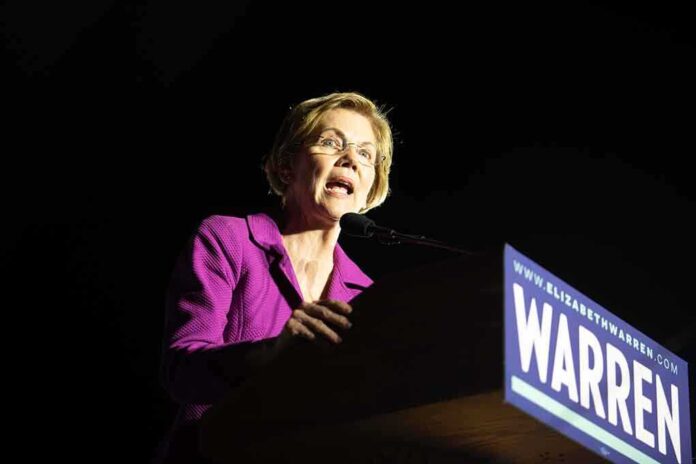
Elizabeth Warren is using a must-pass defense bill to sneak in a radical housing scheme that could haunt President Trump’s new term and every conservative who cares about limited government.
Story Snapshot
- Sen. Elizabeth Warren is reportedly trying to attach a sweeping housing agenda to the National Defense Authorization Act (NDAA).
- Using the NDAA as a “dumping ground” for unrelated liberal projects sidesteps real debate and accountability.
- Conservatives warn this tactic risks exploding federal spending and tightening Washington’s grip on local land use.
- Trump’s 2025 return focused on cutting bloat and restoring constitutional limits now clashes with Warren’s big-government push.
Warren’s Housing Gambit Hidden Inside a Defense Bill
Reports indicate that Sen. Elizabeth Warren is trying to leverage the annual National Defense Authorization Act as a vehicle for what critics are calling a “housing bill from hell.” The NDAA is supposed to fund and guide the U.S. military, yet it has increasingly turned into a magnet for unrelated liberal wish-list items. Conservatives see this maneuver as a deliberate way to bypass normal scrutiny for a massive ideological housing package.
Attaching sweeping domestic policy to the NDAA matters because lawmakers face intense pressure to pass the defense bill on tight timelines. That pressure lets controversial provisions ride along with core national security priorities. When Warren folds housing mandates into the NDAA, members reluctant to oppose the Pentagon’s base funding essentially get trapped into swallowing her agenda. For constitutional conservatives, that tactic looks less like legislating and more like exploiting the troops as political cover.
Why the NDAA Became a Dumping Ground for Liberal Pet Projects
The National Defense Authorization Act has, over the years, become Washington’s favorite “Christmas tree” bill, with lawmakers hanging unrelated ornaments on what should be a focused defense package. Instead of debating housing, social policy, or tech regulation through regular order, Congress now often glues these items onto the NDAA at the eleventh hour. That pattern trains lobbyists and activists to view America’s warfighters as bargaining chips for domestic experiments.
Conservative observers argue this trend erodes transparency and encourages exactly the kind of backroom legislating voters despise. When a housing overhaul rides on the same train as troop pay raises and weapons modernization, citizens struggle to track who supported what. Members can later claim they “had to vote yes for the troops,” even if they privately opposed the social-policy riders. The result is less accountability, more spending, and policy outcomes that never survived serious debate in the open.
The “Housing Bill from Hell” and Its Threat to Local Control
Although full legislative text is still emerging, Warren’s proposal is described by critics as a sweeping federal intervention in housing markets, zoning, and land use. Instead of allowing states and communities to decide how neighborhoods grow, the bill could tie defense-related or federal funds to progressive housing conditions. That approach effectively pressures localities to accept higher-density, federally steered development that aligns with left-wing urban planning priorities rather than local preferences.
For many conservatives, this kind of Washington-knows-best housing policy is a direct threat to property rights and community self-governance. When the federal government conditions key funding on compliance with uniform housing standards, it dilutes the authority of states and local voters to shape their own streets, schools, and infrastructure. The bill’s critics warn that federalized housing rules risk accelerating congestion, straining public services, and forcing suburban communities into social experiments they never voted for.
Clash With Trump’s 2025 Push to Rein in Washington
President Trump’s return to the White House in 2025 centered on rolling back bloated federal power, cutting red tape, and restoring clear constitutional lines. The new administration has emphasized undoing the regulatory excess and spending spikes associated with the Biden years. Trump’s team has promoted tighter control of federal agencies, reductions in ideological programs, and a renewed focus on core national interests like border security and defense readiness.
Warren’s attempt to bolt a giant housing intervention onto the NDAA runs squarely against that governing philosophy. While Trump works to streamline government, reform benefit programs, and restore fiscal discipline, a housing megabill buried in a defense package would drag Washington back toward sprawling mandates and open-ended commitments. Conservative readers who watched inflation, high rents, and housing uncertainty explode under progressive rule see little wisdom in handing more leverage to the same central planners.
Fiscal Risks and the Legacy of Biden-Era Overspending
The likely price tag for Warren’s housing ambitions raises red flags for taxpayers already burned by years of overspending. Biden-era stimulus, pandemic outlays, and expansive social programs fueled record deficits and helped drive the inflation that hammered middle-class families. Many conservatives now prioritize restoring sound budgeting and curbing Washington’s addiction to “temporary” programs that become permanent fixtures buried deep in federal baselines.
Embedding a long-term housing framework inside the NDAA makes it even harder to unwind later. Once defense-related funding streams are tangled with housing mandates, future efforts to trim or reform the bill risk being accused of “defunding the military.” That dynamic protects big-government experiments from the normal fiscal accountability voters demand. For an audience already frustrated with runaway debt and shrinking purchasing power, such tactics look like a direct assault on financial sanity.
What Conservatives Should Watch as the NDAA Fight Unfolds
As Congress debates the NDAA, conservatives will be watching closely to see which lawmakers demand clean defense legislation and which quietly accept Warren’s housing riders. Transparent floor debates, clear amendment votes, and public explanations will help expose who stands for limited government and who tolerates liberal pet projects smuggled in under a camouflage of national security. Grassroots pressure and primary challenges may await Republicans who capitulate without a fight.
For Trump-supporting voters, this fight is about more than one bill: it is a test of whether Washington learned anything from the last decade’s mistakes. Using America’s military funding as a vehicle for ideological housing policy disrespects the troops and the taxpayers who support them. Holding the line against Warren’s “housing bill from hell” inside the NDAA means defending constitutional process, local control, and the principle that national defense should never be a bargaining chip for social engineering.