
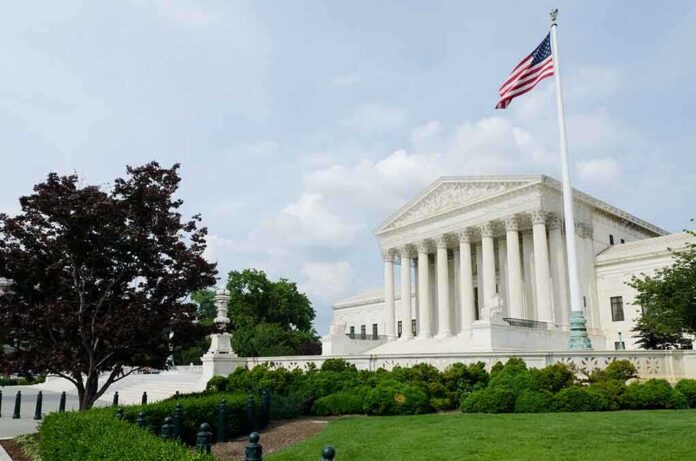
Supreme Court unanimously clears path for Christian street preacher to challenge Mississippi city’s speech restrictions, shielding First Amendment rights from government overreach.
Story Highlights
- U.S. Supreme Court rules 9-0 on March 20, 2026, allowing Gabriel Olivier’s lawsuit to proceed despite his 2021 conviction under Brandon’s protest ordinance.
- Decision clarifies First Amendment protections trump municipal barriers when seeking future relief from unconstitutional laws.
- Brandon’s 2019 ordinance confined preachers to remote zones, arresting Olivier for sidewalk evangelism near amphitheater.
- Unanimous ruling authored by Justice Kagan rejects city’s use of Heck precedent to silence constitutional challenges.
- Victory bolsters religious liberty amid rising government attempts to corral free speech into “designated areas.”
Christian Preacher’s Arrest Sparks Constitutional Clash
Gabriel Olivier, a devoted Christian evangelist from Bolton, Mississippi, preaches the Gospel using loudspeakers and signs outside public venues. In May 2021, he positioned himself on the sidewalk in front of Brandon’s amphitheater to share his faith. City police arrested him for ignoring the designated protest zone, which he deemed too distant to reach concertgoers effectively. Olivier pleaded no contest, paying a $304 fine and serving one-year probation. This incident exposed tensions between local control and core constitutional freedoms that conservatives hold dear.
Lower Courts Block Challenge Using 1994 Precedent
Brandon enacted its demonstration ordinance in 2019 to manage crowds at events like those at the amphitheater. The rule mandated all protesters stay in specified areas. After his conviction, Olivier filed a federal lawsuit in late 2021 under Section 1983, seeking an injunction to block future enforcement. A federal district judge dismissed the case citing Heck v. Humphrey, a 1994 Supreme Court ruling barring civil suits that imply a conviction’s invalidity. The 5th Circuit Court of Appeals upheld the dismissal, prioritizing municipal authority over individual rights.
Supreme Court Unanimously Reverses, Protects Prospective Relief
On March 20, 2026, the U.S. Supreme Court unanimously vacated the lower courts’ decisions. Justice Elena Kagan authored the opinion, holding that Olivier’s request for forward-looking relief escapes the Heck bar. The Court ruled his suit does not collaterally attack his conviction but prevents future violations. Kagan wrote that barring the case would force Olivier to either risk repeated arrests or abandon protected speech. This narrow ruling sends the merits back to district court without judging the ordinance’s constitutionality.
The decision distinguishes claims for damages tied to convictions, which Heck blocks, from injunctions against ongoing enforcement. Justices across the ideological spectrum agreed, signaling strong consensus on safeguarding speech rights. For faith-driven Americans, this affirms that past minor convictions cannot eternally muzzle constitutional challenges to overreaching local laws.
This City Arrested a Pro-Life Street Preacher Over His Speech – the Supreme Court Just Weighed In
https://t.co/ppDKAY5V2D— Townhall Updates (@TownhallUpdates) March 23, 2026
Victory for Religious Liberty Amid Broader Threats
Olivier views street preaching as essential to his faith, reaching citizens where they gather. The ruling empowers religious speakers nationwide to contest similar “free speech zones” that isolate dissent. Cities like Brandon must now defend such restrictions on First Amendment grounds, facing potential injunctions if deemed unconstitutional. This development arrives as conservatives grapple with endless foreign wars draining resources while domestic freedoms erode under regulatory pretexts. Strengthening individual liberty at home honors promises of limited government.
Long-term, the clarification of Heck could flood courts with challenges to protest ordinances, many mirroring Brandon’s. Municipalities may revise rules to avoid litigation, preserving public order without trampling rights. For families and patriots prioritizing constitutional safeguards over bureaucratic edicts, this unanimous win reaffirms America’s founding principles against creeping government control.
Sources:
Mass Lawyers Weekly: Supreme Court preacher First Amendment 1983 Heck ruling
SCOTUSblog: Unanimous court allows street preacher’s free speech case to move forward
Supreme Court Opinion: Olivier v. City of Brandon, Mississippi