
A Pennsylvania man’s home revealed over 100 human skulls in a shocking grave robbing case that exposes how weak oversight allows criminals to desecrate sacred burial sites and exploit trusted medical institutions for profit.
Story Highlights
- Over 100 human skulls discovered in Pennsylvania man’s home after cemetery desecration charges
- Suspect allegedly part of multi-state trafficking network tied to Harvard Medical School scandal
- Case exposes gaps in cemetery oversight and body donation program security
- Criminal faces felony charges including abuse of corpse and institutional vandalism
Massive Collection of Human Remains Discovered
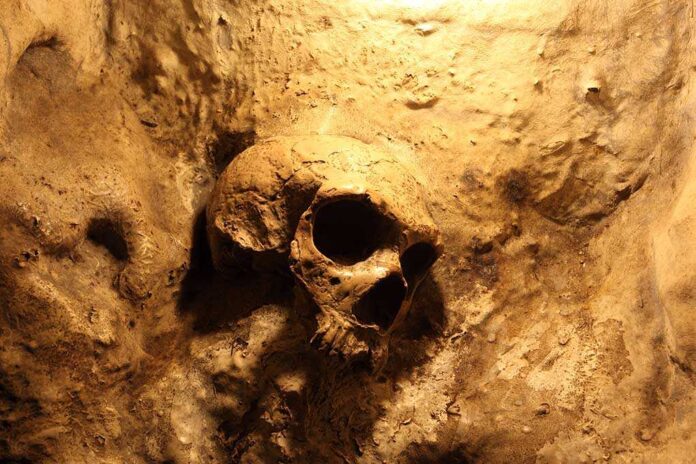
Law enforcement officers executing a search warrant at a Pennsylvania residence uncovered more than 100 human skulls along with numerous other bones and body parts, some allegedly displayed as home décor. The suspect stands accused of stealing remains from cemeteries and purchasing others from co-conspirators linked to mortuary and medical school body donation programs. This discovery represents one of the largest collections of human remains found in a private residence in recent criminal prosecutions.
The Pennsylvania man faces serious criminal charges including abuse of a corpse, receiving stolen property, theft, and institutional vandalism under state law. Federal investigators have also connected his activities to a broader multi-state trafficking network involving stolen cadaver parts from Harvard Medical School’s Anatomical Gift Program. The case spans traditional grave desecration and diversion of donated medical cadavers, bridging two different regulatory systems.
Interstate Criminal Network Exposed
Federal authorities began unraveling a multi-state trafficking network in early 2023, involving individuals in Massachusetts, Arkansas, Pennsylvania, and other states who allegedly stole and sold donated cadavers and funeral home remains. The Pennsylvania suspect allegedly purchased numerous skulls and body parts through mail delivery from these intermediaries while also desecrating local cemeteries by removing remains from graves. This criminal enterprise exploited both weak cemetery oversight and institutional diversion networks to fuel an underground market for human bones.
Co-conspirators included individuals working in funeral homes, crematories, and Harvard Medical School’s morgue who are accused of stealing donated remains and selling them through online platforms. Their alleged motivation was financial gain from the illicit sale of parts that should have been cremated or respectfully handled according to donor agreements. The Harvard connection has magnified public concerns about trust in medical schools and mortuary practices nationwide.
Legal Vulnerabilities Exposed
Pennsylvania’s fragmented legal framework for protecting human remains has created opportunities for criminal exploitation. While state law includes penalties for desecration of venerated objects and institutional vandalism, historic and archaeological human remains coverage remains incomplete. A 2021 assessment found Pennsylvania law provides guidance but lacks comprehensive protection for archaeological contexts and older burial sites, explaining how cemetery-based theft can occur over extended periods with limited detection.
Under Pennsylvania law, desecration of a cemetery constitutes a third-degree felony when involving significant desecration or pecuniary loss above $5,000. The suspect faces multiple felony charges that could result in substantial prison time and fines. However, evidentiary challenges in proving which skull came from which grave or institution may complicate prosecution efforts, particularly for older or unrecorded remains where documentation is sparse or nonexistent.
Sources:
Pennsylvania Institutional Vandalism Statute
Pennsylvania Burial Grounds Law
Historic and Archaeological Human Remains Report