

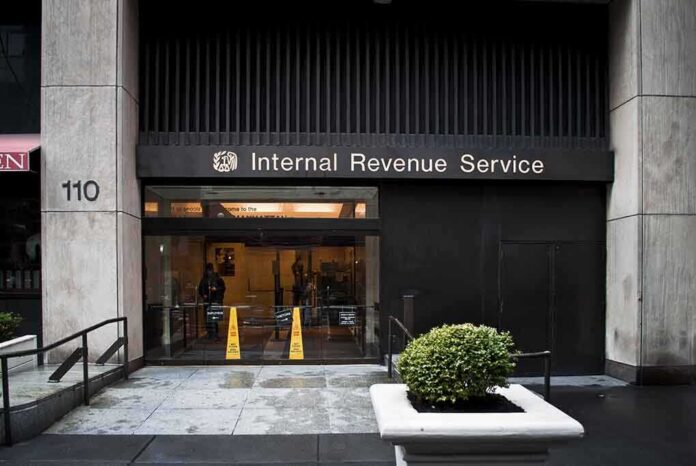
A politically motivated IRS contractor illegally leaked Donald Trump’s private tax records to left-wing media outlets — and now the lawsuit over that real breach of taxpayer confidentiality is heading toward an unexpected resolution that could redirect $1.7 billion in taxpayer funds.
Story Snapshot
- Former Internal Revenue Service contractor Charles Edward Littlejohn stole Trump’s confidential tax records and leaked them to the New York Times and ProPublica between 2018 and 2020 — Littlejohn is now imprisoned for the crime.
- Trump filed a $10 billion lawsuit against the IRS and Treasury Department, alleging the agencies failed to protect his private financial information from a politically motivated leak.
- Trump is now expected to drop the lawsuit in exchange for a $1.7 billion fund reportedly intended to compensate individuals who claim they were targeted by government weaponization.
- A federal judge questioned whether Trump and the Department of Justice are “sufficiently adverse” to proceed, raising procedural concerns about the case’s legitimacy as a true adversarial dispute.
A Real Breach With a Complicated Legal Path
The underlying facts of this case are not in dispute. Littlejohn, a contractor working for defense technology firm Booz Allen Hamilton, accessed confidential tax records belonging to Trump, the Trump Organization, and other wealthy individuals and delivered them to major news outlets. He was convicted and sentenced to prison for the unauthorized disclosure. Trump’s legal team argued the Internal Revenue Service “wrongly allowed a rogue, politically-motivated employee to leak private and confidential information” to left-wing outlets, which then published it widely.
The lawsuit sought at least $10 billion in damages, alleging the leak caused “reputational and financial harm, public embarrassment, unfairly tarnished their business reputations, portrayed them in a false light, and negatively affected President Trump and the other plaintiffs’ public standing.” Trump also stated publicly that he would donate 100 percent of any settlement proceeds to charity. Federal law under Internal Revenue Code Section 7431 does provide a private damages remedy for unauthorized disclosure of taxpayer information, but legal analysts note the remedy is typically tied to specific, demonstrable harms rather than broad reputational injury claims.
Jayapal: First, Trump essentially sues the IRS for taxpayer dollars for himself, and then he says he’ll drop the lawsuit if he gets his $1.7 billion slush fund for the January 6th insurrectionists that he pardoned.
It is an outrage that taxpayers are having to pay for this and… pic.twitter.com/LdMo3Uh7Kz
— Acyn (@Acyn) May 15, 2026
Judge Raises Red Flags Before Settlement Talks Accelerate
Federal Judge Kathleen Williams ordered both Trump’s team and the Department of Justice to justify by a May 20 deadline why the case should be allowed to proceed, questioning whether the two parties are “sufficiently adverse” to constitute a genuine legal dispute. That judicial skepticism is significant. When the plaintiff is the sitting president and the defendant agencies fall under his executive authority, the adversarial nature of the litigation becomes structurally questionable. The court’s concern reflects a legitimate institutional issue, not merely a political one.
The timing of settlement discussions arriving alongside that looming court deadline raises additional questions. Legal experts at the Tax Law Center noted the case involves unresolved questions about the exact statutory cause of action, the government’s specific duty of care, and whether a contractor’s misconduct — rather than direct agency wrongdoing — can support a negligence claim against the IRS or Treasury Department itself. Those are real legal hurdles that may have accelerated the move toward resolution outside the courtroom.
The $1.7 Billion Fund and the Conflict-of-Interest Problem
According to ABC News sources, Trump is poised to drop the lawsuit in exchange for the creation of a $1.7 billion fund reportedly designated to compensate individuals who claim they were wrongly targeted by government agencies. Reports indicate the settlement structure may prohibit direct payment to Trump personally while leaving open whether affiliated entities could file separate claims. Trump said he would direct any proceeds to an account intended to help those he describes as victims of government weaponization.
The arrangement creates an undeniable optics problem, even for supporters who rightly acknowledge that the original tax leak was a genuine abuse. The president controls the executive branch agencies that are effectively writing the check. Congress has a legitimate oversight interest in how taxpayer funds are being directed, and the lack of full adversarial litigation means the damages figure was never tested in court. Conservatives who spent years demanding accountability for IRS targeting of Tea Party groups and political weaponization of federal agencies should be equally vigilant when any administration — including a friendly one — uses executive leverage to direct public funds outside of normal legal adjudication. The leak was real, the harm was real, and Littlejohn deserved his prison sentence. Whether $1.7 billion in taxpayer money is the right remedy is a question that deserved a full day in court.
Sources:
[1] Web – DOJ considers settling Trump’s IRS lawsuit: report
[2] Web – Trump poised to drop IRS suit, launch $1.7B ‘ …
[3] Web – House Democrat Warns Trump on Verge of ‘Largest Single …
[4] Web – Statement on Trump lawsuit and potential settlement
[5] YouTube – Trump seeks BILLIONS in taxpayer cash in IRS suit
[6] YouTube – Trump asking IRS to pay him up to $10 BILLION
[7] Web – Trump’s $10B IRS Suit Over Tax Data Leaks Raises Legal Issues
[8] YouTube – Trump sues IRS, Treasury Department for $10 billion
[9] Web – Judge signals trouble for Trump’s $10B lawsuit against the IRS